![Lee Won-guk, deputy head of Korea Exchange's Kosdaq Market Division, delivers an opening address at the 2026 Kosdaq Listed Companies Disclosure Officers Workshop held Friday at L Tower in Seocho-gu, Seoul. This photo is unrelated to the article. [Yonhap]](https://wimg.heraldcorp.com/news/cms/2026/06/29/rcv.YNA.20260626.PYH2026062613890001300_P1.jpg)
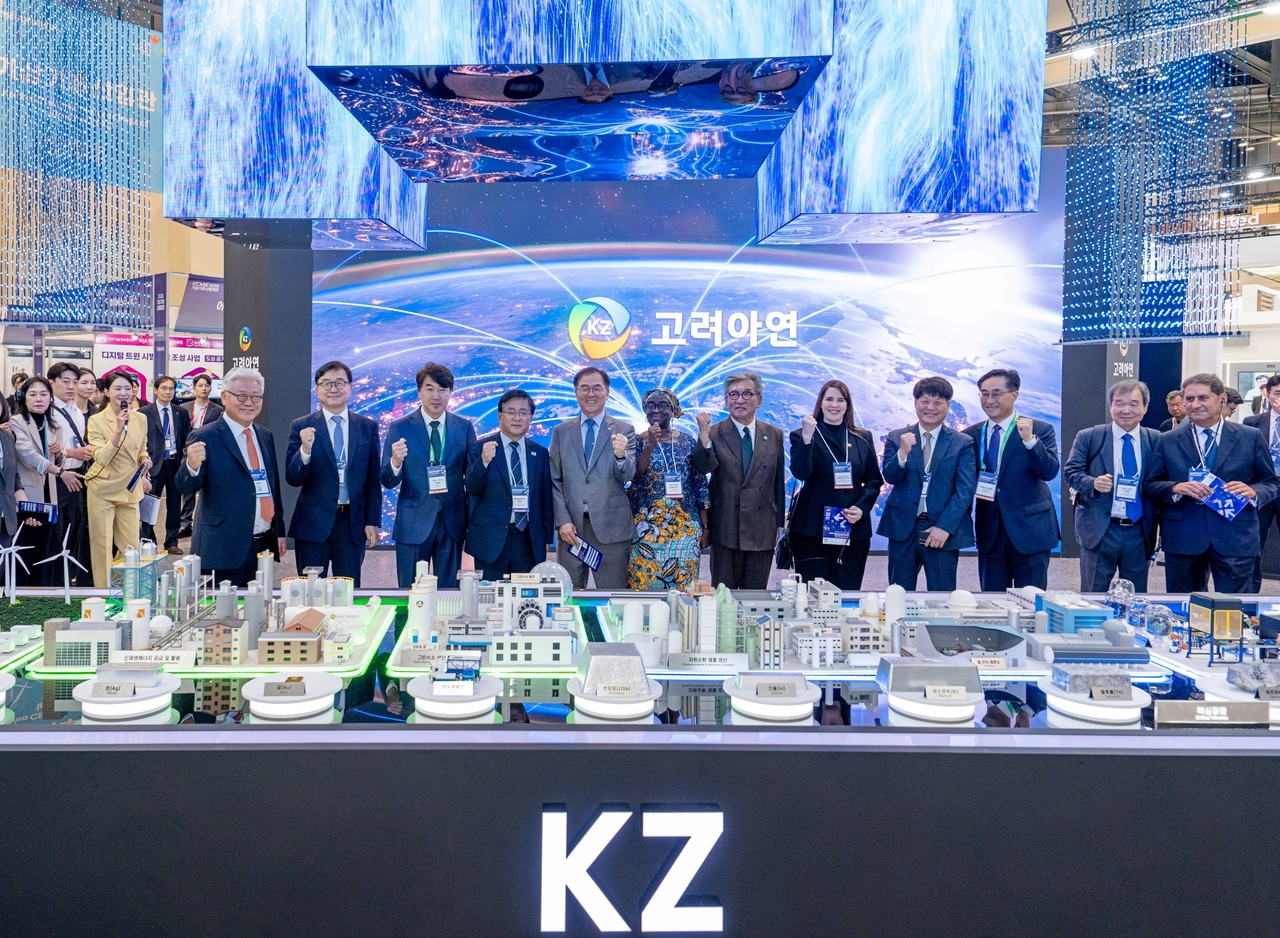
Korea Exchange will hold KOSDAQ CONNECT 2026 from Wednesday through Friday to mark the 30th anniversary of the Kosdaq market's launch. The event is the Kosdaq's largest investor relations (IR) gathering, drawing listed companies, institutional investors, investment banks and venture capital firms. This year, it is drawing particular attention as a barometer of whether government Kosdaq revitalization policies can restore investor sentiment in a market that has been struggling.
According to Korea Exchange, the three-day event opens Wednesday with a pharmaceutical, biotech and medical device industry conference, along with a CEO forum featuring top executives from leading Kosdaq companies. Thursday's program centers on a policy session covering the removal of underperforming companies, expansion of customized technology-assessment fast-track listings, and funding for growth-stage firms through business development companies (BDC) and the National Growth Fund. On the final day, Friday, discussions will focus on strategies to strengthen market competitiveness, including Kosdaq corporate value enhancement and improvements to the disclosure regime. Throughout the event, 47 Kosdaq-listed companies — including Voronoi, HPSP, Silicon2, Oscotec and Rznomics — will hold IR sessions for domestic and foreign institutional investors.
The event takes place against a backdrop of a sharp Kosdaq downturn. The index briefly topped the 1,200 level in April on expectations of government revitalization measures, but has since been pushed back to the 850 range as investor flows tilted toward semiconductor-heavy Kospi stocks and growth shares weakened. This month, from June 1 through Friday, the Kosdaq fell 20.79 percent — dropping from 1,074.80 to 851.37 — while the Kospi slipped just 0.77 percent over the same period, widening the performance gap sharply. Amid this, the market is watching closely to see whether the government's Kosdaq revitalization policies can revive depressed investor sentiment.
The policies to be unveiled at the event are follow-up measures to the government's "Capital Market Structural Reform Plan" announced in March. The Financial Services Commission is pursuing a two-track strategy to reshape the Kosdaq into an innovation-driven market — tightening the exit of underperforming companies while expanding the supply of venture capital to growth-stage firms.
![Kosdaq revitalization policy roadmap [Financial Services Commission and Korea Exchange]](https://wimg.heraldcorp.com/news/cms/2026/06/29/news-p.v1.20260629.d20a4e97d2cf4029ae03e92a427399f8_P1.png)
Tighter delisting standards will take effect in July. The minimum market capitalization required to maintain a Kosdaq listing will rise from 15 billion won ($9.71 million) to 20 billion won, and delisting requirements will also apply to so-called penny stocks trading below 1,000 won per share. Korea Exchange plans to run an intensive delisting management period through June next year, swiftly removing underperforming and financially troubled companies to restore market credibility.
The supply of growth capital to innovative companies will also be expanded. The government has broadened its customized technology-assessment fast-track listing system — previously focused on biotech — to include AI, space and energy sectors, with additional eligible industries to be phased in later this year.
The National Growth Fund, open to public participation, is targeting more than 30 trillion won in commitments this year and had approved a total of 14.6 trillion won across 21 investment projects as of Friday. Its support scope has been extended beyond AI and semiconductors to advanced strategic industries including biotech and defense, channeling long-term venture capital into growth-stage companies. The BDC regime, introduced in March, allows retail investors to invest in unlisted innovative companies through public offerings, broadening the funding base for growth firms by opening up a venture investment market that had previously been dominated by institutional players.
The government's proposed Kosdaq tiering system is also drawing attention. The plan would divide Kosdaq-listed companies into premium and standard segments (tentative names) to create a market structure centered on high-quality companies. At this week's event, however, the government is expected to outline only the broad direction of the initiative. Specific criteria for segment placement and operational details are expected to be finalized around September, following consultations with an advisory panel and industry feedback.
The securities industry argues that Kosdaq revitalization policies must go beyond institutional reform and translate into a genuine recovery of market confidence. Analysts say the next 30 years of the Kosdaq will hinge not on quantitative growth in the number of listed companies, but on a qualitative reassessment centered on high-quality firms. Achieving that, they say, requires building a virtuous cycle in which strong companies remain on the Kosdaq, receive fair valuations, and attract a consistent inflow of institutional and foreign capital.
"KOSDAQ CONNECT is not simply a 30th-anniversary celebration — it is an opportunity to identify the industries that will define the Kosdaq's next chapter," said Kim Du-eon, an analyst at Hana Securities. "The next challenge for the Kosdaq is not listing more companies, but building a market structure where good companies receive higher valuations."
Kim added that "the policy direction — including the tiering system and tougher delisting standards — is ultimately aimed at raising market quality," and that "capital will only return to the Kosdaq once market confidence is restored."
hajun825@heraldcorp.com