Samsung announces investment plan at Gwangju's Kim Dae-jung Convention Center
Jeon Young-hyun stresses stable power supply for round-the-clock semiconductor operations
Honam region's renewable energy strengths offset by intermittency concerns
Korea's PPA regime excludes nuclear; industry calls for change
Presentation also requests permission to establish specialized regional high schools
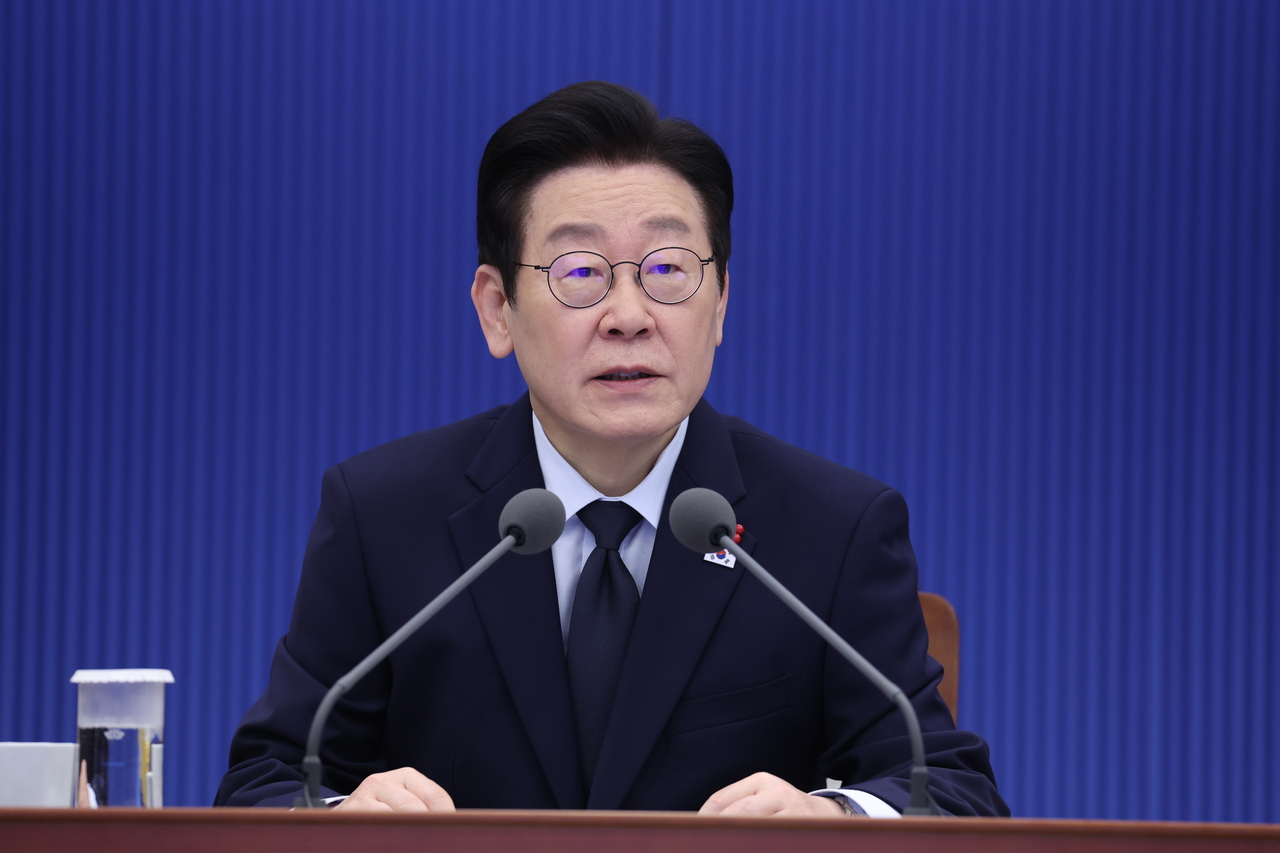
![President Lee Jae Myung shakes hands with Samsung Electronics Vice Chairman Jeon Young-hyun at the Southwest Region Advanced Industry Development Vision national briefing held at the Kim Dae-jung Convention Center in Gwangju on Tuesday. [Yonhap]](https://wimg.heraldcorp.com/news/cms/2026/06/30/rcv.YNA.20260630.PYH2026063017450001300_P1.jpg)
Jeon Young-hyun, vice chairman and head of Samsung Electronics' Device Solutions division, called on the government Tuesday to expand nuclear power capacity and power purchase agreements to compensate for the intermittency of renewable energy, stressing the importance of stable electricity supply for the company's planned semiconductor cluster in the Honam region.
President Lee Jae Myung responded to Jeon's request by saying he wanted "confirmation" of the government's commitment. "I will make sure to show that this is not a 'political show' put on by politicians," Lee said, signaling strong support for the initiative.
Speaking at the Southwest Region Advanced Industry Development Vision national briefing at the Kim Dae-jung Convention Center in Gwangju on Tuesday afternoon, Jeon said Samsung plans to invest about 400 trillion won ($259 billion), starting with two fabrication plants in Gwangju. He described the city as offering strong incentives, including essential semiconductor infrastructure such as power and water, workforce support and residential amenities.
He pledged that Samsung would actively participate in the government's carbon-free energy policy and contribute to energy self-sufficiency, adding that the company would invest in nuclear-based hydrogen and green hydrogen production.
However, Jeon said individual corporate efforts have their limits. "I again ask that you actively pursue the expansion of nuclear power and PPAs to offset the intermittency of renewable energy, and ensure that LNG combined heat and power generation is also carried forward," he said.
Semiconductor production facilities operate around the clock, making stable power supply a top priority. The Honam region is considered well-positioned for renewable energy — particularly solar and offshore wind — but the high variability of generation output depending on weather and environmental conditions remains a recognized limitation.
Jeon's direct mention of nuclear expansion and PPAs conveyed the industry's deep concern over renewable energy intermittency. A PPA is a contract between a company and a power generator that guarantees a stable supply of electricity over an agreed period.
![Samsung Electronics Vice Chairman Jeon Young-hyun presents the company's investment plan at the Southwest Region Advanced Industry Development Vision national briefing, presided over by President Lee Jae Myung at the Kim Dae-jung Convention Center in Gwangju on Tuesday. [Yonhap]](https://wimg.heraldcorp.com/news/cms/2026/06/30/rcv.YNA.20260630.PYH2026063015940001300_P1.jpg)
The semiconductor, data center, steel and petrochemical industries — four key sectors — are currently required to use carbon-free electricity.
The available supply of such power falls short of demand, making procurement through PPAs an increasingly discussed alternative. South Korea's PPA regime, however, limits carbon-free power sources eligible for such contracts to renewable energy only.
The Korea Federation of Enterprises proposed in a July last year policy report on activating the PPA regime that existing nuclear plants should be included in PPAs, as is the case in the United States and France. The report argued that allowing companies to freely choose their power sources through PPAs would help ease the shortage of carbon-free electricity.
The federation projected that the four industries' carbon-free power coverage ratio — the share of electricity demand that can be met with carbon-free sources — would reach only 81.6 percent by 2038. But if existing nuclear plants were included in PPA-eligible carbon-free sources and nuclear utilization rates were raised, the coverage ratio could reach 101.8 percent by 2042, it said.
Minister of Climate, Environment and Energy Kim Sung-hwan said at a national briefing held at Cheong Wa Dae on Monday that electricity demand will inevitably surge in the AI era. "We will mobilize everything — solar, wind, nuclear, small modular reactors, LNG and hydrogen conversion," he said.
While the government has pledged active support for power and water supply, voices within the semiconductor industry are calling for Gwangju to be designated a national industrial complex through legislation — as was done for the Yongin semiconductor complex — to establish a clear legal basis for that support and enable the government to deliver power and water directly and swiftly to the site.
Although Jeon did not raise the points directly in his remarks, Samsung's presentation materials included requests to expand the military service exemption program for specialized researchers and to allow the establishment of regionally specialized high schools. With securing locally rooted talent in the Honam region cited as a key challenge, calls are growing for stronger administrative backing from the government.
"The president has on multiple occasions spoken of various strong policy support measures — securing top talent to maintain Korea's semiconductor lead and improving residential conditions," Jeon said. "Going forward, our company will also pick up the pace and do our utmost so that South Korea can take a great leap forward."
joze@heraldcorp.com
go@heraldcorp.com