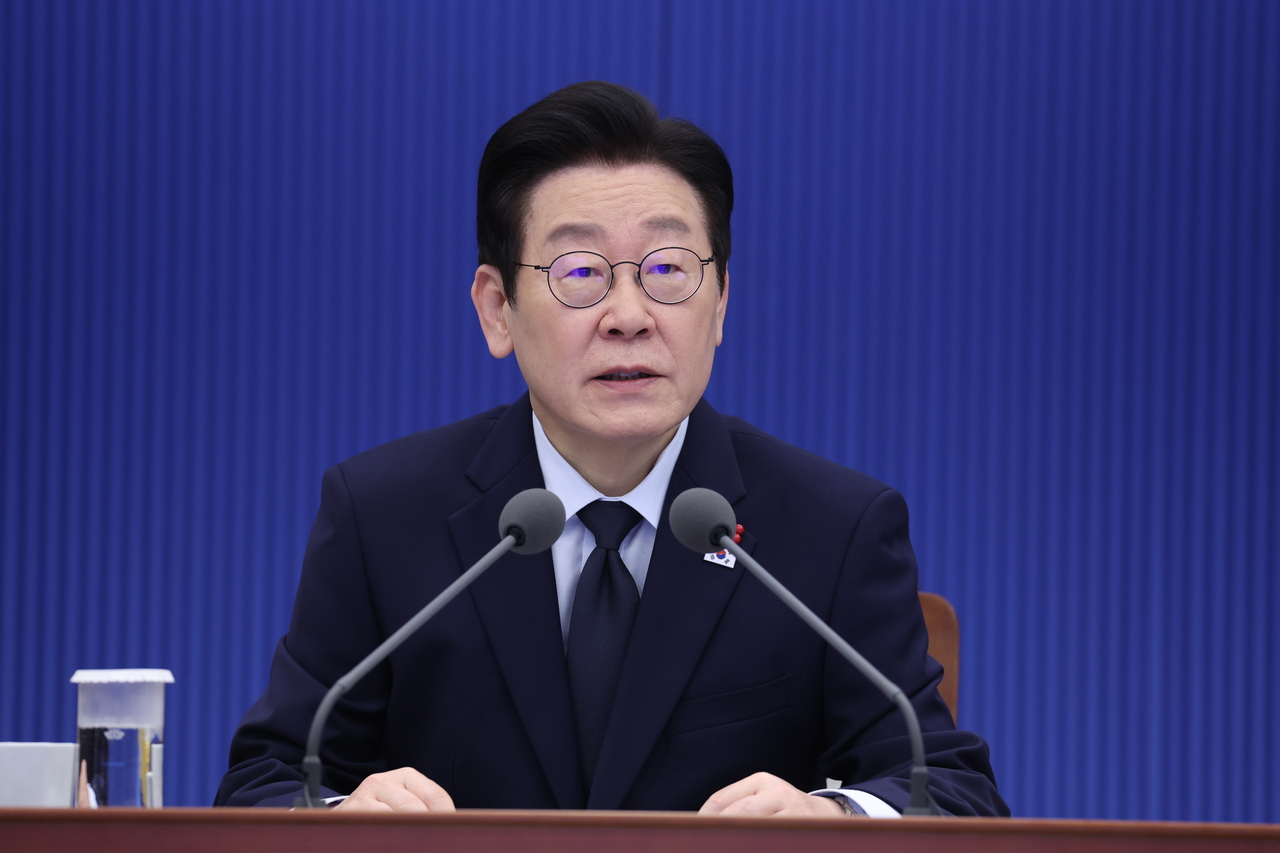
Park Soo-young hosts seminar on economic effects of inheritance tax reform

By Jung Seok-jun, The Herald Business
Reducing South Korea's inheritance tax rate from 50 percent to 30 percent could expand the domestic tax base by 202 trillion won, according to new research unveiled Tuesday.
The findings were presented at a policy seminar titled "Economic Effects of Inheritance Tax Reform," jointly hosted Tuesday by People Power Party lawmaker Park Soo-young, the Korea Center for Free Enterprise and the Korean Academy of Management. Park said the event had moved the debate beyond ideology. "There has been ideological dispute between the People Power Party and the Democratic Party of Korea over cutting the inheritance tax rate, but this policy forum has shown through empirical data the necessity of lowering the rate — including expanding the tax base and protecting our companies," she said.
Yoo Byung-jun, a professor in the business administration department at Seoul National University, presented an analysis titled "Analysis of the Economic Effects of Inheritance Tax Rate Reduction — Deriving the Optimal Rate, Changes in the Tax Base, and Macroeconomic Feedback Effects." His research examined how a rate cut would affect the outflow of domestic capital abroad, the repatriation of overseas Korean-owned assets, new inflows of foreign capital, and the long-term feedback effects of domestic investment and economic growth.
Yoo's analysis found that cutting the rate from the current 50 percent to 30 percent would expand the total potential domestic tax base from 473.87 trillion won to 675.52 trillion won — an increase of roughly 201.65 trillion won. "The expansion of the tax base breaks down into approximately 98.97 trillion won from curbing the outflow of domestic capital overseas, about 48 trillion won from the repatriation of overseas Korean-owned assets, and around 54 trillion won from new foreign capital inflows," Yoo said.
Yoo also proposed an "equilibrium optimal tax rate" of around 22 percent, a figure that takes into account tax revenue, retention of domestic capital, curbing of capital outflows and attraction of new investment. The research found that if a 22 percent rate were applied over the long term, annual potential inheritance tax revenue would surpass that generated under the current 50 percent system starting in 2037, with cumulative potential revenue overtaking the current system from 2043. "Lowering the inheritance tax rate has the potential to form a larger tax base over the long term by curbing capital outflows and expanding domestic investment," Yoo said.
Choi Seung-no, president of the Korea Center for Free Enterprise, said inheritance tax is "an important economic system that affects business succession, capital formation, investment and employment," adding that discussions on reform "should move beyond the framing of 'hereditary wealth' and objectively examine how inheritance tax affects corporate activity, investment, capital accumulation and economic growth."
Lee Ung-hee, chairman of the Korean Academy of Management, said the current inheritance tax system "does not adequately reflect rising prices, higher asset values or the rapidly changing business environment." He warned that expanding conditional special provisions and deferred payment schemes while leaving the nominal tax rate unchanged "could further increase uncertainty for businesses and add complexity to the system."
Park said South Korean companies including Chungho Nais, Yunidus, 777 (Three Seven) and Lock&Lock had been acquired by Chinese and other foreign investors because they could not afford to pay inheritance taxes under what she described as the highest rate among OECD member countries. "Now that the effects of cutting the inheritance tax rate have been empirically analyzed, we need a realistic reform plan to protect our companies and jobs," she said. Park added that she would use empirical data to expose what she called the blind spots of the Lee Jae-myung administration's "tax-hike-as-cure-all" approach — covering not only inheritance tax but also income tax, corporate tax, real estate holding tax and capital gains tax — and work toward building a system that serves people's livelihoods.
mp1256@heraldcorp.com