
PPP vows to narrow scope of labor disputes to working conditions
Korea Employers Federation raises concerns over mandatory retirement age extension, worker presumption rule
KEF chief says current laws failing to keep pace with the times
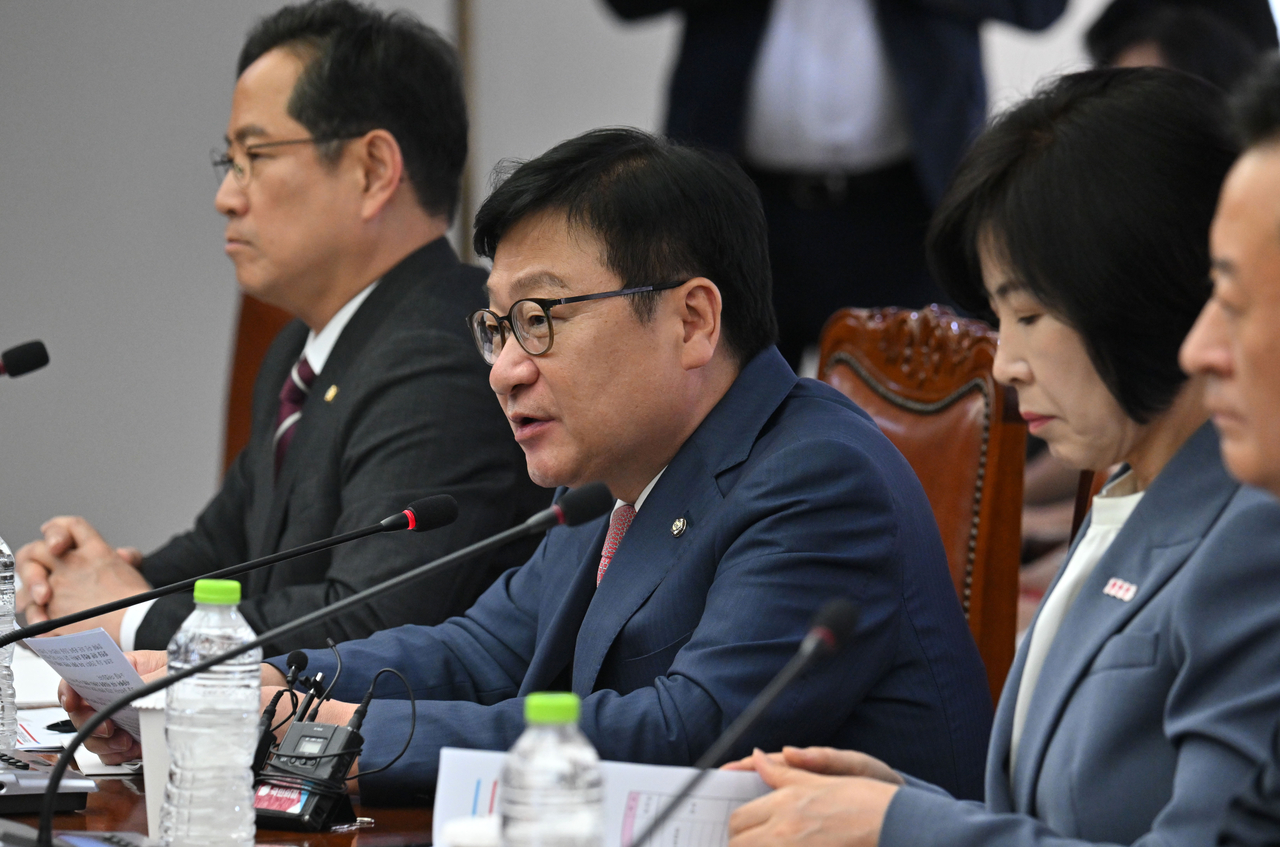
The People Power Party and the Korea Employers Federation held a policy forum Tuesday, agreeing that supplementary legislation is needed to minimize the side effects of the so-called Yellow Envelope Law — an amendment to Articles 2 and 3 of the Trade Union Act.
PPP floor leader Jung Jeom-sik, speaking at the forum held Tuesday afternoon at the KEF building in Mapo-gu, Seoul, said the Yellow Envelope Law "must be revised to minimize confusion at industrial sites, where concerns have been mounting." He added that the party would "clarify the ambiguous definition of employer and reorganize the scope of labor disputes during collective bargaining to focus on working conditions."
Jung said the party is preparing an amendment that "reflects voices from the field, including excluding violent workplace occupations and other illegal acts from protected conduct." He pledged to "build a rational labor-management order that guarantees both management stability and the legitimate rights of workers."
"When labor and management share reasonable rules built on trust, productivity rises and our industries become more competitive," Jung said, stressing that the government should "create an environment where investment and research and development feed into a virtuous cycle through stable, consistent systems — not stifle innovation with excessive regulation."
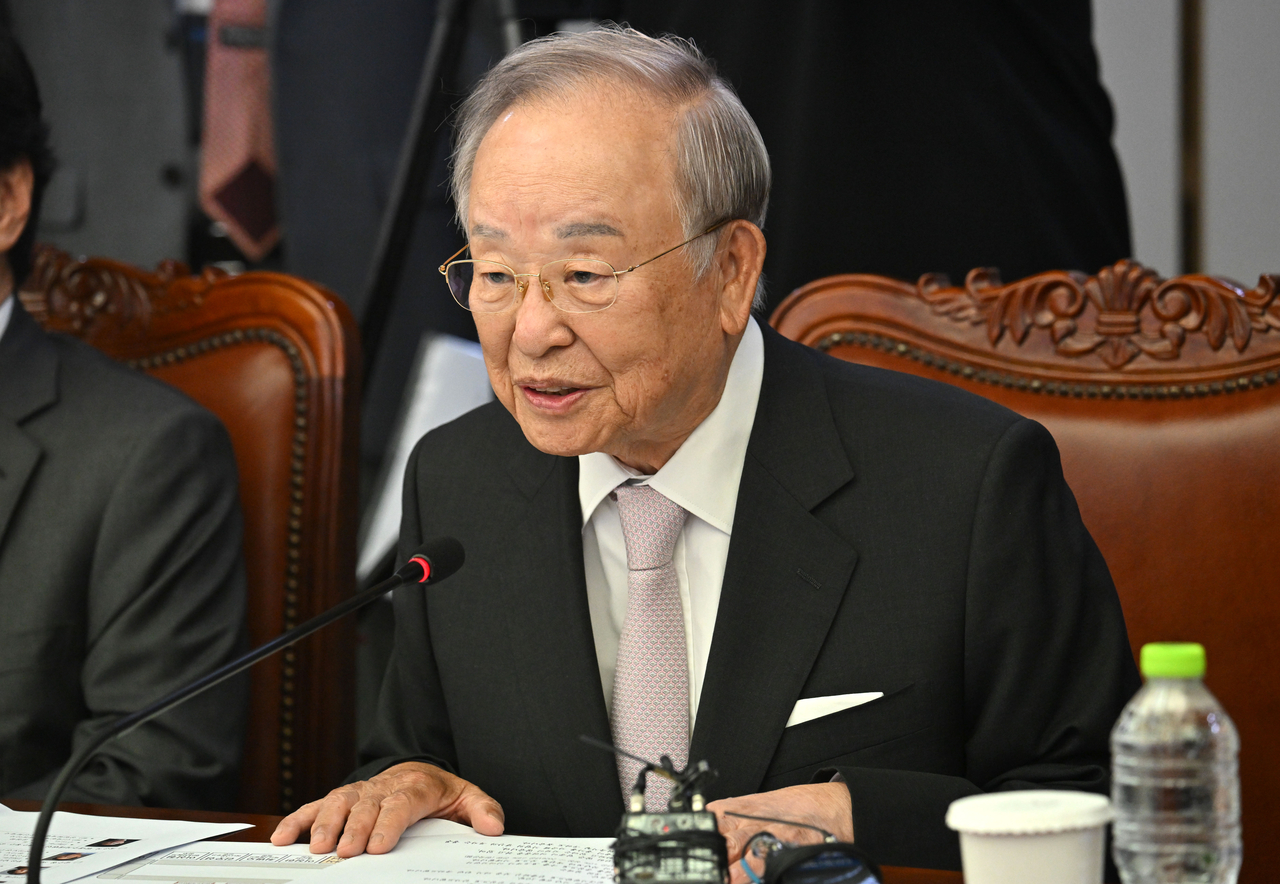
The KEF conveyed its concerns about the Yellow Envelope Law, a mandatory retirement age extension and a proposed worker presumption rule in a written set of recommendations submitted to the PPP at the forum Tuesday.
The federation urged that "the scope of employer liability be reasonably adjusted and employer defense rights strengthened to minimize the side effects of the amendments to Articles 2 and 3 of the Trade Union Act."
It also warned that "subcontractor unions are demanding that wages and performance bonuses be placed on the bargaining table regardless of whether the primary contractor exercises actual control, raising the risk of labor-management conflict."
The KEF also flagged a situation in which labor relations commissions are using primary contractors' compliance with the Occupational Safety and Health Act as grounds for imposing collective bargaining obligations with subcontractor unions, calling it "a contradictory outcome where faithfully following the law leads to bargaining obligations."
The federation noted that companies seeking legal clarity on the ambiguous definition of employer face the risk of being penalized for unfair labor practices simply for pursuing litigation. On the mandatory retirement age extension, the KEF said it favors a shift to a job- and performance-based pay system alongside a post-retirement rehiring model.
Regarding the Basic Act for Working People and the worker presumption rule, the KEF said the measures "could increase the employment burden on small and medium-sized enterprises and small business owners, ultimately reducing jobs," and argued that "an economic law approach, rather than a labor law approach, would be more appropriate."
KEF Chairman Son Kyung-shik said the persistently high exchange rate "is likely to push up prices and dampen corporate production and investment as well as private consumption." He added that while "the spread of AI and other advanced technologies is demanding sweeping changes to industrial foundations and employment structures, the laws and systems governing Korea's labor market are failing to keep pace with the times."
The forum was attended by floor leader Jung along with PPP lawmakers Kim Mi-ae, Park Soo-young, Choi Eun-seok and Yoon Yong-geun.
thanks@heraldcorp.com





