KOTRA-hosted fair showcases K-beauty, food and lifestyle products
107 Korean firms meet 240-plus local buyers
Food safety fears boost Korean brands, retail networks
K-pop performances tied to fair to channel hallyu into sales
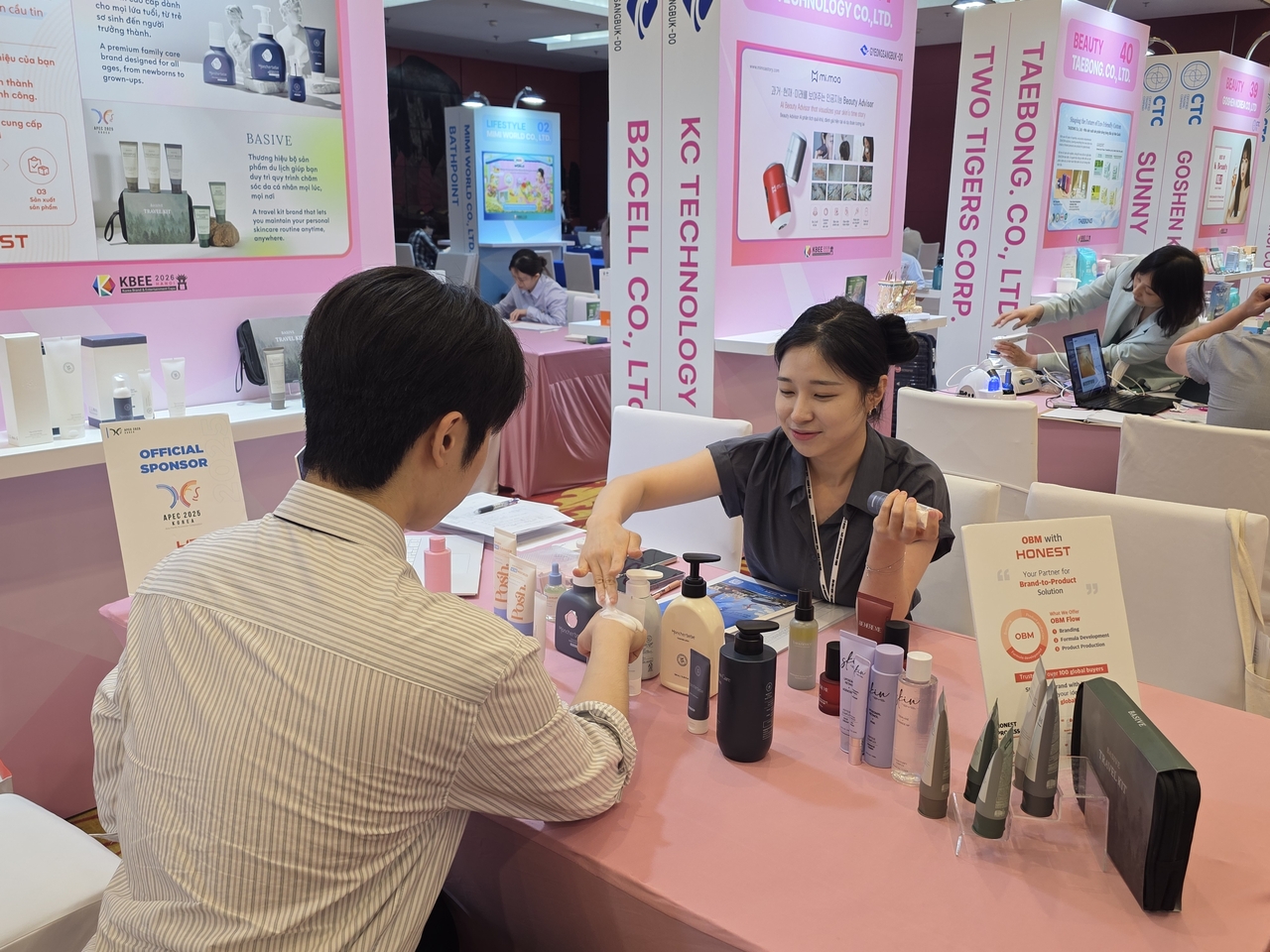
"I came to the hallyu fair in Hanoi to look at Korean cosmetics. After meeting the companies and sitting down with them, I found the quality to be even better than I expected," said a Vietnamese cosmetics buyer at the event.
Korean consumer goods companies and buyers from Vietnam and neighboring countries held back-to-back meetings Wednesday (local time) at the National Convention Center in Hanoi. Company representatives applied cosmetics directly on visitors' skin and offered food samples, while buyers peppered them with questions they had long wanted answered.
Now in its 27th edition, the hallyu fair is co-hosted by the Ministry of Trade, Industry and Energy, the Korea Trade-Investment Promotion Agency (KOTRA), the Ministry of Agriculture, Food and Rural Affairs, and the Korea Agro-Fisheries and Food Trade Corporation. The event was organized to sustain bilateral momentum following the Korea-Vietnam Business Partnership held during President Lee Jae-myung's visit to Vietnam in April, which produced $82.09 million in export contracts.
B2B export consultations run Wednesday and Thursday, while B2C exhibition and promotional booths operate Thursday and Friday. A total of 107 Korean consumer goods companies and more than 240 buyers from Vietnam and nearby countries took part in the B2B sessions. A status board at the venue showed 368 consultations had taken place on Wednesday alone, yielding 11 memorandums of understanding.

Buyers at the fair expressed strong expectations for Korean products. One Vietnamese cosmetics buyer said Korean beauty brands had been in the market long enough to build solid trust. "In the past, cosmetics used by famous celebrities drove sales," the buyer said. "Now, more and more people are buying Korean cosmetics again and again simply because they have tried them and liked them."
Korean food brands and retail networks also drew strong interest. A buyer working at a local Lotte Mart said persistent concerns about counterfeit food products in Vietnam were pushing consumers toward supermarkets they trust. "Lotte Mart operates 15 stores across Vietnam and plans to open its 17th location by the end of this month to bring Korean products to a wider audience," the buyer said.
The buyer added that rising incomes were making Vietnamese consumers more willing to pay a slight premium over Chinese-made goods for better-quality Korean products. "Low-sugar and low-calorie items have been gaining popularity in Vietnam as well, so we launched a Korean brand's zero ice cream line," the buyer said.
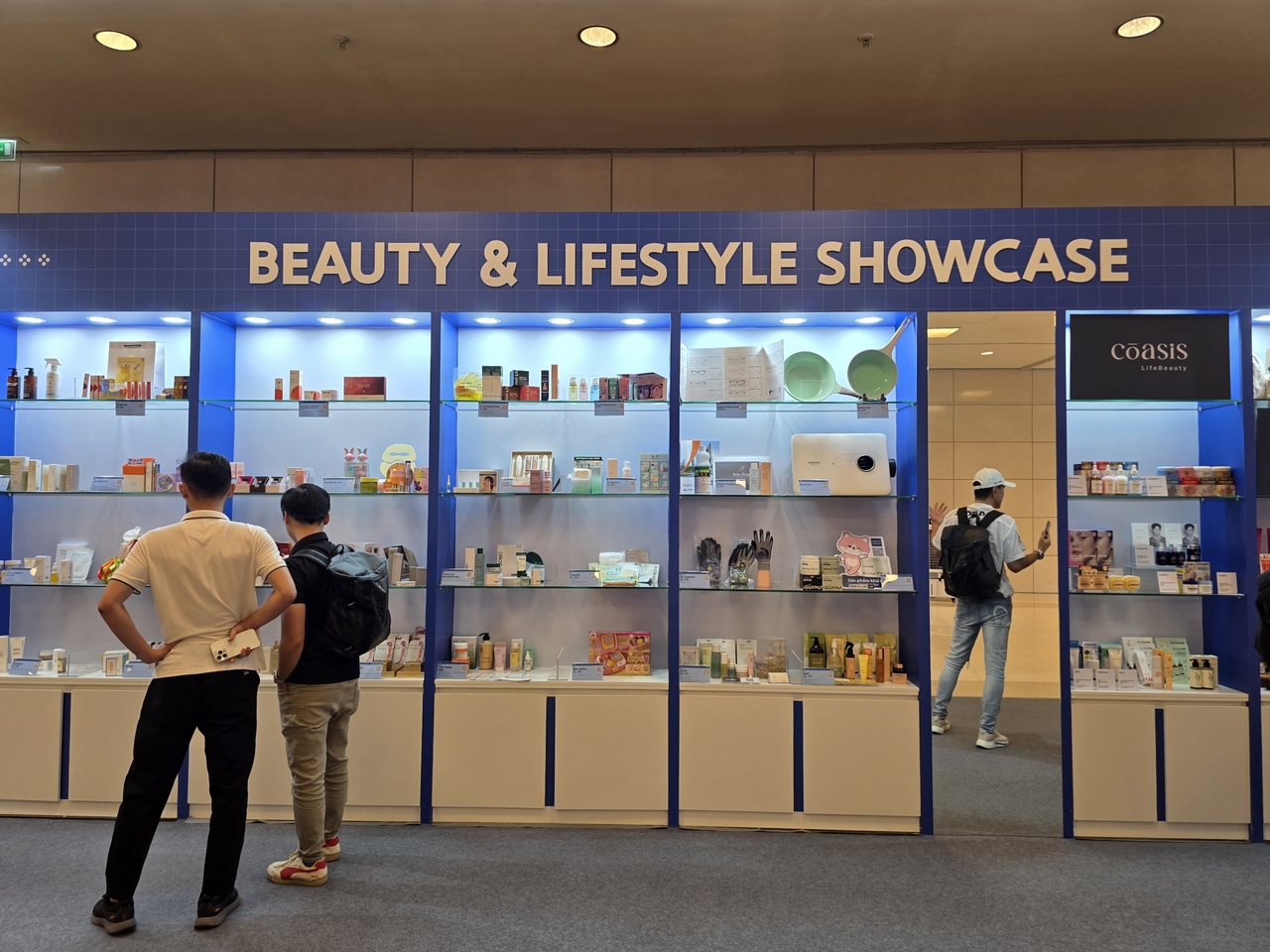
Vietnam holds strong appeal for Korean companies as well. It is South Korea's third-largest trading partner and the fourth-largest destination for consumer goods exports. With a population of about 100 million, a median age of 33 and GDP growth of 7 to 8 percent over the past two years, it ranks among the most dynamic emerging markets in the region. Some 99.4 percent of Vietnamese respondents in a survey said they had experience consuming Korean products or services, reflecting deep familiarity with Korean culture.
Korean companies at the fair said the B2B sessions gave them valuable, Vietnam-specific feedback. A representative from Earnest, a cosmetics original equipment manufacturer, said a buyer pointed out that coconut fragrance — used in one of the company's children's lotions — is so common in Southeast Asian markets that it fails to convey a premium image. "Since it is a product for children, we also plan to look further into local safety certifications to make sure it fits the market," the representative said.
K-pop groups Winner and Fifty Fifty, the official promotional ambassadors of the hallyu fair, are scheduled to perform Thursday to draw hallyu fans to the event. KOTRA plans to link the performances to the fair, hoping to channel enthusiasm for hallyu into interest in Korean consumer goods.
A representative from a cooperative in Goheung, South Jeolla Province, which produces processed foods using locally grown yuzu, said perceptions of Korean ingredients had shifted dramatically since the company first attempted to export to Vietnam in 2013. "Back then, buyers told us local mangoes tasted better than our yuzu," the representative said. "Now the image has changed a great deal. Hallyu is creating opportunities for even small Korean companies to try their hand at exporting."
eyre@heraldcorp.com