Samsung, SK hynix HBM disguised as server processors for export
Chips separated in China and fed into Huawei AI chip supply chain
HBM3E price surges from hundreds of dollars to $4,000 in a year
Korean chipmakers face scrutiny as US tightens export controls
Smuggling networks are expanding to move advanced high-bandwidth memory chips made by Samsung Electronics and SK hynix into China, circumventing US semiconductor export controls. The method involves packaging Korean-made HBM together with low-cost server processors and exporting the combined unit, then separating the components once inside China. As demand for HBM — essential to China's AI chip development — has surged, prices on the smuggling market have reportedly climbed to $4,000 per chip.
According to The Information, a US technology publication, smugglers have been exploiting loopholes in export regulations to bring Korean-made HBM into China despite the US ban on semiconductor exports to the country.
The method gaining traction involves packaging HBM together with a low-end server processor onto a single board. The resulting product is classified under server processor export categories rather than as a standalone memory chip, allowing it to sidestep export restrictions. Smugglers are exploiting a provision in US export rules under which the overall computing capability of a package is assessed based on the server processor, not the memory chip.
Once the package arrives in China, technicians apply heat to melt the solder, extract the HBM stacks they need and discard the remaining server processor components.
The process carries significant risk, however, as it demands a high degree of precision. Applying heat too quickly or leaving the package exposed for too long can warp or crack the internal memory stacks.
Smugglers accept the risk of damaging the chips because the surge in Chinese demand for HBM has made the profit margins substantial.
A broker in their 20s who facilitates smuggled memory sales in China told The Information that a single HBM3E chip that traded for a few hundred dollars in China a year ago now fetches around $4,000.
A single AI chip package typically requires six to eight HBM units. At current Chinese market prices, the memory alone would cost between $24,000 and $32,000 — before factoring in the AI chip itself, servers or power costs.
HBM obtained through these channels is sold primarily to customers of Huawei, the Chinese telecommunications and IT conglomerate.
Sources familiar with Huawei's supply chain said the company has recently told some customers that its next-generation flagship AI chip, the Ascend 960DT, will rely heavily on HBM produced by Samsung Electronics and SK hynix.
Huawei has said the Ascend 960DT delivers twice the performance of its predecessor and will be among the most powerful processors China can manufacture domestically.
Unable to purchase the memory it needs directly from Korean chipmakers, Huawei has also instructed some customers ordering AI chips to source their own HBM.
The situation underscores that even as China accelerates its push to develop homegrown AI semiconductors, it has yet to reduce its dependence on Korean companies for critical memory components.
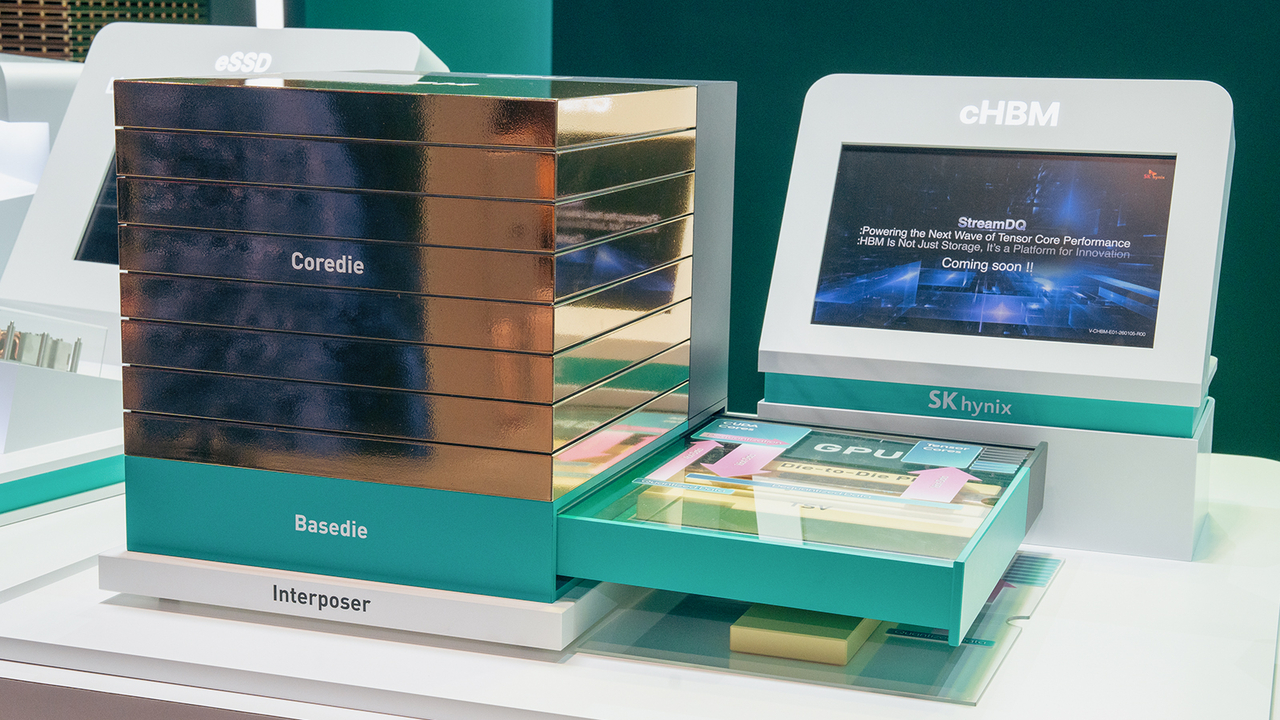
HBM is a high-performance memory chip that stacks multiple DRAM dies vertically to boost data transfer speeds. Even the most capable AI processor cannot perform to its full potential without sufficient HBM to support it.
Chinese AI companies such as DeepSeek and Moonshot, in particular, need a combination of high-performance AI processors and HBM to continue training large-scale AI models and expanding their services.
Global HBM supply is already tight, and China's own domestic production remains negligible. Samsung Electronics and SK hynix together account for more than 80 percent of the global HBM market, driving Chinese companies to seek out Korean-made memory with growing urgency.
The Information noted that the situation could create problems for Samsung Electronics and SK hynix as well. Even if neither company exported the chips directly, finding their memory inside Chinese AI chips could draw scrutiny from the US government.
TSMC, the Taiwanese contract chipmaker, came under a US government investigation in 2024 after chips it had manufactured were found in Huawei products. The US subsequently ordered TSMC to halt all exports of AI chips to China.
SK hynix said it "strictly complies with all relevant laws and regulations, including export control rules in the United States and South Korea." The company added that it has not supplied products to Huawei since US export restrictions took effect in 2020.
Meanwhile, a broader cultural undercurrent has emerged in China's HBM smuggling market, where violating export controls is increasingly framed as a patriotic act.
The broker in their 20s said they do not think of themselves as a smuggler, describing the work as "contributing to the motherland."
At the same time, there are growing concerns that as smuggling routes become more widely known, the risk of enforcement is rising.
One smuggler who has been ordering memory semiconductors from South Korea said the influx of competitors has made it time to wind down the business.
"The routes I use are now being used by many other operators," the smuggler said. "The more people like us there are, the easier it becomes for regulators to catch us."
"Enforcement in South Korea and the United States will only get stricter going forward," the smuggler added. "I plan to sell most of my stake in the company next year."
sjy@heraldcorp.com