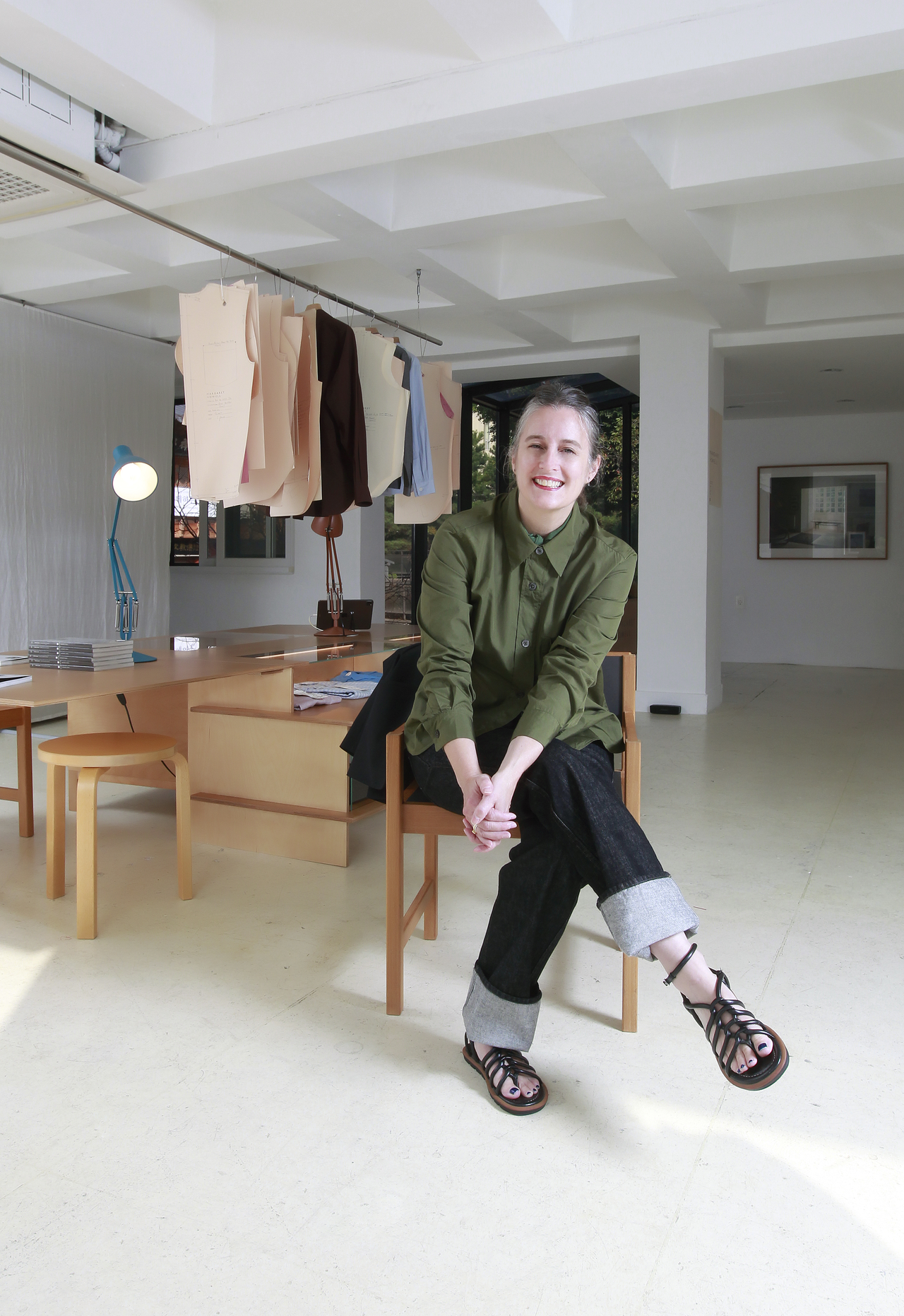
![Kwon Ki-chang, mayor of Andong, North Gyeongsang Province. [Andong City]](https://wimg.heraldcorp.com/news/cms/2026/07/06/news-p.v1.20260706.f9c22de9710d4eb6bf1e23306167f77b_P1.jpg)
Twenty years have passed since Andong proclaimed itself "the capital of Korea's spiritual culture."
That declaration two decades ago was not simply a bid to claim a differentiated city brand. It was a solemn pledge — a proud affirmation before the nation of the spiritual and cultural values that the people of Andong had built and preserved over centuries, and a self-imposed commitment to champion a world centered on human dignity.
The world has changed dramatically over those 20 years. The rise of AI and advances in digital technology have brought material prosperity unlike any in history, yet a culture that prizes efficiency, speed and competition above all else has exposed the limits of materialism — deepening human alienation and eroding community bonds.
Faced with the defining question of our age — whether a faster society is necessarily a better one — humanity is turning once again to Confucian culture and humanist philosophy, which place people at the center of all values.
Andong has long been the spiritual homeland of Confucian culture, preserving its original form. Confucianism began with Confucius in Shandong, China, but it took deep root in Korean life through the Neo-Confucian scholarship of Toegye Yi Hwang at Dosan in Andong. Andong's Confucianism was never a fossilized academic tradition — it was a living philosophy that continually asked and practiced the question of how human beings ought to live.
That spirit has been proven time and again throughout Korean history. When the nation faced peril, figures such as Seokju Lee Sang-ryong gave their lives and entire fortunes to lead the independence movement against Japanese colonial rule. In times of peace, scholars such as Nongam Lee Hyeon-bo devoted themselves to filial piety and propriety within the family, while Toegye modeled humility and tirelessly nurtured the next generation. Patriotism, filial devotion and education — these practical legacies form the roots of the Andong spirit.
Andong's spirit is neither closed nor dogmatic. Though it stands as a center of Confucian culture, it coexists with Bongjeongsa, a temple representing the essence of Buddhist culture, while Catholicism, Protestantism and other faiths and philosophies respect one another and form a harmonious landscape. This pursuit of coexistence over confrontation, and harmony over conflict, is the true power of a spiritual culture capable of healing an age defined by division.
Andong is no longer content simply to preserve this noble spiritual heritage — it is extending that heritage toward the city's future and the wider world. The annual 21st Century Humanities Values Forum has established itself as a global platform where Andong's spirit is brought to bear on the challenges facing humanity today. Through the World Humanities Cities Network and the K-Character Humanities Education initiative, the city is putting human-centered values into practice in governance and education.
Territory has borders, but culture does not. The spirit of Andong — which holds people in high regard, encourages self-reflection and puts neighbors and community first — carries universal values that people around the world need as they navigate the age of AI and an era of deepening conflict.
Through the 21st Century Humanities Values Forum, the World Humanities Cities Network and the K-Character Humanities Education initiative, Andong now seeks to share these values with a broader world. The 20th anniversary is not a moment to look back — it is a new point of departure toward taking Andong's spiritual culture global.
With eyes fixed solely on Andong and its citizens, the city will throw open the door to the next 20 years — so that what makes Andong distinctly itself may come to embody what is best about Korea, and so that Andong's spiritual culture may shine as a guiding value for the coexistence of all humanity.
yeop@heraldcorp.com