Yeosu Coast Guard nabs large oil-spilling ship after tenacious investigation
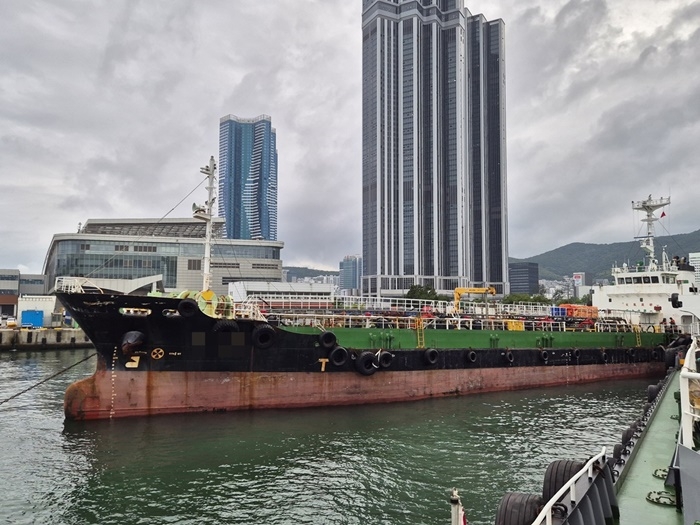
The Yeosu Maritime Police Agency announced Monday it had tracked down and apprehended Vessel A, an 800-ton fuel supply ship, on charges of illegally discharging wastewater into the sea.
Vessel A — an 800-ton ship registered in Busan — is suspected of pumping bilge wastewater through a pipe into the sea at around 4:30 a.m. on June 16 while anchored at Yeosu New Port, then sailing to Busan via Geoje without taking any containment measures.
After receiving a report of the spill, the coast guard launched an emergency cleanup operation while simultaneously activating its maritime pollution response support system. Investigators traced the movement of the oil hour by hour, analyzed the vessel's track, examined the routes and fuel transfer records of 42 ships, and reviewed thermal surveillance footage operated by the military to pinpoint the time of the discharge.
Authorities confirmed the vessel's involvement by analyzing the oil's "fingerprint" — a chemical profile of the residual oil found in Vessel A's engine room that captures its origin, refining process and storage conditions.
Oil fingerprinting is a technique widely used to identify maritime polluters. Because the chemical properties of oil vary depending on its origin, refining process and storage conditions, each sample can be compared and matched much like a human fingerprint.
The investigation found that Vessel A had covertly discharged heavy bilge wastewater from its engine room through an illegal pipe while operating near the anchorage off Yeosu Port. The ship then returned to Busan — about 180 kilometers away — without filing any report or taking containment action.
Under the Marine Environment Management Act, discharging oil at sea and fleeing without reporting the incident is a serious offense punishable by up to five years in prison or a fine of up to 50 million won ($32,500).
The Yeosu coast guard plans to charge Vessel A under Article 22 of the Marine Environment Management Act, which prohibits the discharge of pollutants, and to bill the vessel's operator for all costs associated with the cleanup, including ships and materials deployed.
"Although the initial oil discharge occurred in the early morning hours, we were able to identify the oil through coastal surveillance equipment," a Yeosu coast guard official said. "By analyzing data from more than 42 vessels over 20 days and refusing to give up, we were able to catch the offending ship. Anyone who dumps oil at sea and flees will be caught."
parkds@heraldcorp.com