The average interest rate on unsecured loans for mid-credit borrowers stood at 7.9 percent as of late March, about 3.0 percentage points higher than for high-credit borrowers. Low-credit borrowers faced a rate of 13.4 percent — roughly 2.7 times the rate paid by those with top-tier credit scores.
Financial regulators have begun working in earnest on expanding loan supply to mid- and low-credit borrowers and closing the rate gap, including reviewing new programs developed in cooperation with banks and non-bank financial institutions.
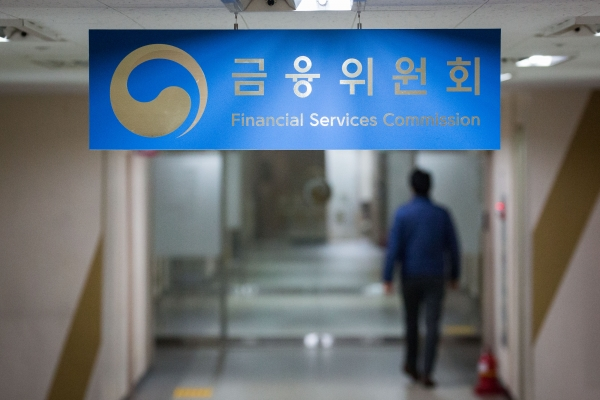
The Financial Services Commission held the first meeting of the financial industry subcommittee under its inclusive finance strategy task force on Tuesday at the Korea Federation of Banks building in Jung-gu, Seoul, to review the direction of discussions on key agenda items.
The FSC launched the inclusive finance strategy task force after Kim Yong-beom, the presidential chief of staff for policy at Cheong Wa Dae, raised the public role of finance as a key issue last May. The task force is divided into four subcommittees — overall coordination, policy finance for ordinary citizens, financial industry, and credit infrastructure — to discuss ways to improve the financial system. The supervisory coordination subcommittee held its inaugural meeting Monday, examining major agenda items including the introduction of a chief inclusive finance officer at financial firms, and the financial industry subcommittee followed with its own first session.
The financial industry subcommittee will operate separate working groups on four themes: expanding loan supply to mid- and low-credit borrowers and closing the rate gap, rationalizing financial soundness regulations, improving the mutual finance system, and building a sustainable inclusive finance evaluation framework.
To effectively close the rate gap for mid- and low-credit borrowers, the subcommittee will pursue implementation of the mid-rate loan activation measures announced last April alongside efforts to lower rates for that borrower segment. It will review improvements needed in proprietary products — such as the Saeheuimang Holssi loan and other mid- and low-credit loan products — operated by banks and other sectors, and plans to discuss tangible support measures targeting mid- and low-credit borrowers in the insurance and credit card sectors.
According to the FSC, as of end-March the average interest rate on unsecured loans for borrowers in the top 50 percent by credit score was 5 percent, while those in the 50th-to-80th percentile paid 7.9 percent and those in the bottom 20 percent paid 13.4 percent.
The rate gap is particularly wide when broken down by sector: for mid-credit borrowers, rates range from 5.8 to 14.5 percent depending on the lender. The FSC attributes this to structurally higher rates in the non-bank sector, driven by high loan origination costs, limited credit assessment capabilities, and the tendency of borrowers in that segment to be sensitive to credit limits.
On financial soundness regulation, the subcommittee underscored the need to rationalize rules that have become excessively rigid in pursuit of short-term, mechanical soundness targets. It will examine risk weights, asset quality classification standards, and loan-loss provisioning requirements, and plans to move quickly on follow-up measures, including revisions to sector-specific supervisory rules.
To strengthen the role of mutual finance institutions, the subcommittee plans to discuss providing profitability and liquidity support at the federation level for cooperatives with strong inclusive finance records, offering regulatory incentives related to inclusive finance — such as adjustments to loan-to-deposit ratios — along with legislative improvements, and reflecting inclusive finance performance in management evaluations and awards.
The subcommittee will also work with the citizen finance subcommittee, which handles the comprehensive inclusive finance evaluation, and the overall coordination subcommittee, which focuses on embedding inclusive finance into corporate governance, to explore ways to institutionalize inclusive finance within financial firms' systems and provide a range of incentives to top-performing institutions.
Participants agreed that a sustainable inclusive finance system — not one-off support measures — must take root, and that incentive structures and soundness regulations should be restructured to encourage financial firms to expand credit supply to mid- and low-credit borrowers on their own initiative.
The financial industry subcommittee plans to develop proposals for each agenda item and present them at an inclusive finance transformation conference.
ehkim@heraldcorp.com