
Some assembly members fear the semiconductor committee will also be run with a South Jeolla Province focus
Assembly Speaker Song rebuffed concerns, saying he cannot understand why lawmakers keep drawing a line between South Jeolla Province and Gwangju
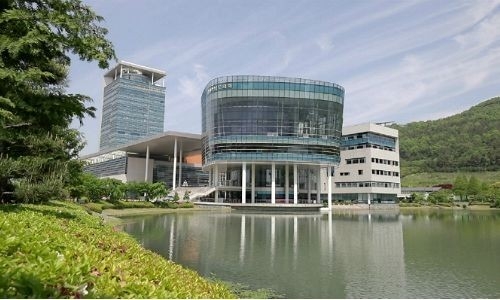
The Gwangju-South Jeolla Integrated Special City Assembly is moving to establish a standing special committee dedicated to supporting the Honam region semiconductor industrial complex planned for the former Gwangju military airbase site.
The committee is intended to consolidate semiconductor-related issues — currently scattered across multiple standing committees covering power supply, water, permits, budgets and regulatory reform — under a single assembly-level body. The proposal has, however, revived concerns about South Jeolla Province dominance, this time over the committee's leadership and operating base.
According to the assembly Wednesday, it is reviewing plans to establish the standing special committee to oversee support for the semiconductor complex.
The panel is expected to handle institutional backing, budget support, government petitions, and oversight and assistance for the executive branch in connection with building the semiconductor cluster on the former military airbase site.
The push for a dedicated committee stems from a recognition that the existing standing-committee structure alone cannot provide the speed and coordination needed to advance a semiconductor industrial complex that cuts across so many policy areas.
Responsibilities related to the semiconductor industry — including fostering the sector, securing power supply and industrial water, handling permits, building infrastructure, creating jobs and securing government grants — are currently divided among the Future Industry Committee, the Climate and Energy Committee, the Jobs and Economy Committee, and the Administration and Fire Department Committee. The new panel would bring those threads together under one roof.
Existing standing committees would retain their core functions — reviewing ordinances, deliberating on budgets and receiving departmental reports — while the special committee would coordinate issues that span multiple panels.
Assembly Speaker Song Hyeong-gon, who proposed the standing special committee, said the assembly decided to pursue its establishment "to provide detailed support at the assembly level for institutional backing and budget allocation."
The move has drawn concern from Gwangju-area lawmakers, who worry that even the assembly's semiconductor-related organization is being shaped around South Jeolla Province interests.
Those concerns have been fueled by reports that a senior, multi-term lawmaker from South Jeolla Province is being considered to chair the special committee, and that day-to-day administrative support for the panel may be left to the existing assembly organization, which is centered on the former South Jeolla Provincial Assembly.
Gwangju-area members have already accumulated grievances over what they see as South Jeolla Province-centered arrangements in the formation of the integrated assembly's leadership, standing committee chairs, secretariat operations and budget committee composition.
On top of that, suspicions are growing that South Jeolla Province could also come to dominate the assembly's role in overseeing the semiconductor complex, even though the complex itself is slated for a Gwangju site.
One Gwangju-constituency lawmaker said that if the semiconductor special committee ends up being led by South Jeolla Province members despite the complex being located at the Gwangju military airbase, "there could be a mismatch." The lawmaker also expressed concern that the role of the Future Industry Committee — currently chaired by a Gwangju-area member — could be weakened as a result.
Speaker Song rebuffed those concerns sharply.
"The military airbase has become more concrete as the semiconductor site, but the western region was also a candidate, and there are still unresolved matters," he said. "If we already talk about this as belonging only to Gwangju, how can we move forward in an integrated way?"
He added that he "cannot understand why people keep drawing a line between South Jeolla Province and Gwangju," and said that if necessary, members of the Future Industry Committee could join the special committee in large numbers and participate in its work.
kkm9971@heraldcorp.com





