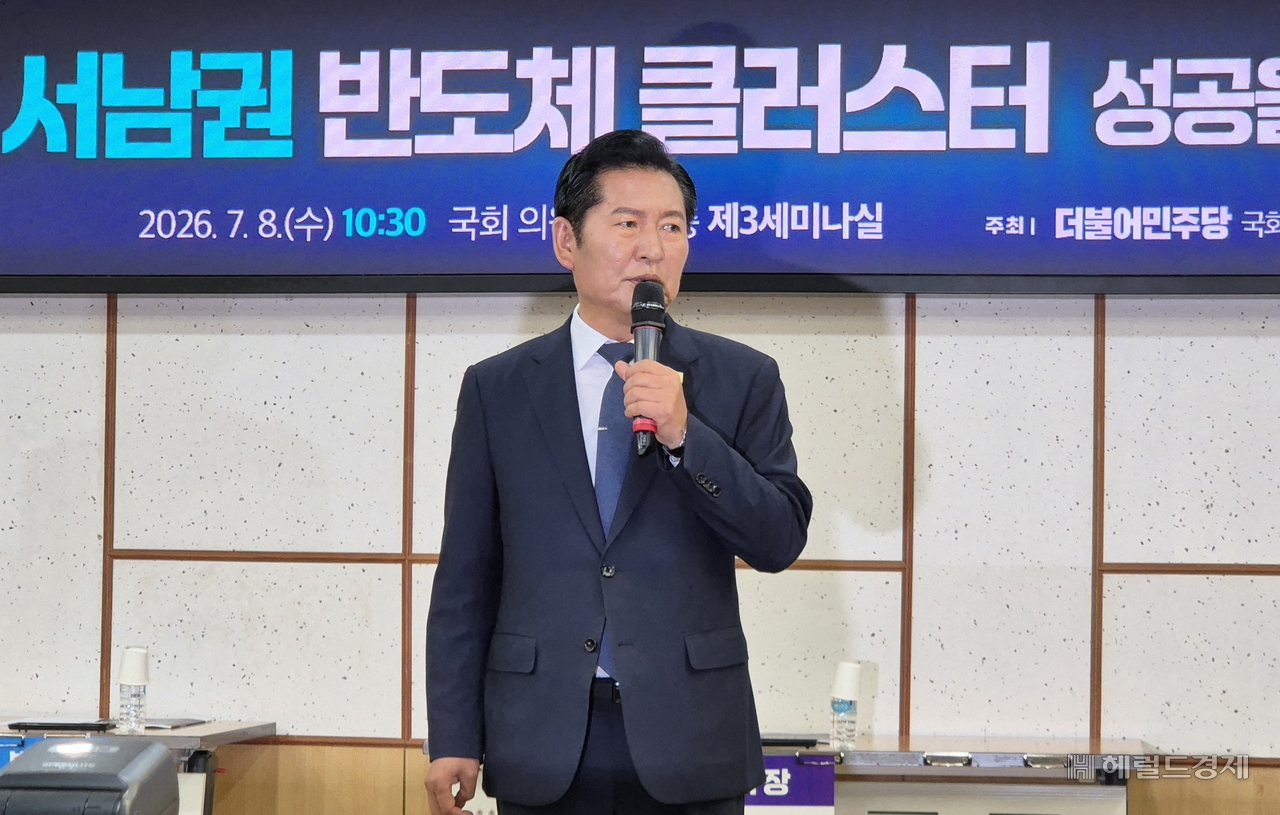
With the Gwangju military airfield selected as the site for a southwest semiconductor cluster where Samsung Electronics and SK hynix plan to invest 800 trillion won ($524 billion), experts are calling for all administrative procedures — including environmental impact assessments and permits for power, water, roads and construction — to be bundled into a single package and handled simultaneously by a dedicated local government unit.
Processing the various permits sequentially, as in the past, would make it impossible to meet the government's stated goal of completing the cluster by 2030, experts warned. They urged the southwest cluster to pursue an aggressive, fast-track approach, drawing lessons from the Yongin cluster in Gyeonggi Province, which took six years from site confirmation to actual ground-breaking.
Sequential permitting won't work — parallel fast-track approach needed
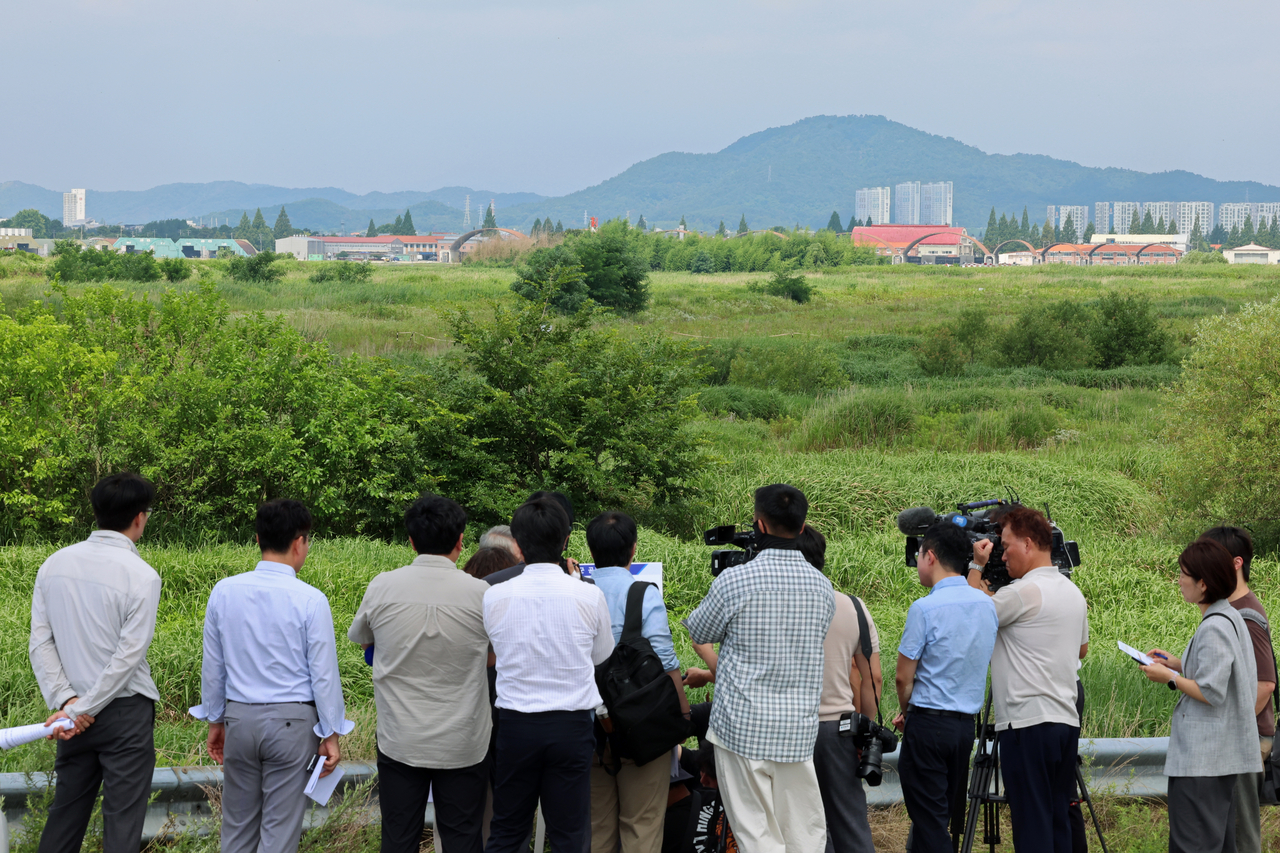
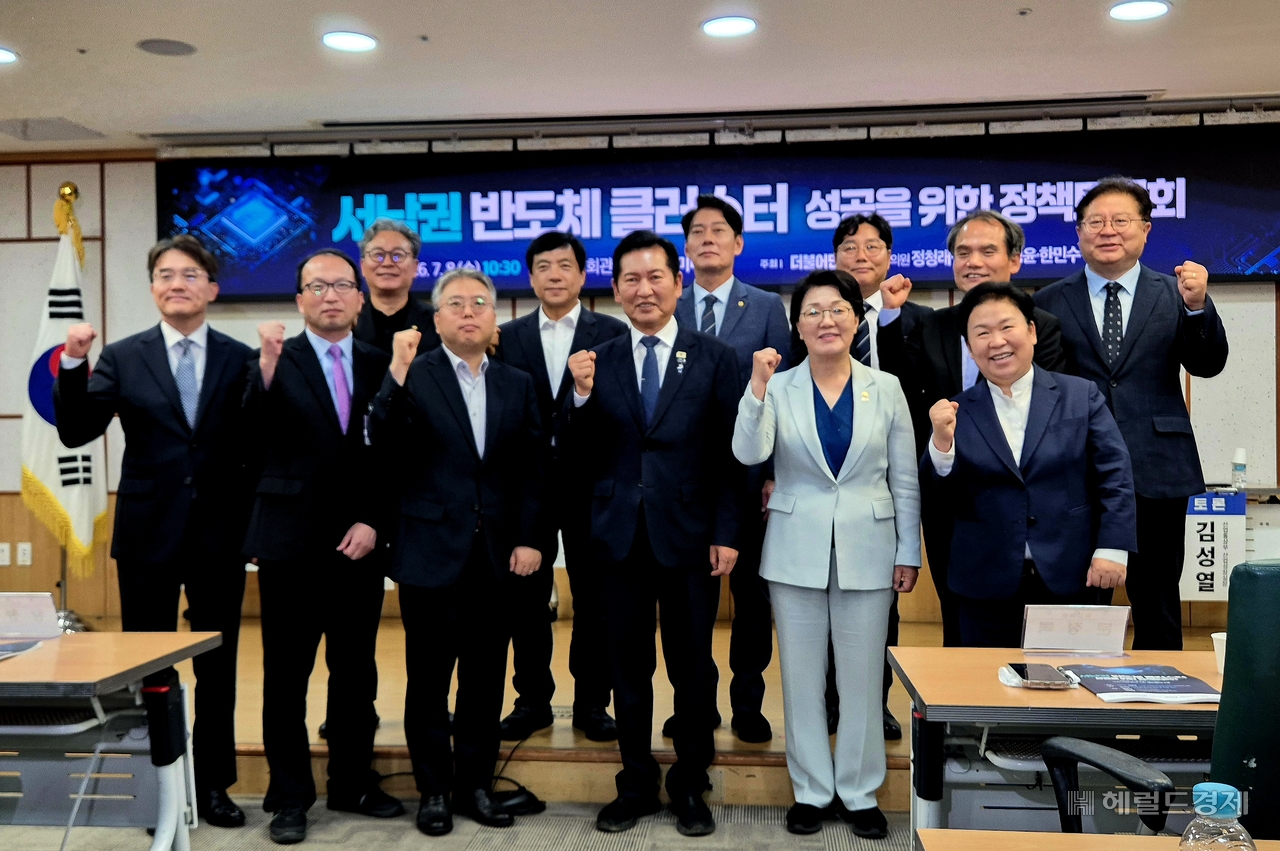
Democratic Party of Korea lawmaker Jung Chung-rae hosted a policy forum titled "For the Success of the Southwest Semiconductor Cluster" on Wednesday morning at the National Assembly Members' Office Building in Yeouido, Seoul.
Kim Sang-muk, a division head at the Korea Photonics Technology Institute, delivered the keynote address and laid out six conditions for the cluster's success: site, power and water supply, residential environment, talent development, and materials-parts-equipment supply chain — and said all five must be pursued simultaneously.
"Speed is what matters," Kim said. A dedicated one-stop permitting unit should be established in the integrated special city of South Jeolla Province and Gwangju, he added, with explicit response deadlines set for every step from industrial complex designation to construction permits.
TSMC's factory in Kumamoto Prefecture, Kyushu, Japan, is widely cited as a benchmark for fast-track semiconductor fab construction. Announced in November 2021, it broke ground the following April and was completed in February 2024 — just 22 months later.
The Yongin cluster, by contrast, was beset by delays in transmission line construction and land compensation procedures. SK hynix took six years to break ground, and Samsung Electronics has yet to complete its land compensation process.
'Power is about timing' — grid infrastructure must come before fab construction
Kim said Wednesday that the cluster must combine "Kumamoto's speed" with "Yongin's lessons," bundling land, permits and infrastructure into a single package to be pursued in parallel rather than in sequential stages, cutting the overall timeline as much as possible.
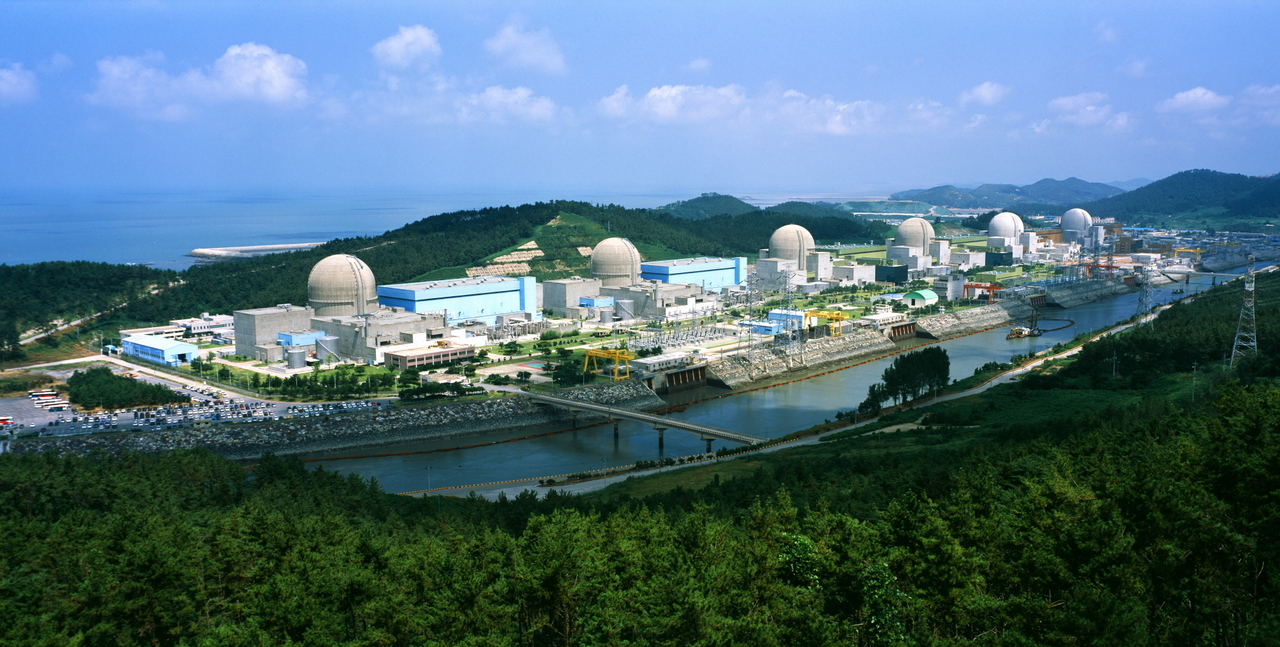
He particularly urged that the power grid — including substations and transmission lines — be built before semiconductor fab construction begins. The priority, he said, is the early construction of the Sinjangseong substation in Jangseong-gun and 345kV transmission lines to deliver power from the Hanbit nuclear power plant in Yeonggwang-gun and renewable energy from the offshore wind complex in Sinan-gun to the Gwangju cluster.
The four semiconductor fabs planned for the Gwangju industrial complex — two by Samsung Electronics and two by SK hynix — will require approximately 6.3 gigawatts of power, making large-scale transmission infrastructure and substation construction essential.
"Getting the grid built on time matters more than securing the total power volume," Kim said. "Substations and transmission lines must be built proactively, before the fabs go into operation." He pointed to the Yongin cluster, which continues to struggle with community opposition to transmission tower construction, as a cautionary example.
International schools, company housing needed to keep workers' families in the region
Kim also addressed talent acquisition, another factor that will determine the project's success. In the early stages, the focus should be on "regional settlement" rather than "training," he said, with international schools, gifted high schools, medical facilities and company housing complexes built quickly so that employees and their families can put down roots in the area.
With each semiconductor fab requiring roughly 3,000 workers, the four fabs planned for the Gwangju complex will need a total workforce of 12,000.
"Expanding university enrollment alone is not enough," Kim said. "A talent pipeline must be built in the region, broken down by specific job function."
He outlined a tiered approach: semiconductor specialized high schools and meister schools in the Honam region would train frontline workers; four-year universities such as Chosun University and Suncheon National University would produce process, quality and yield engineers; and Chonnam National University, GIST and the Korea Photonics Technology Institute would develop advanced research and development personnel at the master's level and above.
Maeng Jong-seon, a professor at Chonnam National University's Semiconductor Joint Research Institute, proposed that universities in the Honam region jointly build a shared fab to provide hands-on, industry-aligned education. The measure is intended to prevent a mismatch between rapidly evolving industry technology trends and what is being taught in classrooms.
"It is impossible for a single university to have its own clean room," Maeng said. "Universities in the Honam region must join forces to set up a shared fab and develop practically trained local talent."
Materials, parts and equipment suppliers to co-locate — building a complete regional supply chain
Kim said a strategy is needed to bring materials, parts and equipment companies that support Samsung Electronics and SK hynix into the Gwangju industrial complex alongside the chipmakers, in order to build a stable supply chain.
"A supplier cooperation zone should be established near the fabs, and partner companies should be selected and placed based on the actual procurement needs of Samsung Electronics and SK hynix," he said.
He cited SK hynix's Yongin cluster as a reference case. SK hynix has committed to building Trinity Fab, a testbed at the Yongin cluster that replicates actual mass production conditions, for use by materials, parts and equipment companies.
The facility was conceived in response to calls for a testing environment equivalent to a real production line, so that supplier companies can quickly adapt to advanced technologies. Suppliers will be able to use it to run verification tests on their own products and confirm mass-production readiness.
"Local suppliers must be integrated into the supply chain to maximize the economic ripple effect on the region," Kim said.
joze@heraldcorp.com