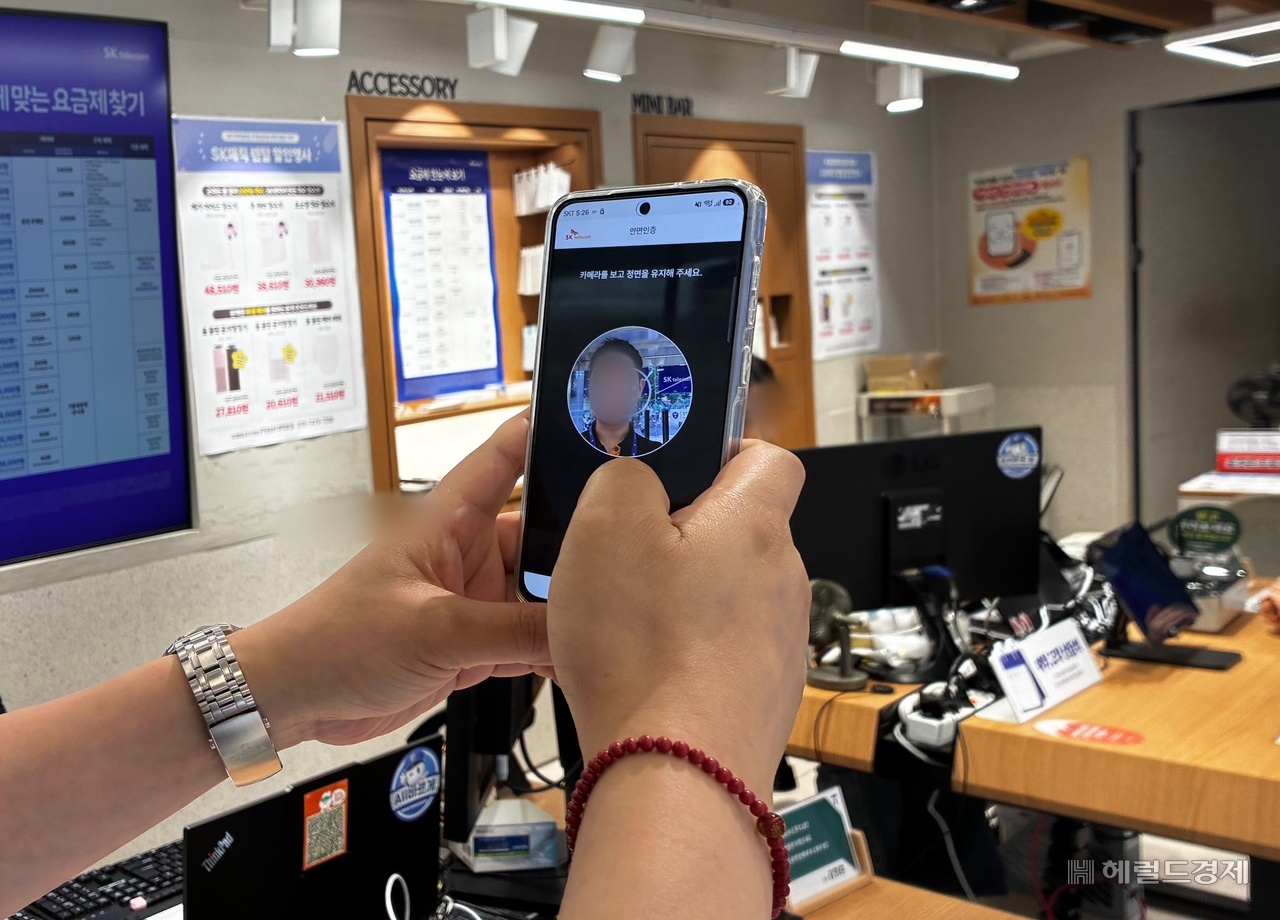
"Tilt your head up. Now turn to the right."
At a mobile carrier store near Jonggak Station in Jongno-gu, Seoul, on Tuesday afternoon, Park Chang-hun, 53, scanned a QR code handed to him by a store employee, then slowly turned his face up, down, left and right in front of his phone's camera as prompted on screen. The system failed to match his face to his national ID photo. It took five attempts before the verification finally went through.
"My national ID is more than 15 years old," Park said with an embarrassed laugh. "I've put on a lot of weight, so it kept saying I wasn't the same person. It was inconvenient, but there was nothing I could do."
As of Monday, anyone signing up for a new mobile plan or switching carriers must complete an additional identity check on top of presenting a physical ID — either through facial recognition, a mobile ID, or a same-day-issued resident registration abstract. The requirement is designed to prevent fraudulent activation of burner phones through identity theft and to curb voice phishing crimes.
During the first week of the new system, reporters visited carrier-owned stores and authorized dealers across Jongno-gu and found a common refrain: explaining the process takes longer than the verification itself. Customers worried about privacy were already looking for ways to avoid facial recognition altogether.
Explaining the rules takes longer than the check itself
At an SK Telecom store in Jongno-gu, an employee said the facial recognition step itself was not difficult, but the time spent explaining why it was required had grown considerably. The store had been running a pilot of the system for a month, yet customer questions had not let up.
"Most people just go along with it, but some ask why we need their face, or whether their data could be leaked," the employee said. "With iPhones, the connection sometimes drops during verification, so we help using a staff phone — and then some customers get suspicious and ask why we're using our own phone." The employee added that more public guidance from the government or carriers on the purpose of the requirement would be welcome.
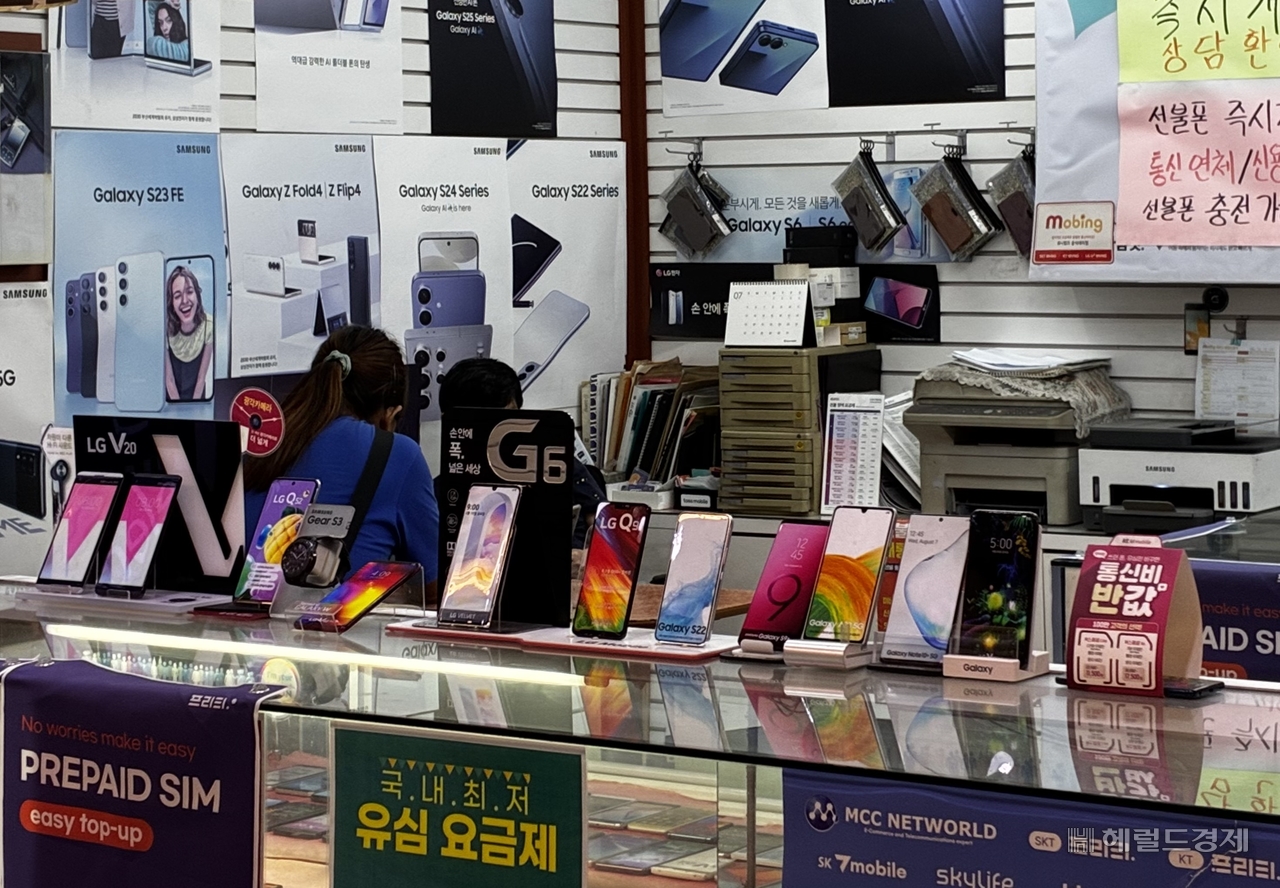
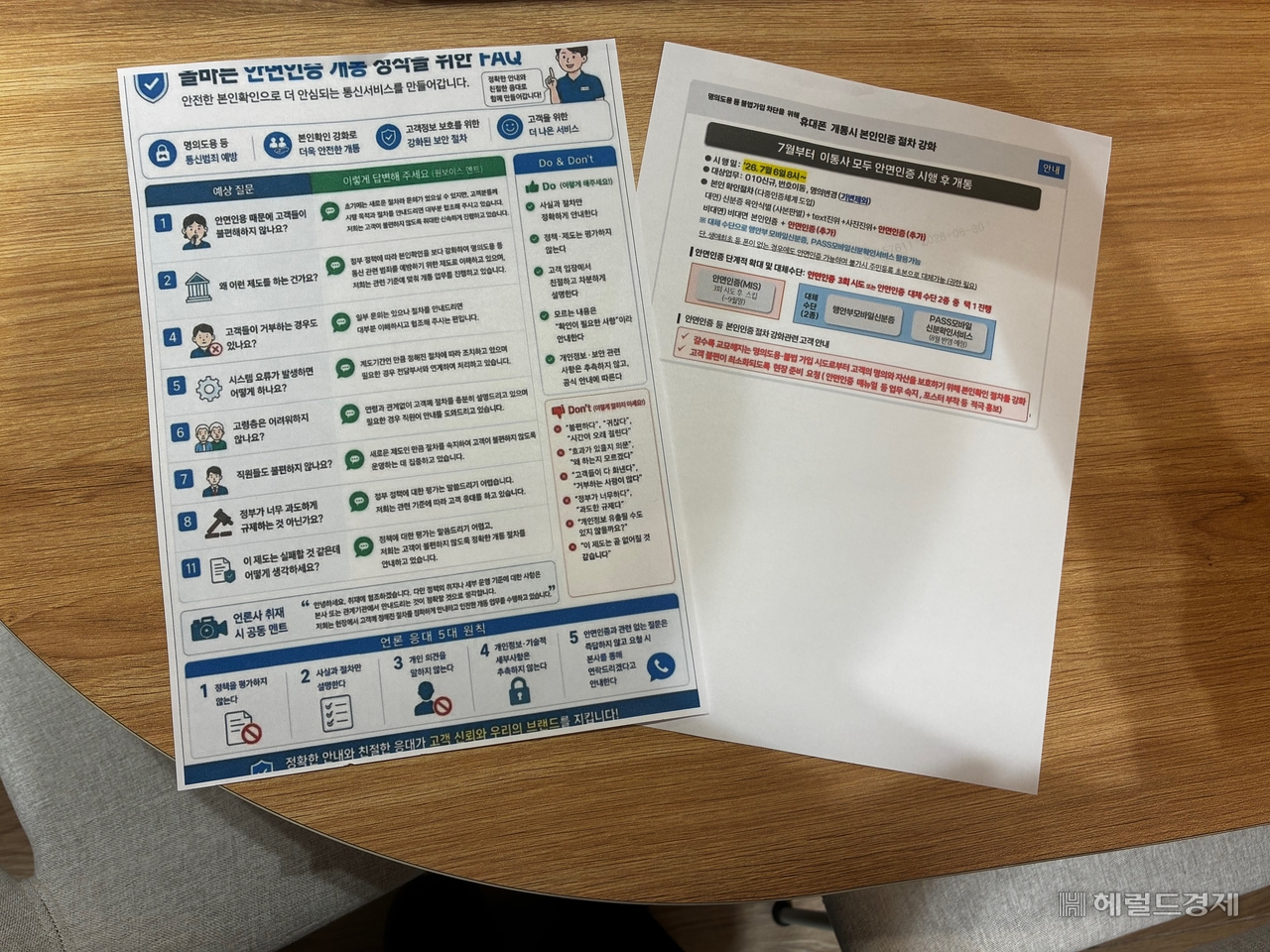
The scene was similar at the KT Corp Plaza Gwanghwamun Central branch in Jongno-gu, where employees kept printed procedure manuals on hand to avoid mistakes. "We're still not used to it ourselves, so we're working off the paper," one employee said. "There aren't that many customers activating new phones in person, so it will take a little more time to see the real effect."
Customer reactions were mixed. A man in his 40s, identified only by his surname Kim, removed his hat and completed the facial recognition on his third attempt. "I kept asking where my face data would be used and whether it was being stored," Kim said. "I had a plan consultation too, but between all my questions and concerns, it ended up taking nearly three hours."
At a nearby store, a man in his 70s gave up on his activation because his national ID was too old. Told that the photo on his card was too outdated for a reliable face match and that he would need to obtain a new ID first, he turned and left. "I waited an hour and now they're telling me to come back — it's maddening," he said.
Some customers who brought a resident registration abstract as an alternative to facial recognition also left empty-handed. "One customer came in with an abstract because they didn't want to do facial recognition, but it hadn't been issued that day, so we couldn't accept it under the rules and they just went home," an employee at a store near Gwanghwamun Station said.
From mobile IDs to workarounds: customers adapt quickly
Many customers at the stores visited were actively seeking alternatives to facial recognition. Hong, 24, who came to a carrier-owned store near Hyehwa Station in Jongno-gu on Wednesday to activate a new phone, used a mobile ID for verification instead.
"My friends told me in advance that facial recognition would be required, so I knew about it," Hong said. "A mobile ID works just as well, and I didn't want to hand over my face data if I didn't have to." He added that most of his friends felt the same way. "The general feeling among people I know is that you can just use a mobile ID and skip the facial recognition."
Lee Seung-min, 27, an office worker who stopped by a store after work to switch carriers, said he had not known facial recognition was required. "They told me a mobile ID would also work, so I went with that," he said. "Deepfake crimes are so common these days, and facial data is sensitive — I figured it was better not to share it if I had a choice."
Store managers and employees described the same trend. "A lot of younger customers these days come in with a mobile ID ready specifically to avoid facial recognition," one store manager said. "The ones who just bring their physical ID are mostly older customers." Another employee said roughly half of recent activation customers had been unaware of the new system, while those who had known about it in advance almost all chose the mobile ID option.
Online communities have already begun sharing tips on how to avoid facial recognition. Posts on various forums include advice such as: "Use a mobile ID and you won't have to do facial recognition"; "I activated through a budget carrier's self-service portal and there was no facial recognition"; and "I deliberately triggered the verification error several times."
The new system was introduced in response to growing identity-theft concerns following a SIM card data breach. Both the Personal Information Protection Commission and the National Human Rights Commission of Korea had earlier raised concerns that the mandatory facial recognition process needed stronger safeguards for biometric data handling and personal information protection.
Hwang Jin-ju, a professor of consumer studies at Inha University, said the intent behind the policy was sound. "Since mobile phones are the starting point for financial identity verification, blocking identity theft at the activation stage is meaningful," she said. "But all three options — facial recognition, mobile ID, and a same-day resident registration abstract — require advance preparation, which increases the burden on consumers, and could become a barrier to entry particularly for those who are less digitally literate."
Lee Hong-ju, a professor of consumer economics at Sookmyung Women's University, said the reluctance toward facial recognition reflected a psychological resistance among consumers who felt they were being asked to hand over sensitive biometric data to carriers again, so soon after the SIM hacking incident. "Unlike a password, your face cannot be changed, and that fear of losing control is also a factor," Lee said.
Lee added that while the policy's intent was valid, it was worth considering whether a more targeted approach — strengthening verification only in cases where the risk of identity theft is high — might be preferable to applying the same requirement uniformly to all users. "Alongside stronger security, it is important to build trust and provide explanations that consumers can actually accept," Lee said.
jookapooka@heraldcorp.com
snsd@heraldcorp.com