Yanggu-gun is considered one of the most remote corners of Gangwon Province, itself the least densely populated province in South Korea, with just 90 people per square kilometer.
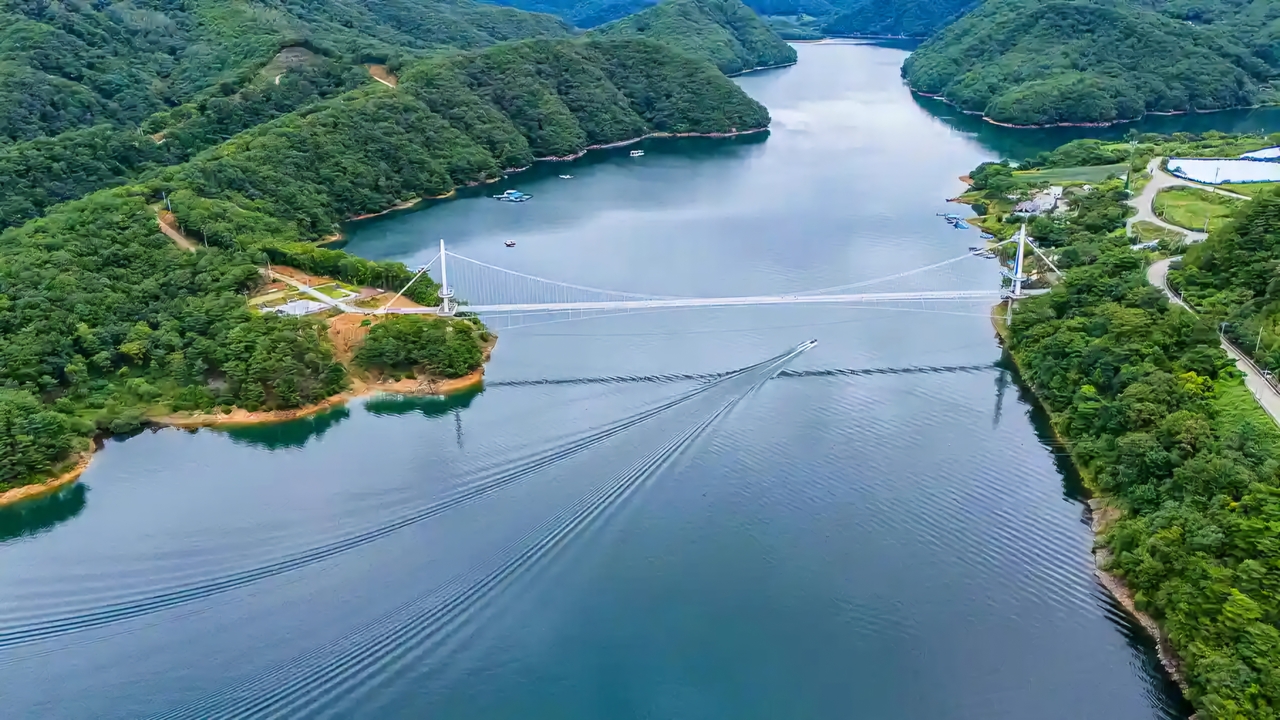
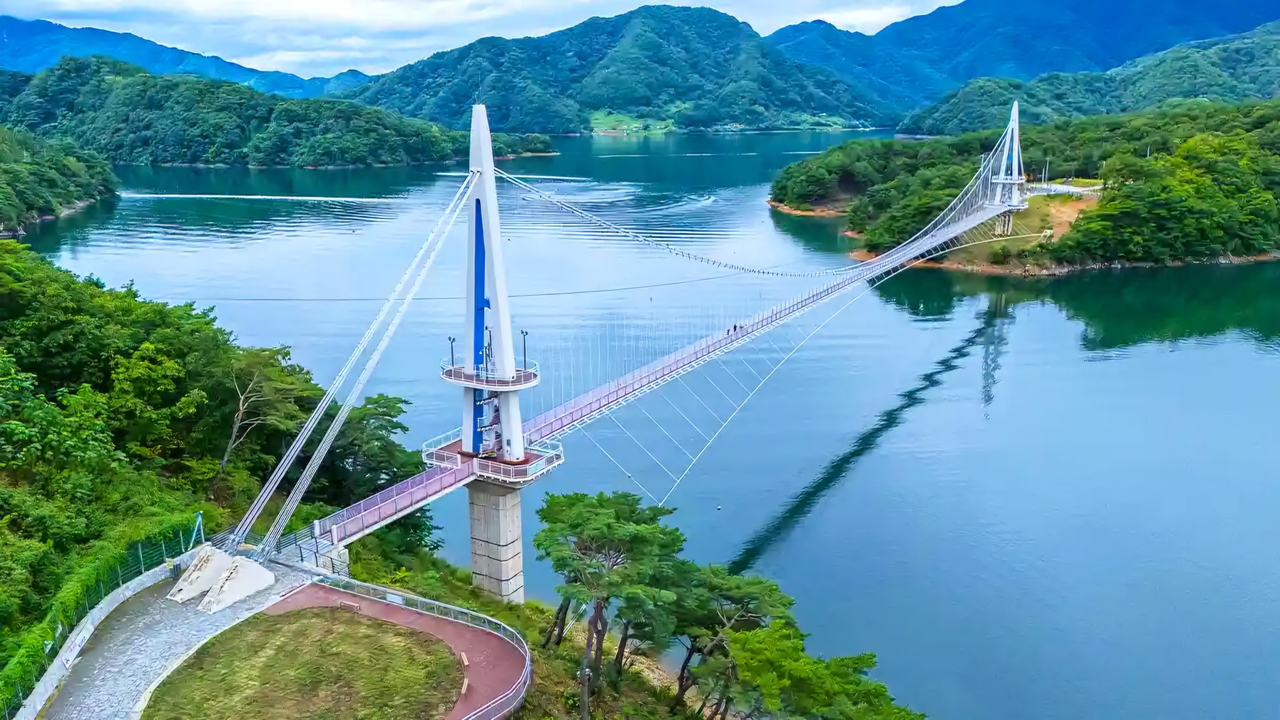
Even within Yanggu-gun, the village of Sangmuryong-ri sits deep in the backcountry — and it is here that a 335-meter suspension bridge spans the water. The bridge entrance is at 1719-21 Gancheok Wolmyeong-ro, Yanggu-eup, Yanggu-gun. Sangmuryong-ri (Section 2) lies on the far side of that entrance.
Of the two Muryong settlements — upper (Sang) and lower (Ha) — the lower village, where prehistoric relics were excavated and relocated, lost enough residents that it never gained official administrative status. Only Sangmuryong-ri remains.
Sangmuryong 1-ri sits along the upper reaches of Paro Lake, while Sangmuryong 2-ri — represented by the hamlet known as Seoho Village — occupies the middle stretch. Downstream, where the water flows toward the Han River, lies Gumalli in Hwacheon.
The name Muryong — literally "a dragon dancing" — was inspired by the lay of the land. In earlier times, the several peninsulas jutting into the lake were said to resemble mortars, and the hamlets were nicknamed "big mortar" and "small mortar." But the image of a dancing dragon eventually won out, and the name Muryong stuck.
![The configuration of water and mountains around Sangmuryong-ri, Yanggu-gun [Source: Naver Maps]](https://wimg.heraldcorp.com/news/cms/2026/07/11/news-p.v1.20260711.59b5bb1d59024a46ba2485f922de5eb6_P1.jpg)
After the Hwacheon Dam was completed in 1943, even the shape of the waterway came to resemble a dragon in motion.
The Sangmuryong suspension bridge will reopen Tuesday, 141 days after it was closed. During a post-thaw safety inspection on Feb. 23, workers discovered that bracket joints had begun to spread apart. Authorities immediately restricted access to prevent accidents and carried out a full repair. All inspection and repair work is set to be completed Monday.
The bridge serves a dual purpose: it draws tourists, but it also functions as a vital crossing for the residents of Seoho Village, one of the most isolated communities in the country.
After the construction of the Hwacheon Dam submerged the overland road, Seoho Village residents spent 78 years ferrying themselves back and forth by private motorboat between their homes and the town center. In winter, when the lake froze over, the village was routinely cut off entirely.
The village once had enough residents to support an elementary school annex, but today only about 30 people live there, including those who visit only on weekends. The community occasionally holds photo exhibitions documenting the remote village's past, for former residents and travelers alike.
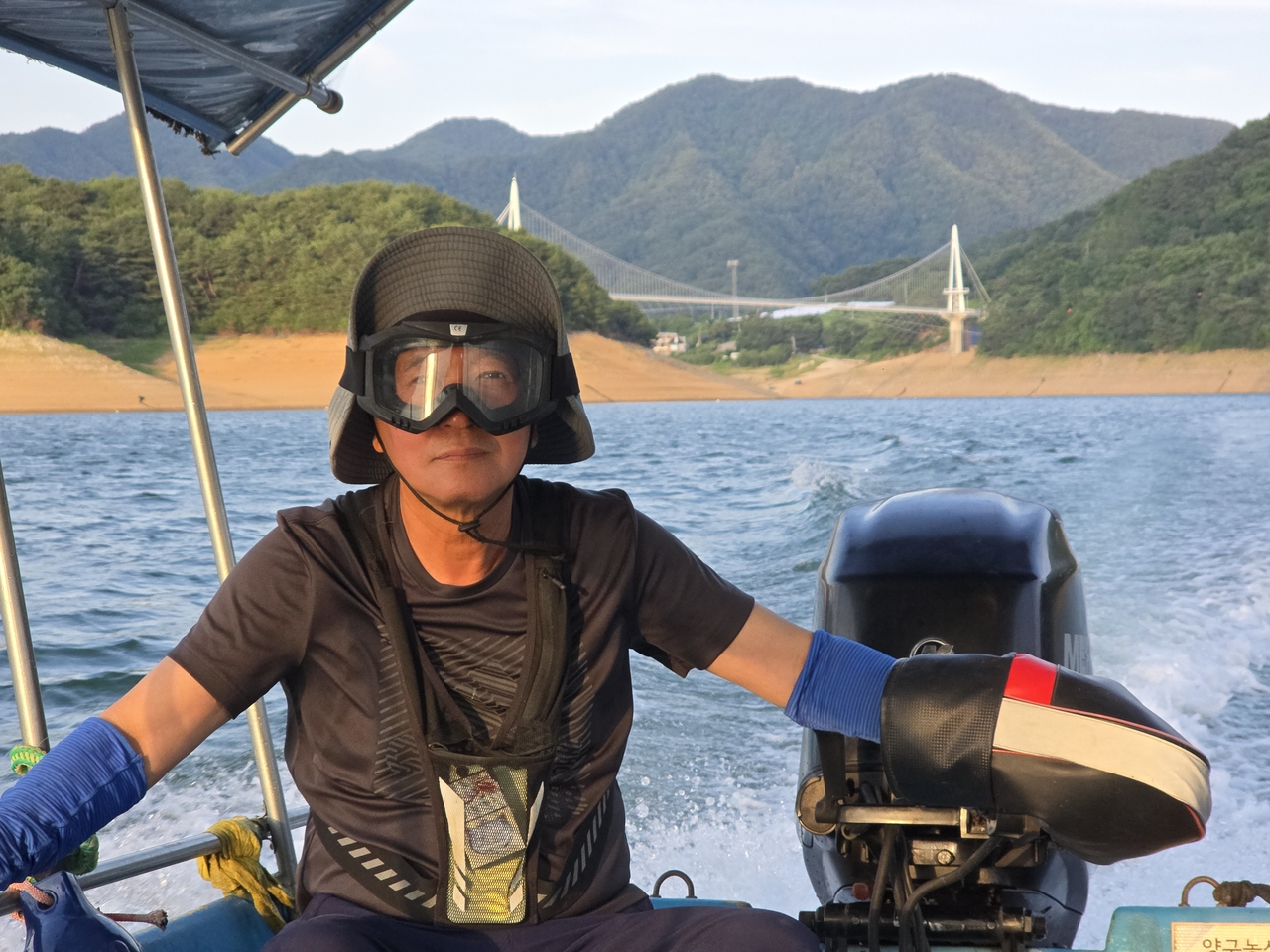
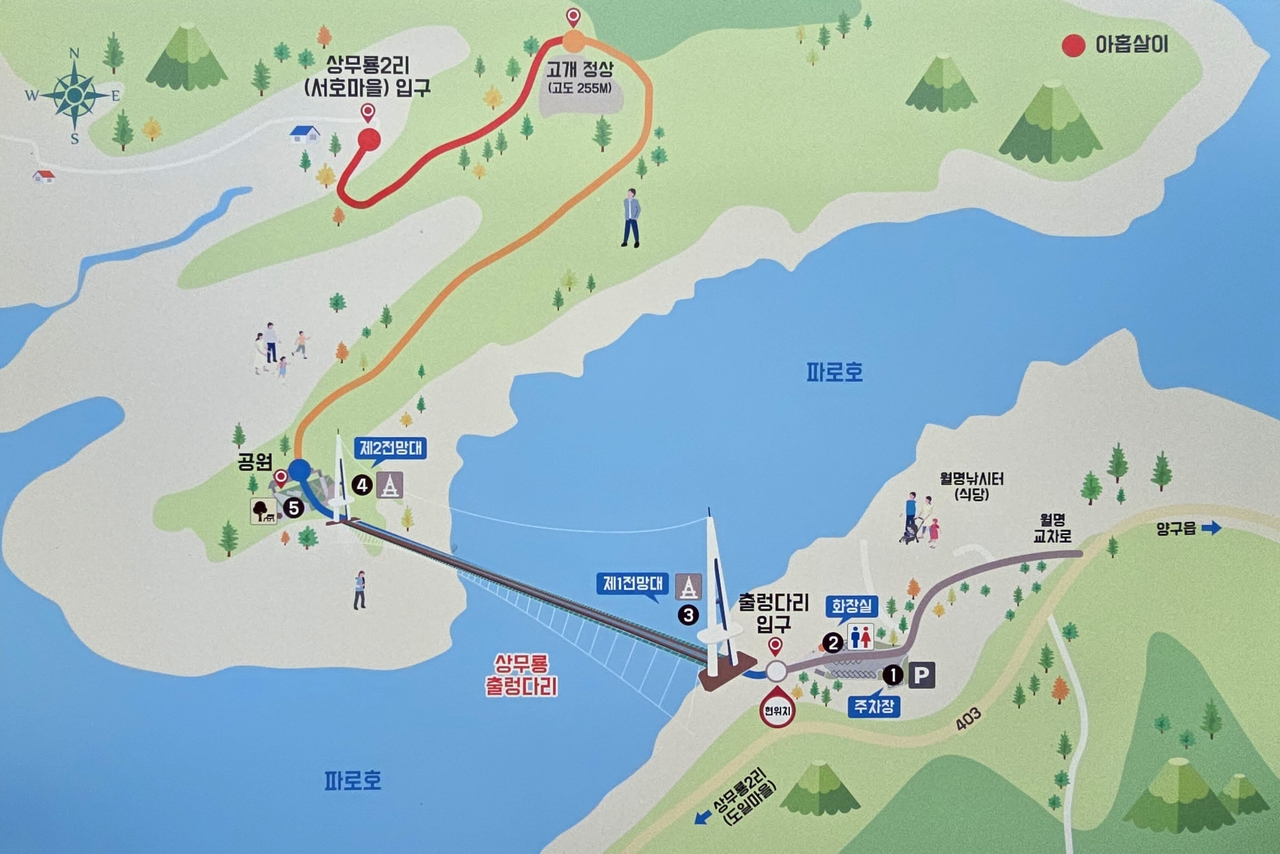
Even after the bridge was built, residents still face a 20-to-30-minute walk just to reach the entrance, and another 10 minutes — including crossing the bridge — before they hit the first road toward town. Many villagers continue to rely on their boats.
For visitors, however, the bridge crossing, a stroll through the village, and a walk along the ecological trail can all be done comfortably within an hour, making it an ideal destination for a walking trip.
Sangmuryong 2-ri also holds the site of a former villa used by President Syngman Rhee. From the bridge, visitors can spot the childhood home of broadcaster Lee Deok-hwa, who was known for his skilled fishing on the Channel A variety program "City Fisherman" and who reportedly wept at the sight of his father's house there.
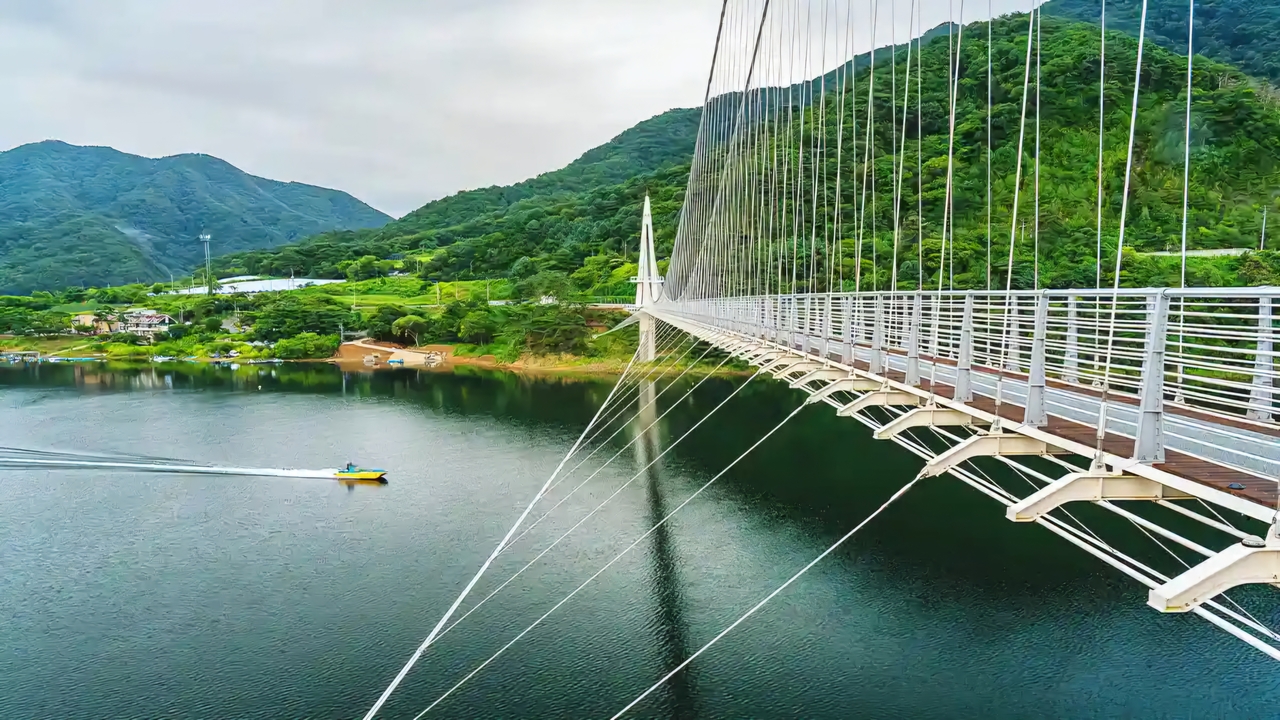
The area is renowned as a fishing spot so rich that the local joke — "half water, half fish" — feels less like a joke and more like a literal description.
The Sangmuryong suspension bridge opened in 2022 at a total cost of 13 billion won ($8.67 million), funded by 7.8 billion won in national government funds and 5.2 billion won from the county. It was designated the eighth of Yanggu-gun's nine scenic landmarks. The nine landmarks are Yanggu Arboretum, Korean Peninsula Island, Dutayeon, the Park Soo-keun Art Museum, the White Porcelain Museum, Punchbowl, Bonghwasan, the Sangmuryong suspension bridge, and Gwangchi Valley.
The pedestrian-only suspension bridge measures 335 meters in length with main towers rising 36 meters, connecting Wolmyeong-ri in Yanggu-eup with Seoho Village in Sangmuryong 2-ri. Admission and parking are both free.
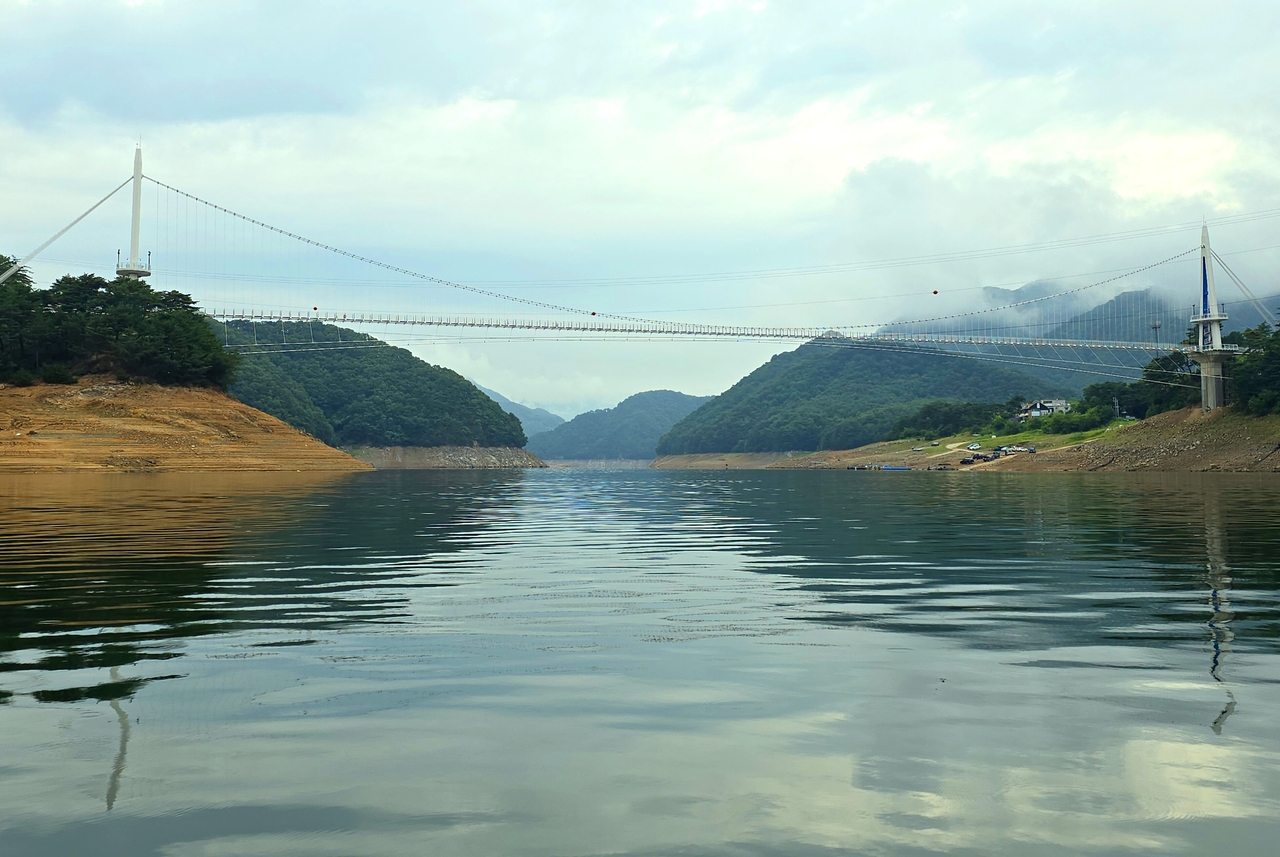
Locals boast that Sangmuryong 1-ri and 2-ri hold scattered glimpses of Ha Long Bay, the world-famous Vietnamese seascape.
With the lower slopes of the hills submerged, only rounded peaks rise above the waterline, and their reflections on the glassy lake create a striking natural symmetry.
Residents and visitors have called for improvements, however: new food options such as a local restaurant and a makgeolli tavern, additional restroom facilities, and permission to bring pets. There are also growing complaints that Yanggu-gun built the bridge but paid too little attention to developing the surrounding travel ecosystem.
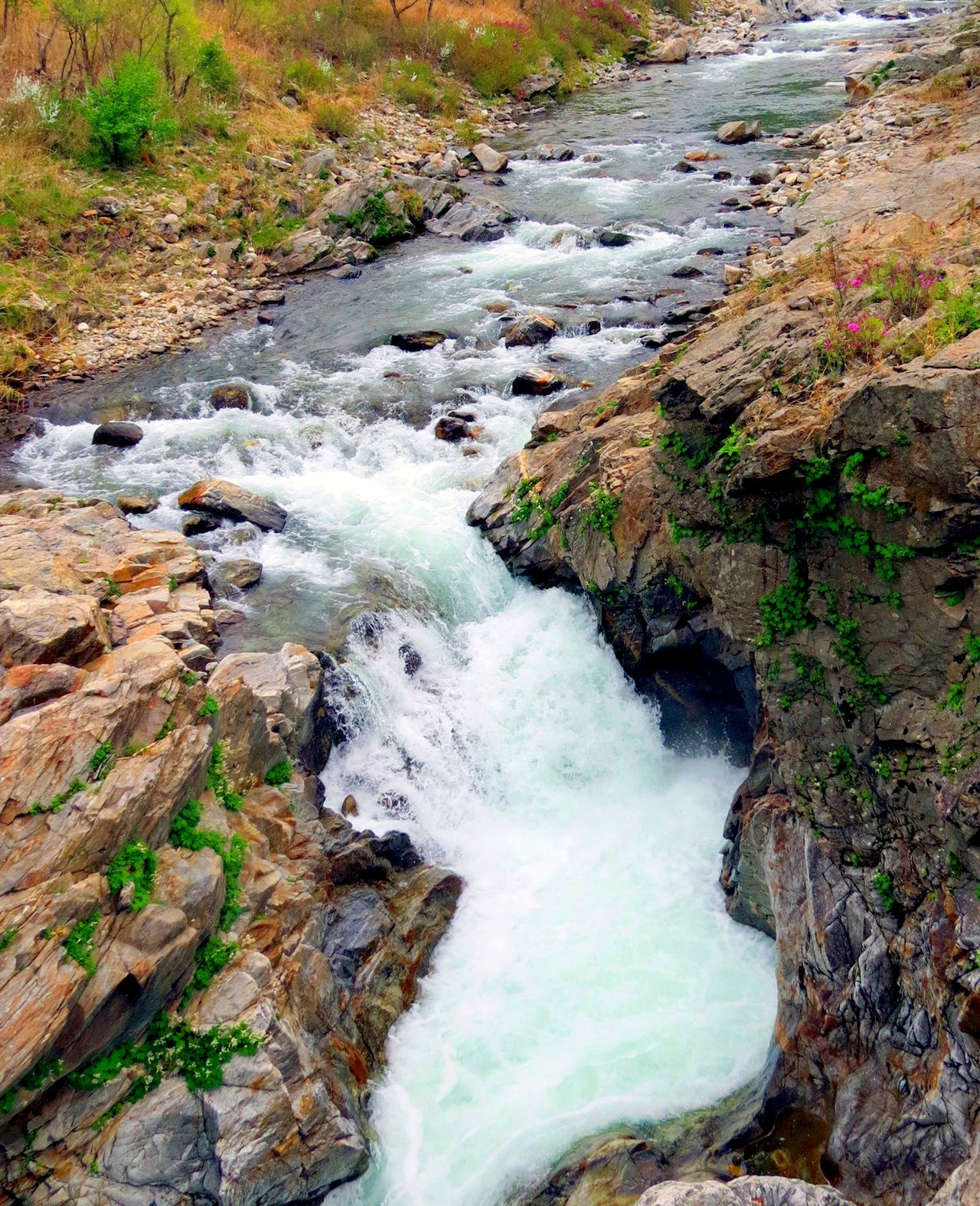
Around the bridge, visitors will find Wolmyeong Fishing Spot — a guide to the fish-rich waters — along with Samyeongsan and its hiking trails, the Paro Lake national ecological and cultural trail, Suipcheon stream, Paseoktang, Ungjin Valley Forest Campground, Cheongchun Park, and a northern-style dolmen from the Yanggu area.
Paseoktang lies on the Sangmuryong 1-ri side of the lake — administratively part of Omi-ri in Bangsan-myeon — and is where the clear waters of Dutayeon, fed by streams from Geumgangsan, gather just before flowing into Paro Lake.
From mid-July onward, a visit to Sangmuryong in Yanggu offers the rare pleasure of one of Korea's last true backcountry landscapes — the thrill of pulling fish from waters that seem to teem with them, and the quiet satisfaction of discovering a hidden natural gem.
abc@heraldcorp.com