
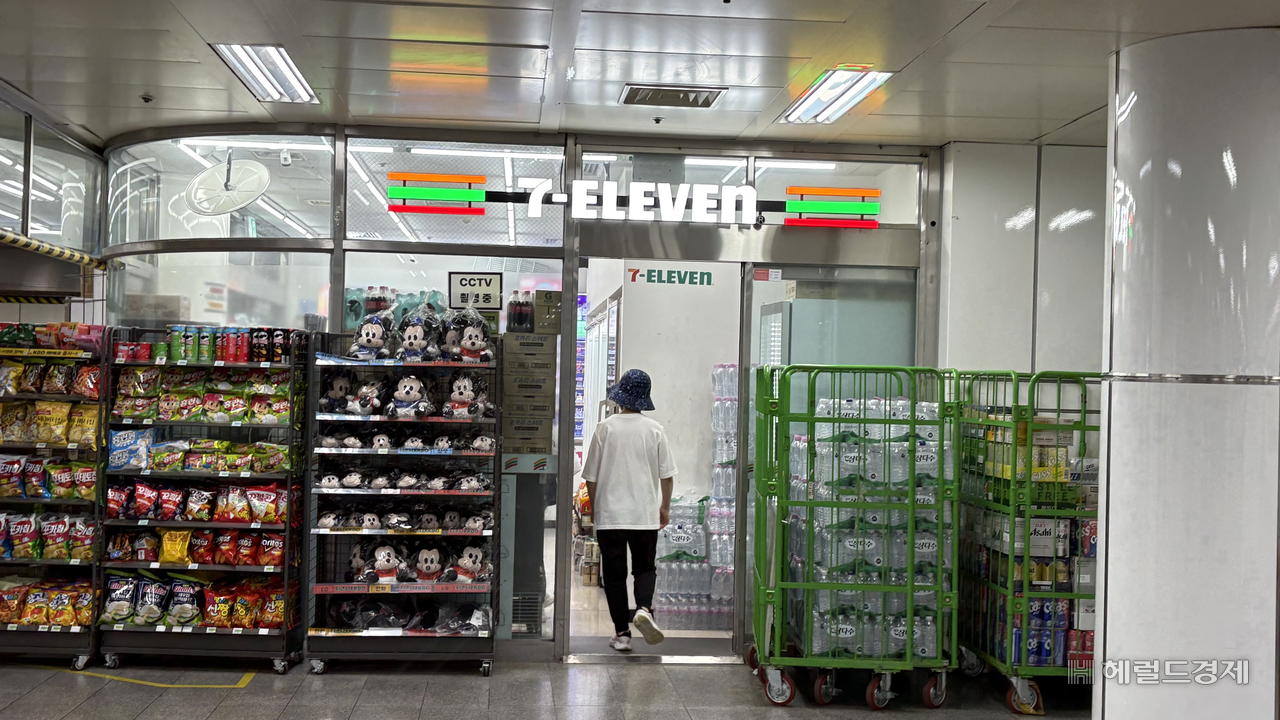
Japan's SoftBank is considering an investment worth trillions of won in Seven & i Holdings, the parent company of the Seven-Eleven convenience store chain. The move is part of a strategy to build its own economic ecosystem by linking the chain's dense nationwide store network with telecom, payment and loyalty point services.
SoftBank and its mobile payment subsidiary PayPay are each weighing investments of 100 billion yen ($616 million) and about 930 billion won, respectively, in Seven & i Holdings, the Nikkei reported Saturday.
Sumitomo Mitsui Card, an affiliate of Sumitomo Mitsui Financial Group, is also exploring joining the investment. If all three companies participate, the total investment could reach as much as 300 billion yen, or about 2.8 trillion won.
SoftBank's interest in Seven & i Holdings centers on Seven-Eleven's physical retail footprint. The chain operates more than 22,000 stores across Japan — locations SoftBank could use to recruit telecom subscribers, expand financial services and broaden the network of outlets where PayPay points can be redeemed.
Convenience stores in Japan function less as simple retail outlets and more as everyday lifestyle infrastructure. By bundling payment, loyalty points and telecom services at stores consumers visit daily, SoftBank could keep customers inside its own ecosystem longer.
AI cooperation is another pillar of the investment discussions. SoftBank could apply AI technology to Seven-Eleven's operations to improve inventory management, ordering, customer analysis and in-store efficiency. For Seven-Eleven, automating operations through AI and robotics is an increasingly pressing challenge as labor shortages worsen.
Japan's retail industry has been grappling with growing pressure from an aging population and labor shortages, which have made overnight operations, logistics and store management increasingly burdensome. The convenience store sector's push to accelerate automation — through self-checkout machines, robot delivery and AI-powered ordering systems — reflects that broader trend.
For Seven & i Holdings, the investment would also mean securing a stable shareholder base. The company received a takeover bid from Canadian retailer Alimentation Couche-Tard in 2024 and has since been charting an independent course. It is also pursuing an initial public offering of its subsidiary Seven-Eleven Inc.
Couche-Tard withdrew its acquisition offer last year. With Seven-Eleven's value having gained recognition in the global convenience store market, Seven & i Holdings still faces the twin challenges of stabilizing management control and securing capital for growth investment.
The combination of a telecom carrier and a convenience store chain has already taken shape once in Japan. Major telecom operator KDDI spent about 500 billion yen in 2024 to launch a tender offer for shares in the Lawson convenience store chain, ultimately acquiring a 50 percent stake and forming a joint management structure with Mitsubishi Corp., which holds the remaining shares.
KDDI has since pursued a strategy of bundling telecom, convenience store and loyalty point services — offering Lawson coupons to its telecom subscribers, for example. SoftBank's consideration of an investment in Seven & i Holdings is closely tied to that competitive dynamic.
The investment discussions signal that Japan's convenience store industry is being reshaped from a simple retail business into a platform integrating telecom, finance and AI. Should SoftBank's telecom, payment and AI capabilities be combined with Seven-Eleven's store network, competition over Japan's "convenience store economy" is expected to intensify further.
kwater@heraldcorp.com





