![A Korean Air mechanic performs maintenance work on an aircraft. [Korean Air]](https://wimg.heraldcorp.com/news/cms/2026/07/14/news-p.v1.20260714.f11d73866395472cbdf4faf8f5a98c23_P1.jpg)
Korean Air and Posco are actively expanding continued-employment models that screen retiring workers by skill level and job suitability — preserving operational competitiveness while keeping capacity to hire younger workers. Unlike a simple retirement-age extension that merely delays when workers leave, the approach is seen as a more efficient alternative because it retains only the personnel a company actually needs.
Korean Air rehires 178 — aviation technicians lead the way
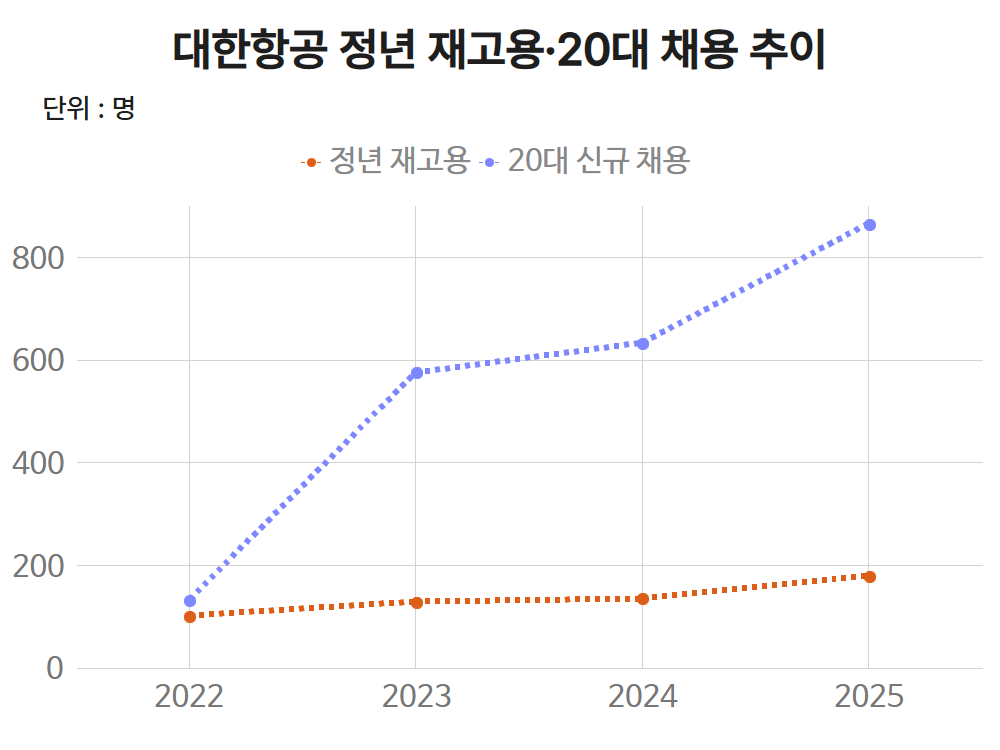
Korean Air's post-retirement reemployment numbers have consistently grown, rising from 100 in 2022 to 127 in 2023, 134 in 2024 and 178 last year, according to industry sources.
By job category, aviation technology accounted for the largest share last year at 72, followed by flight operations at 46, aerospace at 28 and other roles at 32. Reemployed workers are concentrated in fields where qualifications and hands-on experience matter most — aircraft maintenance, flight operations and the aerospace business.
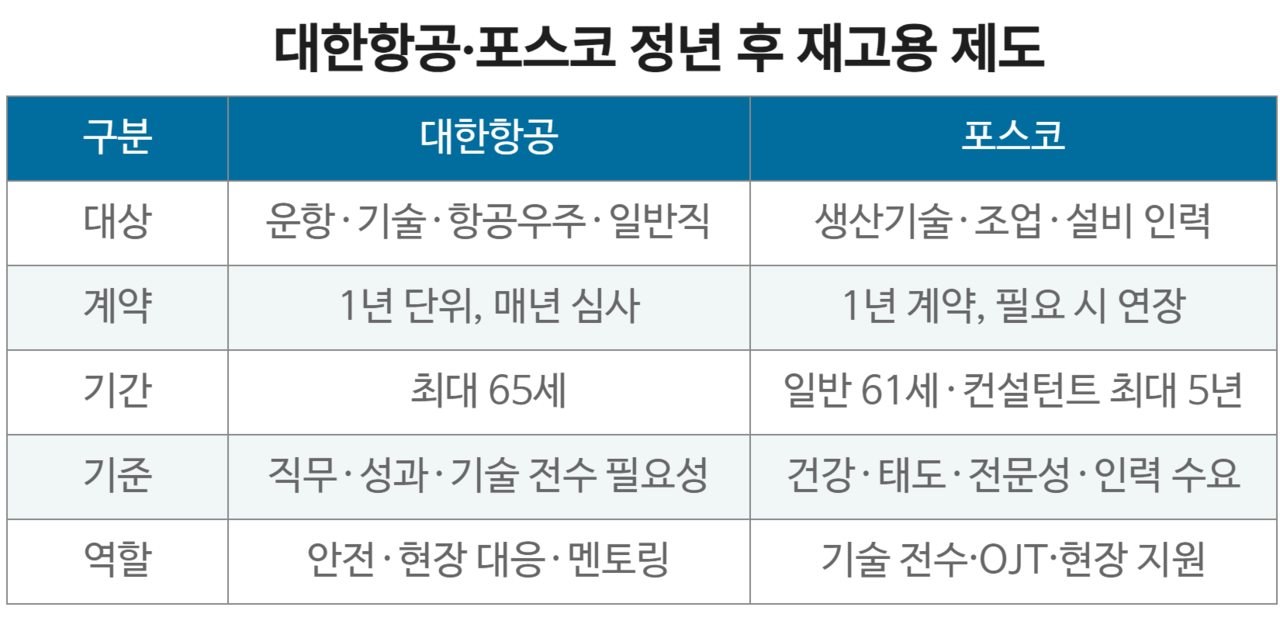
Korean Air's post-retirement reemployment system brings back veteran workers with deep expertise and field experience. Contract terms vary by job type but are typically renewed annually, with extensions possible up to age 65 subject to annual review. The selection process weighs work history, performance evaluations, contributions to mentoring junior staff and overall diligence.
The program originally focused on technical and flight-operations roles requiring deep specialization, but it has recently expanded to general administrative positions as well. Experienced workers are now deployed in areas such as passenger transport, cargo and operations control — roles that demand seasoned on-site judgment — where they help minimize customer disruption during irregular situations such as bad weather or flight delays.
The aviation industry is characterized by a large share of safety-critical work and the difficulty of replacing skilled personnel on short notice. Maintenance workers need considerable time to master the structural and equipment specifics of each aircraft type, and flight crew members must accumulate years of training and flying hours. Korean Air's practice of screening retirees by job category before rehiring them directly reflects these industry realities.
The mentoring effect is also significant. Rehired workers serve as senior mentors on the floor, passing on decades of practical experience and know-how to junior colleagues. The arrangement goes beyond filling staffing gaps — it creates a virtuous cycle that raises the stability and quality of aviation service.
Korean Air said it operates the post-retirement reemployment system "so that workers with seasoned experience and knowledge can contribute regardless of age," adding that the program is helping build "an inclusive organizational culture where different generations share perspectives and collaborate."
Posco rehires up to age 61 — top talent can stay on for up to five more years
Posco is also expanding its continued-employment system for retirees. The steelmaker was an early mover when it introduced a reemployment program in 2011, allowing workers who retired at the then-mandatory age of 58 to return for two years — in effect extending employment to age 60.
The company has since broadened the program in stages. Under its 2024 wage and collective bargaining agreement, it moved away from selective screening and expanded eligibility to about 70 percent of retirees. Last year's agreement went further, committing to rehire retirees up to age 61 unless they decline or are disqualified.
The standard contract runs for one year. Extensions are possible after that, however, based on the worker's health, the staffing situation in their department and operational need. Rather than automatically rolling over all post-retirement employment on the same terms, the system sets new contract conditions by assessing job demand and individual suitability.
![A worker carries out steel production at Posco's Pohang steelworks. [Posco]](https://wimg.heraldcorp.com/news/cms/2026/07/14/news-p.v1.20260714.0f874539826640298d4a787b9a35d9dc_P1.jpg)
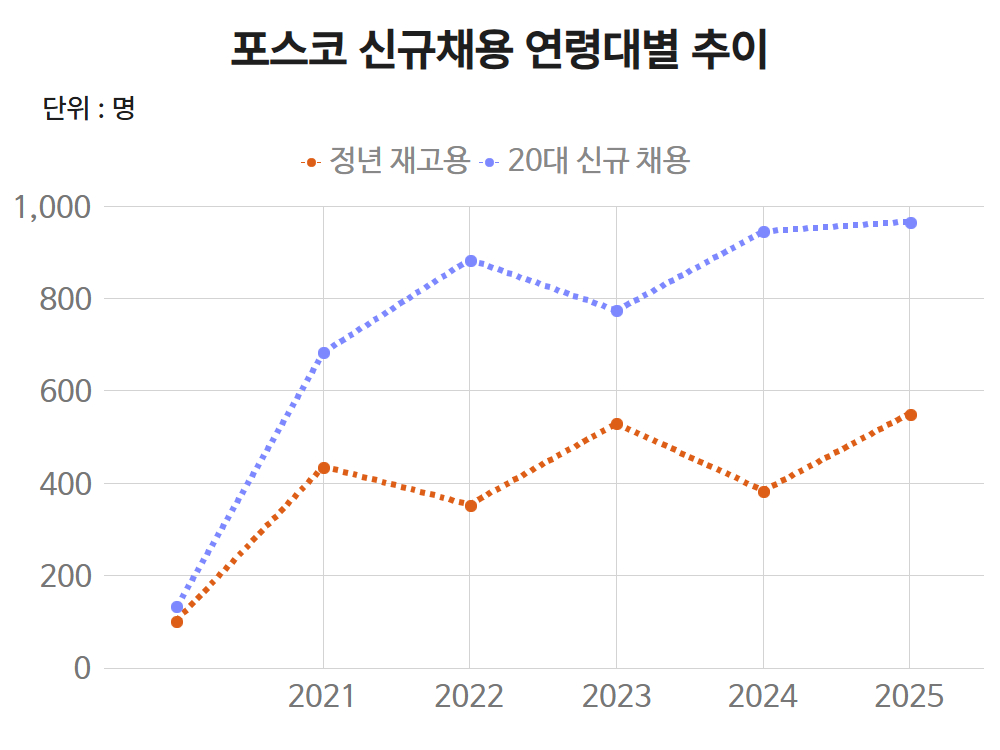
Posco's annual new hires over age 50 fluctuated between the 300s and 500s over the past five years. The figure fell from 433 in 2021 to 351 in 2022, then climbed to 528 in 2023. It dipped again to 381 in 2024 before surging 43.8 percent to 548 last year — the highest in the five-year period.
Workers over 50 accounted for 36.3 percent of all new hires in 2021, 26.3 percent in 2022, 34.9 percent in 2023, 24.8 percent in 2024 and 32.4 percent last year. The vast majority are understood to be retirees brought back through the reemployment program.
A defining feature of Posco's reemployment system is its emphasis on knowledge transfer over simple headcount maintenance. Rehired veteran employees pass on decades of accumulated expertise in steelworks operations and equipment management to junior colleagues, and they also take part in on-the-job training for new hires and floor-level mentoring.
The company also runs a separate "technical consultant" program, selecting retirees with outstanding professional competence and work conduct and allowing them to continue working for up to five years.
Candidates must be recommended by their supervising executive and then pass assessments of professional competence and work conduct before a review committee makes the final determination. Selected technical consultants are evaluated on their activities and performance each year, and the results determine their salary level and whether their contract is renewed.
Last year, Posco selected six new technical consultants across its Pohang and Gwangyang steelworks, bringing the total to 16.
Reemployment tailored to company needs — 'blanket extension to 65 could shrink new hiring'
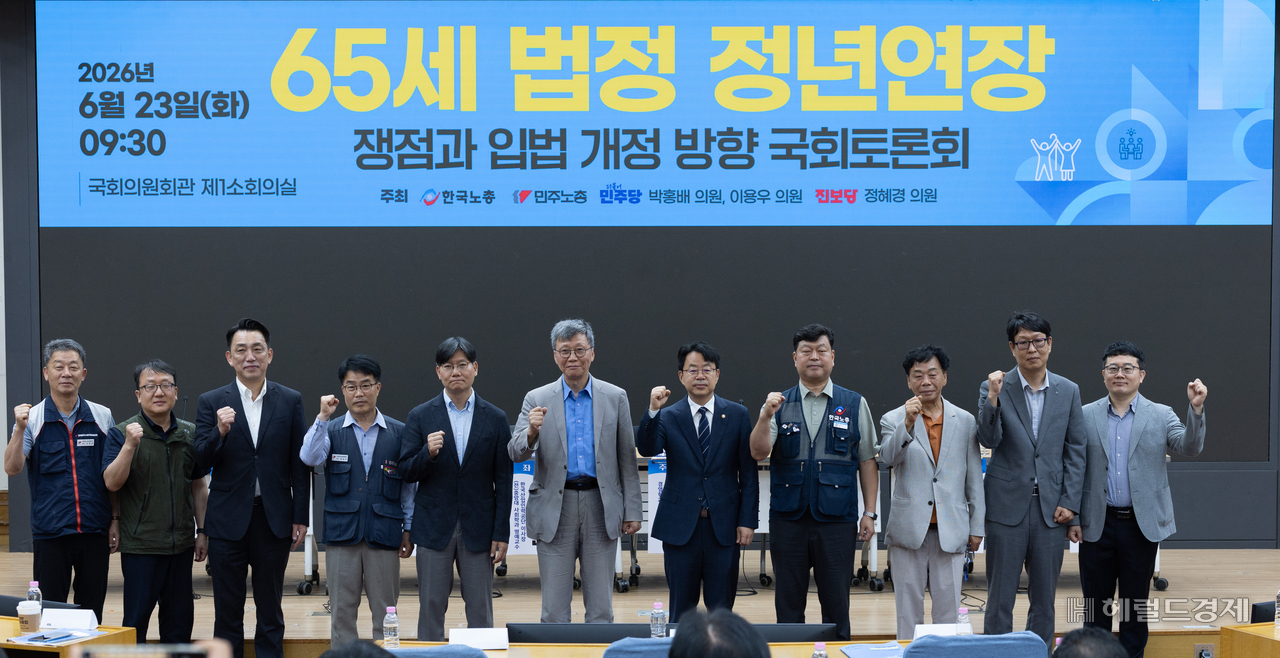
Discussions about raising the statutory retirement age to 65 are moving quickly, driven by the argument that rapid aging and the income gap between the current mandatory retirement age of 60 and the national pension eligibility age can no longer be left unaddressed.
The business community agrees, however, that a blanket retirement-age extension ignoring differences across industries and job types could distort the labor market. The concern is that forcing companies to extend all employment contracts by five years — regardless of how many older workers they actually need — would increase labor costs and create personnel bottlenecks, ultimately leading to cuts in new hiring.
Business groups see reemployment through new contracts after retirement as the more practical alternative. The cases of Korean Air and Posco are the most cited examples. New hiring of workers in their 20s rose at Korean Air from 574 in 2023 to 632 in 2024 and 863 last year, and Posco saw similar growth over the same period, from 772 to 943 and then 964. By contrast, new hiring of workers in their 20s at Hyundai Motor — which rehires the majority of its retirees — fell from 16,551 in 2023 to 14,531 in 2024 and 5,782 last year.
Kim Seon-ae, head of the employment policy team at the Korea Enterprises Federation, said a blanket retirement-age extension "could burden companies by requiring them to retain more workers than they actually need, creating pressure on new hiring and workforce management." She added that "at this stage, the most realistic path is to accumulate experience through reemployment — learning what roles workers over 60 can fill — and then gradually establish continued-employment models suited to each company's circumstances."
kwater@heraldcorp.com