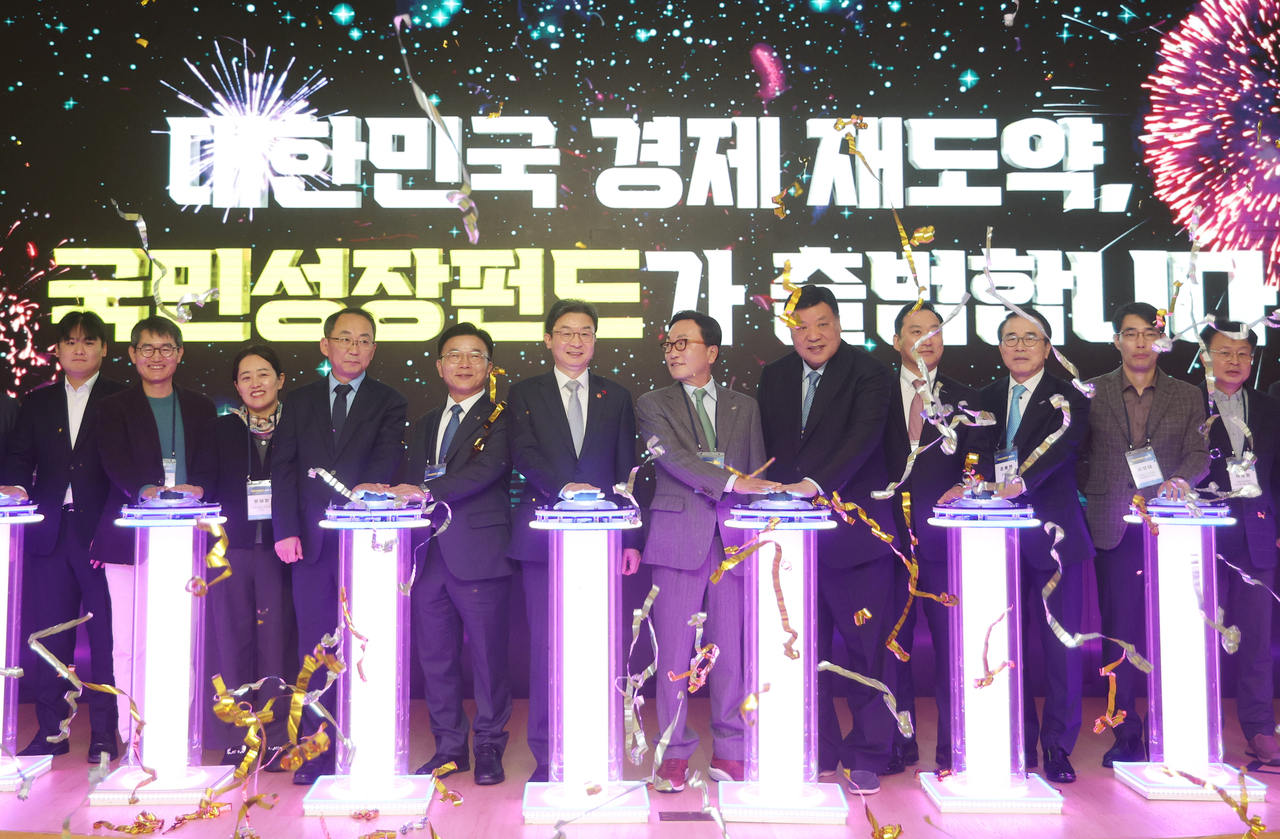
South Korea's financial authorities plan to expand the National Growth Fund from 150 trillion won ($99.7 billion) to 200 trillion won. The fund's coverage will also be broadened from the current 12 advanced industries to include future strategic sectors such as aerospace.
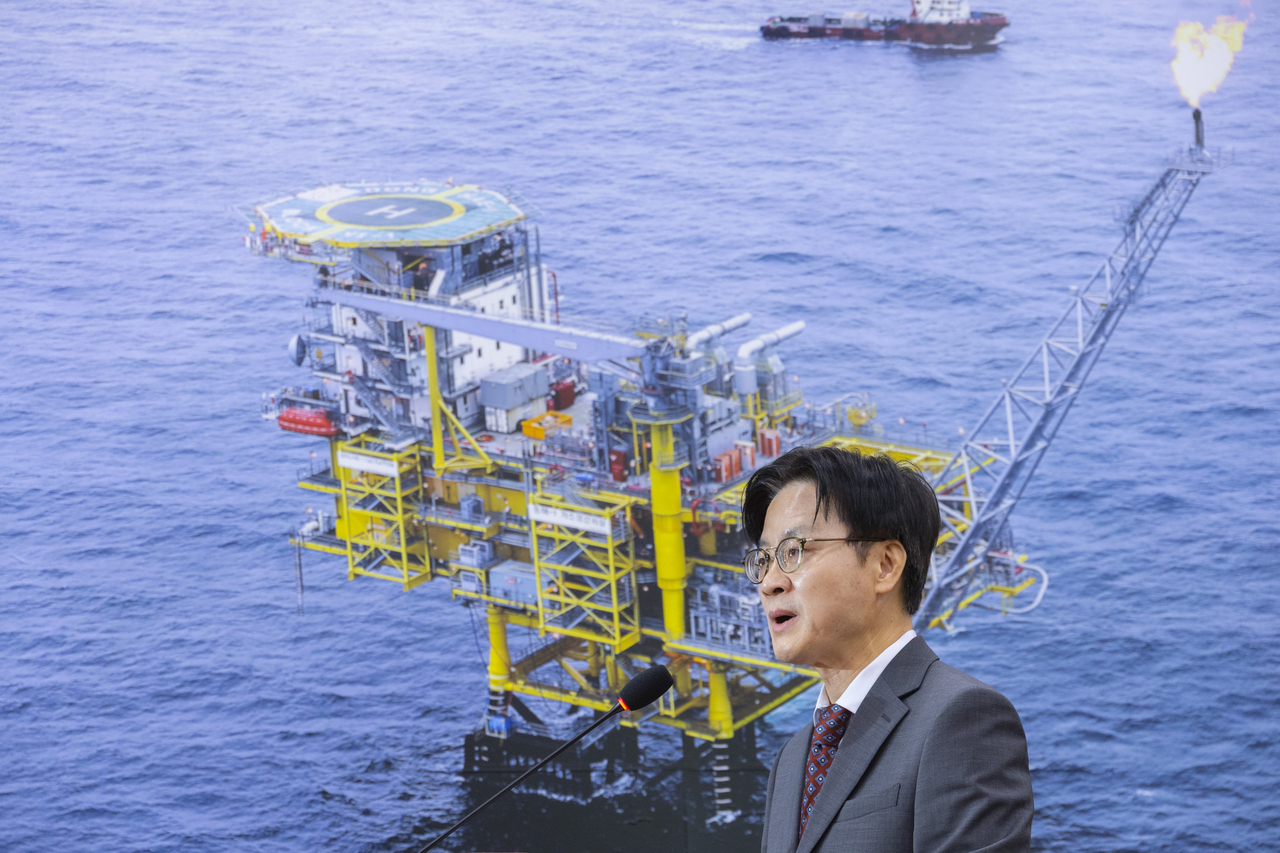
FSC Chairman Lee Eok-won announced the plan — part of a broader push to expand productive finance — at a second-half work report held at Cheong Wa Dae on Wednesday, saying "finance will lead the way in securing national competitiveness in advanced technology and industry."
'Finance to lead the way in securing national competitiveness'
The fund's annual operating scale will first be raised from 30 trillion won to 40 trillion won to meet growing investment demand in advanced industries. The government will also expand direct equity investment support from 3 trillion won to more than 5 trillion won per year, taking on a greater share of investment risk.
In September, a risk management committee and a post-investment management committee will be established within the National Growth Fund to build an objective and transparent investment decision-making framework on par with that of the national pension system.
The FSC also outlined a blueprint for long-term, large-scale financial support. A key initiative is the establishment of Korea Strategic Technology Partners (KSTP, tentative name), a specialized asset manager focused on ultra-long-term, large-scale investment in national strategic technologies. KSTP aims to fund research and development of future-leading foundational technologies and the localization of core technologies in key industries, supplying 1 trillion to 2 trillion won annually over five years for a total of up to 10 trillion won.
Korea Development Bank and Korea Growth Investment will anchor the initiative, with the FSC expecting participation from state-run banks, major financial holding companies and comprehensive financial investment firms. The plan calls for filing for a license and incorporating the entity this year, with the first project to launch in the first half of next year.
Separately, within the National Growth Fund, an 880 billion won ultra-long-term technology investment fund will be launched this year to support research and development and commercialization of promising technologies requiring long-term patient capital. A significant portion of the funding will come from the Advanced Strategic Industries Fund, with private-sector participation expected alongside subordinated fiscal backing. The FSC said KSTP, if successfully launched, could be selected as the fund's manager.
Boosting regional preferential finance for inclusive growth
On regional preferential finance, the government plans to strengthen public-private cooperation while ensuring both policy and private financial institutions play their full roles, with the aim of driving inclusive growth. As the National Growth Fund's operating scale expands, the regional allocation — set at 40 percent of the total — will rise from 12 trillion won to 16 trillion won annually. A dedicated regional fund of 1 trillion won will also be created within the National Growth Fund.
The Export-Import Bank of Korea and Korea Trade Insurance will join the existing four policy finance institutions — Korea Development Bank, Industrial Bank of Korea, Korea Credit Guarantee Fund and Korea Technology Finance — in a regional supply expansion target program. The move is expected to push the total regional supply volume to 164 trillion won by 2028.
On the private finance side, the authorities will roll out a three-part community finance package that includes converting membership points from credit cards and other programs into local currency. Relative assessments will be expanded to sharpen differentiation in regional reinvestment evaluations, and the authorities plan to establish legal grounds for exempting financial firms from sanctions when they support startup funding in advanced industries, while also adding regional finance performance data to the productive finance white paper — all to be completed this year.
In addition, the public-private startup and incubation platform, currently operating at 18 locations nationwide, will be expanded to Gwangju, Daegu, Jeonju and Cheonan. A policy finance loan backed by guarantees — dubbed the 'Startup Build-Up' loan — targeting early-stage startups will be introduced in August.
Meanwhile, the FSC will launch a three-pronged structural reform program for the Kosdaq market. The plan includes expanding customized technology-based listing exceptions to support innovative companies, tightening delisting requirements to accelerate the removal of underperforming firms, and introducing a market segmentation system — rewarding top-performing companies while supporting co-growth among general firms — set to take effect in January 2027.
ehkim@heraldcorp.com
hyuk@heraldcorp.com