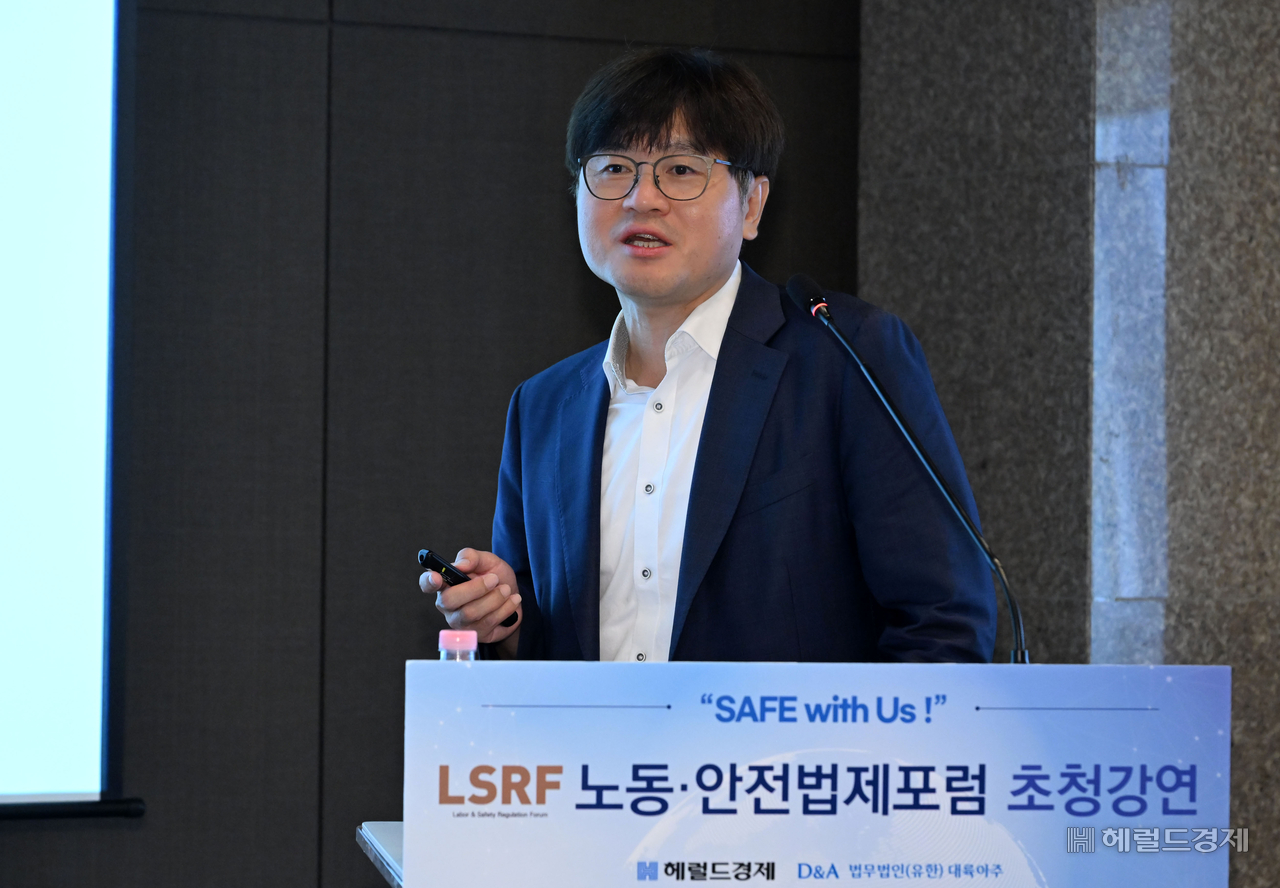
A new era of disclosure is coming to industrial safety. Companies will no longer be required only to report accidents after the fact — they must now open their day-to-day safety management systems and investment records to public scrutiny. Safety is shifting from a cost and compliance burden into a business asset subject to market judgment.
Kim Gyeong-geun, a partner attorney at Daeryuk Aju Law Firm and head of its Serious Accident Response Group, said Wednesday at a labor and safety law forum co-hosted by The Herald Business and Daeryuk Aju Law Firm at The Plaza Hotel Seoul in Jung-gu that "safety and health disclosure is not a regulatory burden but an asset that proves a company's safety capabilities to the market," adding that firms should treat it "not as a defense to avoid punishment, but as a strategy to turn safety into a competitive advantage."
The safety and health disclosure regime takes effect Aug. 1 and applies to employers with 500 or more full-time workers, public institutions, and local public corporations and agencies. Required disclosures include a company's safety organization structure, budget allocation, whether risk assessments are functioning properly, and whether accident-recurrence prevention measures have actually been carried out. Companies that fail to disclose face fines of up to 10 million won ($6,640).
However, the Ministry of Employment and Labor has yet to finalize the ministerial regulations spelling out the specific disclosure methods and procedures. Kim said companies need to start preparing now by gathering data on the six items prescribed by law.
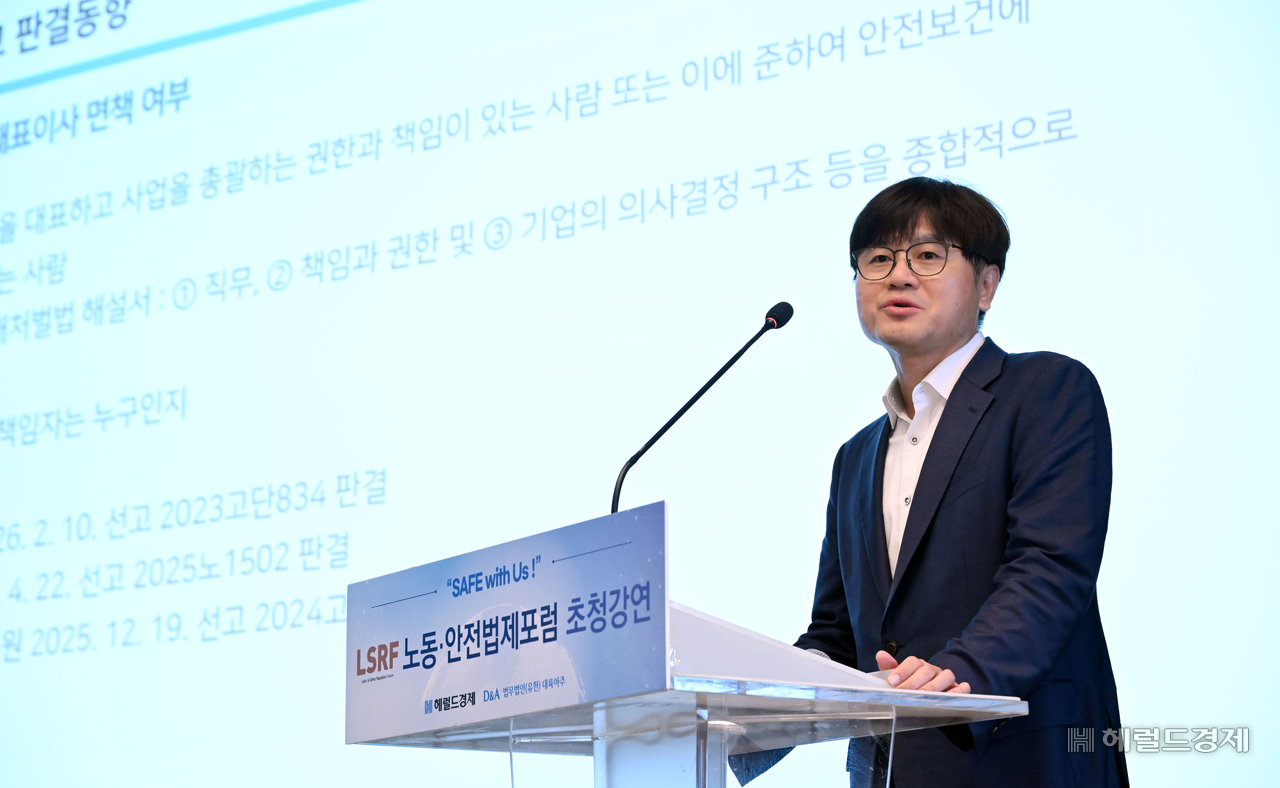
From post-accident reporting to routine safety capability disclosure
The new regime differs fundamentally from the existing disclosure obligations that apply to listed companies after an accident occurs. Listed firms must immediately report a serious accident to the relevant labor authority and stock exchange and include the facts and remedial measures in their business and half-year reports. The safety and health disclosure requirement, by contrast, mandates regular public reporting on a company's safety management system, activities, investment and recurrence-prevention efforts regardless of whether an accident has taken place.
Kim said the significance of the new system lies in "transparently disclosing to external stakeholders — investors, consumers and others — what efforts have been made to build a safety and health management system."
He also cautioned against managing stock exchange disclosures, business reports and safety and health disclosures as separate silos. If the figures or descriptions for the same accident or investment differ across filings, credibility and legal defensibility both suffer. "Companies should build a single safety and health data management system, consistently reflect the same underlying data, and maintain accuracy and coherence," Kim said.
Safety and health disclosures can feed into ESG (environmental, social and governance) ratings and capital-raising, as well as loan and guarantee reviews, interest rate calculations and insurance premium assessments. In public procurement, strong accident-prevention records can earn bonus points while companies that have suffered serious accidents may face deductions; the disclosures can also serve as a basis for prime contractors to evaluate and contract with suppliers.
Kim further proposed using the disclosure items as internal management indicators — treating safety organization and staffing levels, investment scale, accident statistics and recurrence-prevention implementation rates as key performance indicators (KPIs) linked to board oversight and executive compensation, with subsidiary and supplier accidents also factored into executive evaluations.
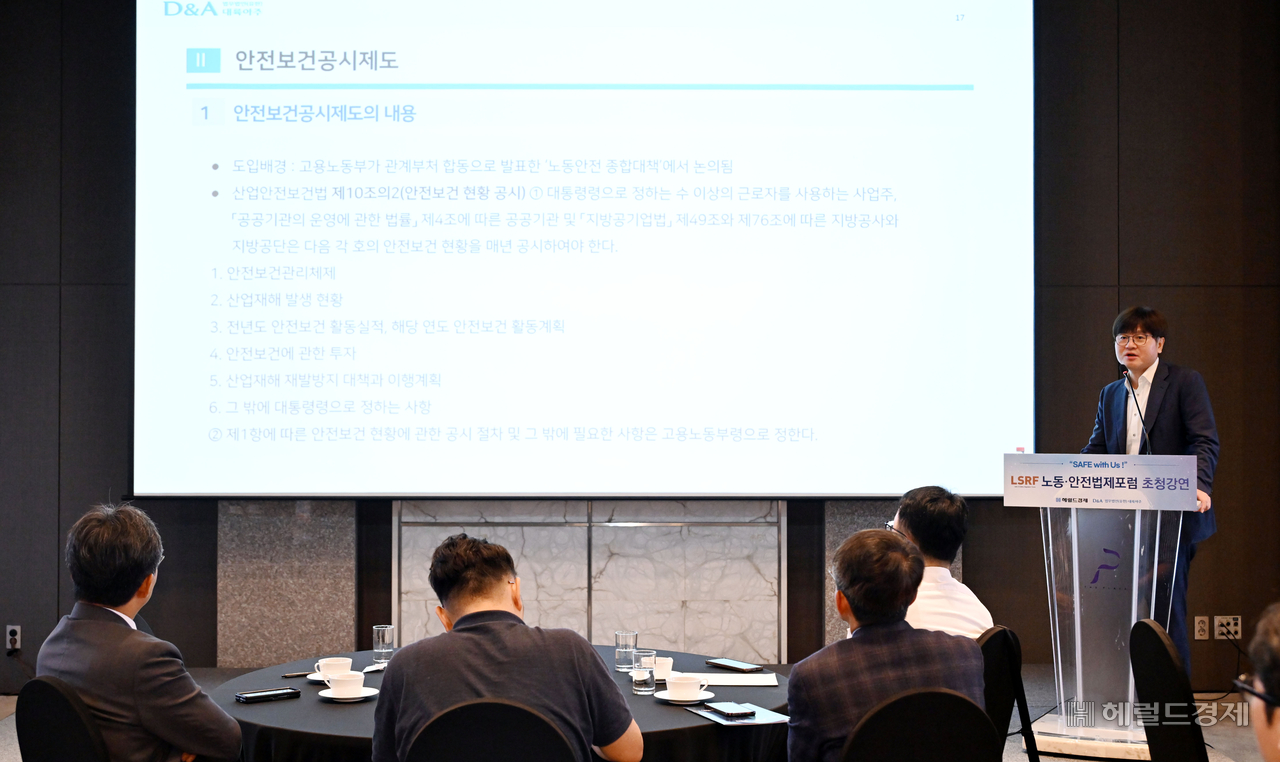
Disclosure records can serve as proof of duty compliance when accidents occur
Disclosure documents can do more than signal a company's safety standards — they can serve as evidence in serious accident investigations and trials that a chief executive fulfilled their legal obligations. "Safety and health disclosure can simultaneously secure the trust of capital markets and serve as proof that the management responsible party faithfully carried out their duties," Kim said.
To that end, companies must document a functioning risk assessment system that incorporates worker input, safety budget expenditures approved by the CEO, and the implementation of recurrence-prevention measures. Courts also examine improvement efforts made after near-miss incidents that preceded a serious accident.
Kim advised companies to prioritize investment in areas where safety and health disclosure requirements overlap with obligations under the Serious Accidents Punishment Act — particularly a genuinely functioning risk assessment system, documented safety budget expenditures that have gone through CEO reporting and approval, and a recurrence-prevention implementation framework.
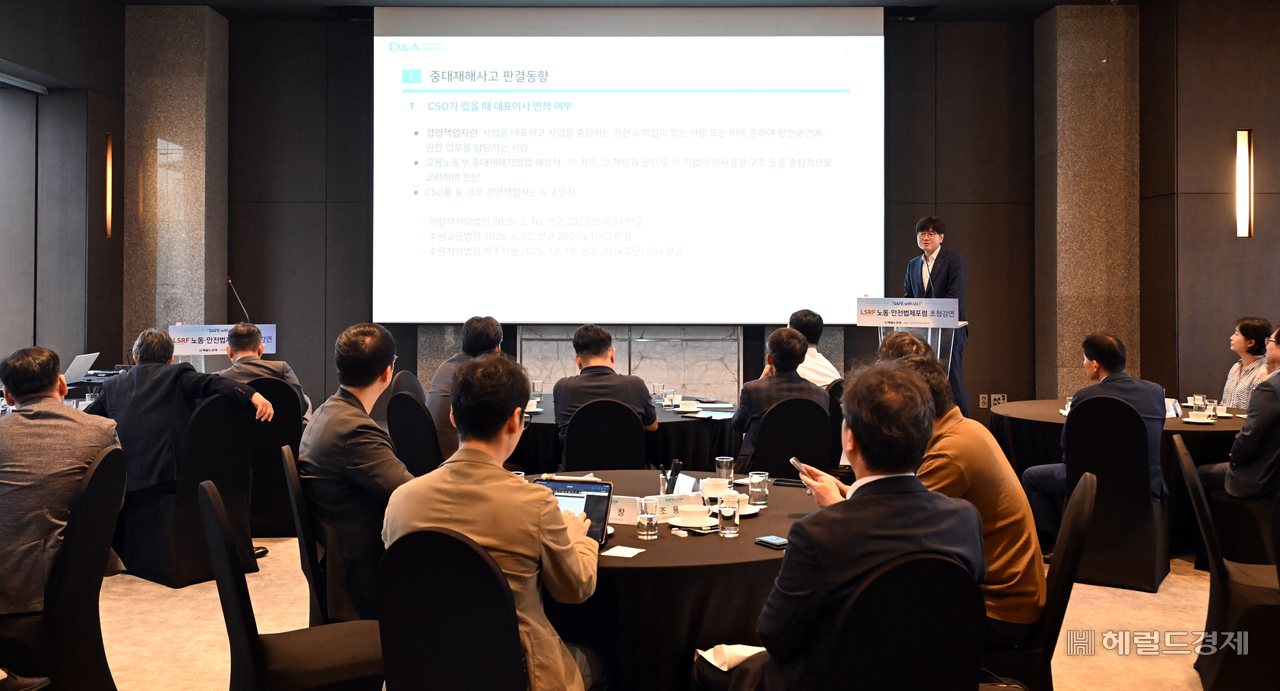
'Appointing a CSO does not automatically shield the CEO'
Kim also reviewed recent ruling trends under the Serious Accidents Punishment Act. About 110 rulings have been handed down so far, with roughly 10 resulting in acquittals. As cases involving prison sentences and fines have emerged, the key legal issues have become the determination of management responsibility, violations of the duty to secure safety and health, and the causal link between those violations and the accident.
He particularly stressed that appointing a chief safety officer (CSO) does not automatically shield the CEO from liability. Courts look beyond job titles to examine actual authority and responsibility and the company's decision-making structure. If the CSO held final decision-making power over the safety and health budget, personnel and organization, there may be room to negate CEO liability — but if the CEO made the final call on key matters, an exemption is unlikely.
"There is no Supreme Court ruling yet on whether a CEO is exempt from liability when a CSO is in place," Kim said. "At this stage, the safest course is for the CEO to directly and faithfully fulfill the duty to secure safety and health."
Not every accident automatically translates into liability for the responsible executive, however. For an unusually unforeseeable accident, courts may find that the causal link between a failure to secure safety and health and the accident itself is broken. "Preventing accidents is the top priority, but the effort to establish recurrence-prevention measures and rebuild the safety and health management system after an accident is equally important," Kim said.
He added that "safety and health disclosure may feel burdensome to practitioners, but it can be an opportunity to prove a company's safety capabilities to the market" and called it "a starting point for boosting worker morale and productivity and building trust in the capital markets."
kwater@heraldcorp.com