
"No matter how many times I read it, this is an insane official document." A single confidential circular from the Ministry of Culture, Sports and Tourism has sent all 234 local governments across the country into an uproar.
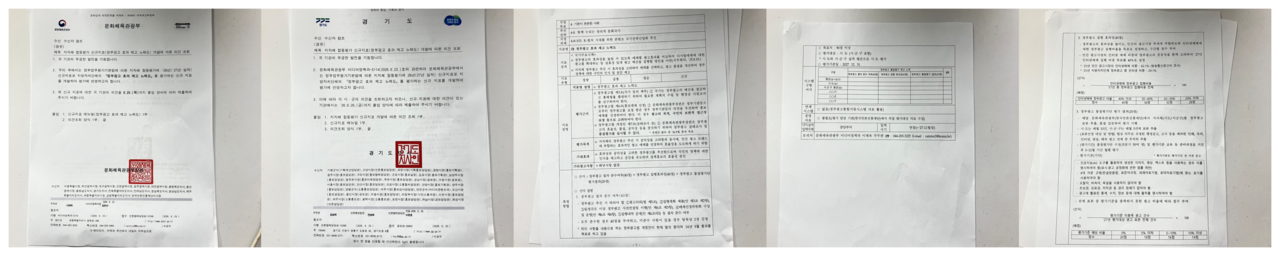
A confidential document obtained exclusively by The Herald Business shows that the Ministry of Culture, Sports and Tourism sent a circular titled "Efforts to Enhance the Effectiveness of Government Advertising" to metropolitan and provincial governments on June 24, instructing them to pass it along to local governments nationwide.
The circular is a non-public document soliciting opinions, but it contains three provisions that defy common sense — among them, a proposal to award higher scores in the government joint evaluation (40 out of 100 points) to local governments that place more advertising with online outlets. One glaring flaw is that the definition of "online outlet" would include one-person internet operations. The confidential document sets no boundaries on what qualifies as an online outlet.
Gyeonggi Province, which received the confidential document, moved quickly: the following day, June 26, officials Lee Eun-ho, the media cooperation officer, Jeon Sang-bae, the media administration team leader, and Kim Seong-jae, the desk officer, slightly reformatted the ministry document into the province's own template and sent it down to all 31 cities and counties under its jurisdiction. Nationwide, all 243 local governments are affected.
The confidential document solicits opinions and has not been finalized as policy. Nevertheless, the fact that it was drafted with specific proposals and circulated to local governments for feedback is widely interpreted as a sign that implementation was already being prepared.
Local governments across the country were stunned by the confidential document.
Some demanded to know whether this was part of President Lee Jae-myung's media reform agenda. The document exposed a broader problem: individuals who are journalists in name only have registered four or five online outlets under family members' names, running websites fed entirely by automated press releases from a company in Daejeon without publishing a single original article. If each outlet collects 1 million won ($670) in advertising, the operator pockets 4 million to 5 million won in passive income per month — and because they register as simplified sole proprietors, they avoid the 10 percent press foundation deduction, keeping the full amount. This is an unfair practice. The document's biggest loophole is its failure to define what counts as an online outlet. Under the circular as written, one-person internet operations would qualify, meaning local governments would have to funnel advertising to them to score well in the joint evaluation. Whether this is even workable — and whether it truly constitutes media reform — is a question worth putting directly to President Lee.
Gyeonggi Province, upon receiving the circular, promptly relayed its contents in connection with Ministry of Culture, Sports and Tourism Media Policy Division document No. 5114 (dated June 23, 2026). The province's circular stated that the ministry planned to develop a new indicator — "efforts to enhance the effectiveness of government advertising by local governments" — for inclusion in the government joint evaluation under the Government Performance Evaluation Framework Act, to be applied starting in 2028 based on 2027 performance data. Agencies with opinions on the new indicator were asked to submit them by June 26.
The controversy centers on two issues.
The first concerns compliance with government advertising procedures, worth 40 points. Requirements such as conducting pre-placement consultations for advertising above a certain scale and forming and operating a media selection committee have drawn criticism for reducing the timeliness of advertising and for creating potential disputes over how the committee is constituted and how it evaluates outlets.
The second concerns the effectiveness of government advertising placement, also worth 40 points. The proposed evaluation method — measuring the share of government advertising placed with online outlets — could produce unintended consequences. Most print media organizations already handle the bulk of their advertising through online banner placements on their websites rather than in print, meaning a policy that artificially inflates the share going to online outlets could end up directing spending toward low-impact outlets such as portal-unaffiliated sites and one-person operations.
One public affairs official, questioning the document's practicality, vented frustration, asking "Is this document President Lee Jae-myung's intention — is this what media reform looks like?" Gyeonggi Province alone has more than 3,000 registered media outlets, the vast majority of them online. The prevalence of one-person operations is already a headache for officials, and Suwon Special City has around 350 registered outlets of its own, fueling fierce competition over advertising revenue.
Adding to the tension, Naver — cast by some as the grim reaper of media reform — is moving in a different direction from the ministry.
Since April, Naver's press evaluation committee has been publishing monthly lists of outlets that accumulate penalty points for violations including copy-paste articles — stories lifted wholesale from press releases — and deleted articles. Copy-paste journalism is common among journalists in name only and one-person online outlets. A significant number of people with press credentials have never produced a single original article; lacking even basic reporting skills, they simply copy press releases. When no press release is available, they log on to city hall websites, copy promotional materials and publish them under their own byline. Whether outlets like these deserve government advertising is a question worth asking.
Naver has made no exceptions.
Major newspapers, business dailies, Naver partner outlets and content providers are all subject to penalty points. Previously, points were tallied annually and reset each year; starting this year, they accumulate over two years. With Naver's evaluation committee significantly tightening its standards, every media organization is on edge. Being dropped by Naver is widely understood to spell the end for an outlet, and most news organizations have already instructed their reporters to stop using press releases altogether.
The current administration has long called for media reform. Given that the governor had led a fair-media watchdog effort and had been tracking the improper advertising practices of the more than 3,000 registered outlets in Gyeonggi Province, it is hard to understand why the ministry would issue such an unconventional confidential document before taking office.
Ultimately, local governments across the country — whether aligned with the Democratic Party or the PPP — overwhelmingly submitted "non-consent" responses. "No" was their firm and unanimous answer.
fob140@heraldcorp.com





