
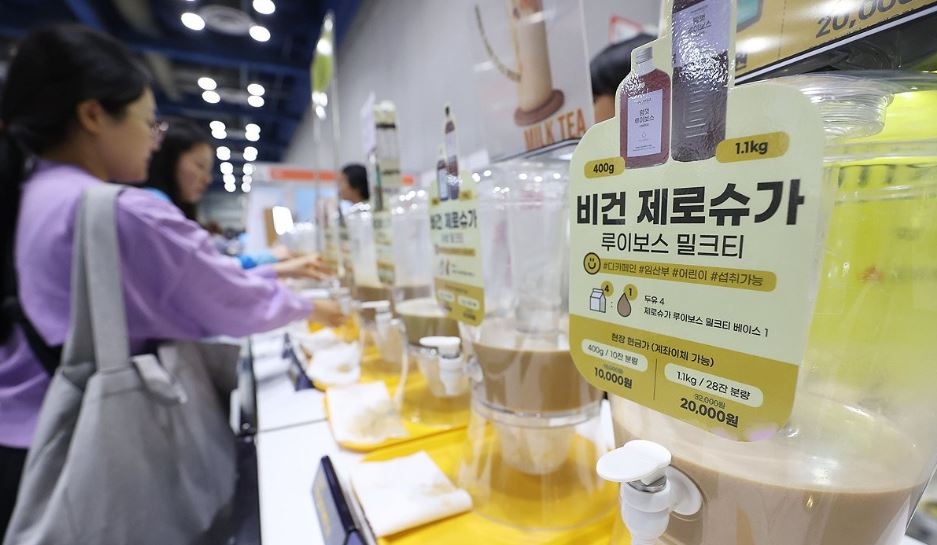
The low-sugar and zero-sugar race in South Korea's food industry is rapidly spreading beyond beverages into cereals and sauces. As "healthy pleasure" consumption — enjoying tasty food while managing one's health — becomes a daily habit, food companies are rolling out products that cut sugar and calories without sacrificing flavor or texture.
The cereal category, popular as a breakfast substitute, has emerged as one of the most competitive arenas for low-sugar products, industry sources said Tuesday.
Orion launched a new product under its meal-replacement brand Market O Nature: Oh! Granola Low-Sugar Cacao. The product is classified as a functional food containing resistant maltodextrin, an ingredient said to help suppress post-meal blood sugar spikes, and keeps sugar content to around 1 gram per 30-gram serving. It combines domestic rice, whole wheat and oats with cacao to deliver both sweetness and texture.
Orion has been expanding the granola market since it introduced the Oh! Granola brand in 2018. It currently offers a range of low-sugar products, including Oh! Granola Oat Whole Nuts and Oh! Granola Low-Sugar Whole Barley.
Nonghyup Food recently launched Nonghyup Low-Sugar Rice Cereal, made with domestically grown Sindongjin rice. The product contains no wheat flour, relying instead on rice and barley, and keeps sugar to about 1 gram per serving. The company plans to expand distribution to Hanaro Mart stores nationwide alongside a promotional discount campaign on Naver's brand store.
Nongshim Kellogg also reinforced its low-sugar strategy last year by reformulating its major cereal products. The company reduced sugar content to 5 grams or less per 30-gram bowl across its flagship granola and five-grain flake lines while boosting whole-grain and dietary fiber content.
The low-sugar trend is now spilling over from cereals into the sauce market.
In the domestic low-sugar, low-calorie sauce segment, Dongwon Home Food's diet-management brand Vivid Kitchen leads the field with a lineup of 55 products. The brand has expanded its low-sugar, low-calorie offerings across mayonnaise, ketchup, salad dressings, barbecue sauce and sriracha.
Rivals are moving quickly to catch up. Daesang Chungjungone introduced its own low-sugar brand Low Tag last year and has since released more than 13 products centered on fermented pastes and sauces. CJ CheilJedang has unveiled the Sugarite brand, while Ottogi is broadening its Light & Joy line into pasta sauces and home meal replacements.
Industry players have taken note that many consumers who carefully manage their diets for health reasons still reach for regular sauces. Condiments such as dressings and mayonnaise are particularly calorie-dense even in small amounts, and analysts say demand for low-sugar, low-calorie alternatives is growing rapidly as a result.
Market data underscore the shift. According to the Korea Agro-Fisheries & Food Trade Corporation and Euromonitor, South Korea's combined low-sugar, protein and care-food market surged from 1.82 trillion won ($1.22 billion) in 2022 to 3.74 trillion won last year. Within that, the low-sugar food segment alone grew 36.9 percent over four years, rising from 301 billion won in 2022 to 412 billion won last year.
Industry insiders say the key battleground has shifted from simply reducing sugar to replicating the taste and quality of conventional products. Companies are accelerating research and development using alternative sweeteners such as allulose and proprietary blending techniques to address the flavor gaps and off-notes that plagued early low-sugar offerings.
"In the past, it was mainly people on diets who sought out low-sugar or zero-sugar food, but these days ordinary consumers eat them as part of everyday health management," an industry official said. "As more consumers want to manage their blood sugar starting with their first meal of the day, low-sugar and zero-sugar options are becoming not a choice but a standard feature."
Another industry official said consumers have moved beyond simply looking for a "zero" label and now compare taste, ingredients and nutritional profiles before buying. "Going forward, the key to market expansion will be raising the taste and price competitiveness of low-sugar sauces so they can establish themselves not as diet products but as everyday replacements for regular sauces," the official said.
The low-sugar trend is no longer confined to beverages and snacks — it is spreading across the entire diet, from the cereal that starts the meal to the sauces used in cooking. The industry expects competition to intensify further as consumer interest in blood sugar management and slow aging continues to grow, with companies racing to develop products that keep the flavor while cutting the sugar.
rainbow@heraldcorp.com





