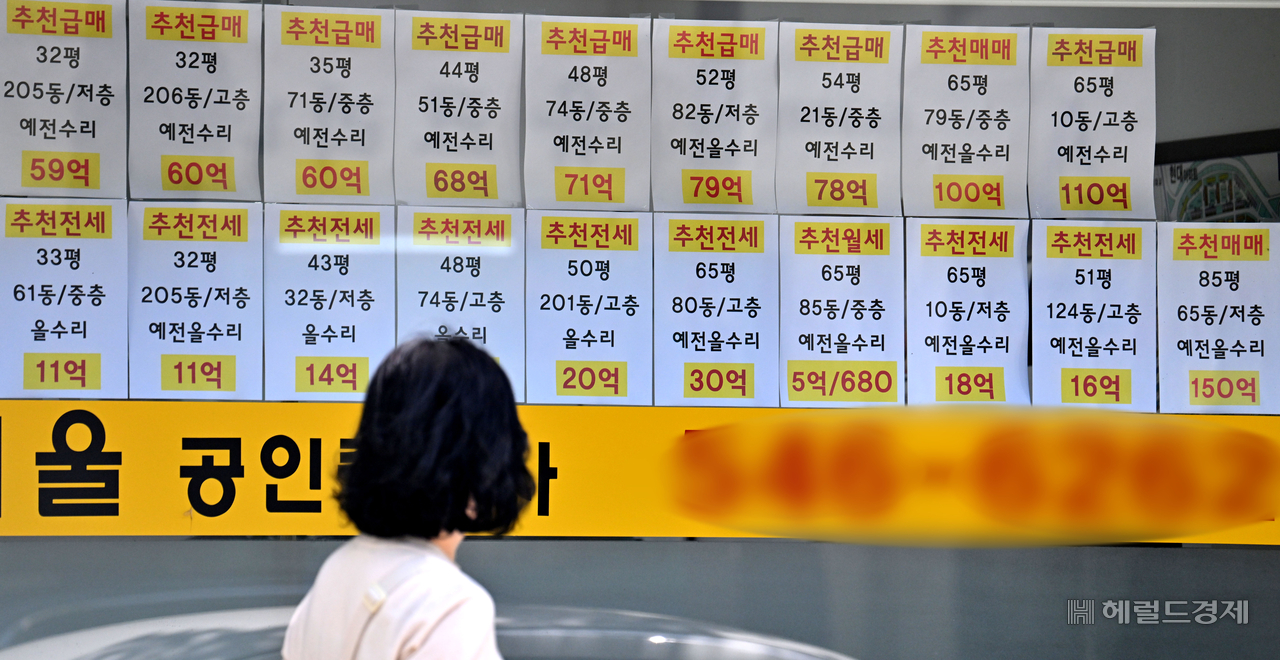
Despite strict mortgage lending caps — limiting home loans to 200 million won ($134,000) for properties priced at 2.5 billion won or more — prices for ultra-luxury apartments have continued to climb. Transactions edged down only marginally even as additional tax pressure, including the reinstatement of the capital gains tax surcharge on multi-home owners, was piled on, raising doubts about the effectiveness of the measures.
According to the Ministry of Land, Infrastructure and Transport's actual transaction price disclosure system, 646 apartments changed hands at 5 billion won or more over the past year as of June 1, accounting for the reporting period for actual transaction prices. That was just 30 fewer than the previous year's 677 transactions, but represented a 164 percent surge from 244 deals two years ago.
The government had been expected to sharply cool ultra-luxury home sales after capping mortgage loans at 400 million won for homes priced at 1.5 billion won or more, and at 200 million won for those priced at 2.5 billion won or more — measures introduced through its Oct. 15 real estate package on top of an earlier 600 million won mortgage ceiling. Instead, transactions fell only marginally.

Prices, meanwhile, moved in the opposite direction. The average actual transaction price for apartments sold above 5 billion won over the same one-year period reached 6.78 billion won — more than 10 million won higher than the 6.77 billion won recorded a year earlier. With 30 fewer deals closed, the per-transaction price has risen.
While tighter lending rules have pushed buyers toward mid- to lower-priced apartments in Seoul's broader real estate market, the high end has quietly continued setting new records. In Banpo-dong, Seocho-gu, a 191-square-meter unit at <style ref="s1">Raemian One Pentas</style> sold for <style ref="s2">10 billion won</style> twice — once in March and again in May, on the 17th and 31st floors respectively — each time setting a new high. A 150-square-meter unit at <style ref="s3">Sinbanpo 2-cha</style> sold May 7 for <style ref="s4">8.4 billion won</style> on the ninth floor, 2.02 billion won above the previous transaction price of 6.35 billion won. In Apgujeong-dong, Gangnam-gu, a 170-square-meter unit at <style ref="s5">Sinhyundae 11-cha</style> sold in April for <style ref="s6">8.5 billion won</style> on the ninth floor, also setting a new record.
Transactions running into the tens of billions of won have continued at high-end residential developments favored by the wealthy. A 273-square-meter unit at Nine One Hannam in Hannam-dong, Yongsan-gu, sold June 18 for 25 billion won on the first floor, maintaining the record high set in February last year. Nearby, a 235-square-meter unit at Hannam The Hill changed hands May 25 for 13 billion won on the ninth floor — 300 million won above the previous transaction price of 12.7 billion won.
Those working in the field say the government's lending restrictions have not meaningfully dampened activity in the high-end apartment market. A licensed real estate agent near Raemian One Bailey said the curbs had effectively turned the market into "a party for cash buyers," with sellers adopting a stance of refusing to sell unless they could get a record price. "Transaction frequency is similar to what it was before the regulations," the agent said.
Experts predict that the ultra-luxury apartment segment, which relies relatively little on borrowing, will also be less affected by interest rate increases. The Bank of Korea's Monetary Policy Board met Wednesday morning and raised the benchmark interest rate by 0.25 percentage points, from 2.50 percent to 2.75 percent annually.
According to the Registry Information Plaza, the average loan-to-value index for collective buildings in the three Gangnam districts — Gangnam-gu, Seocho-gu and Songpa-gu — stood at 37.94, 37.17 and 46.2, respectively, as of last month. <style ref="s7">This means buyers in those areas are financing only 37 to 46 percent of the property price through loans on average.</style>
Nam Hyeok-woo, a real estate researcher at Woori Bank, said sentiment, rather than access to credit, drives the ultra-luxury apartment market. "Because supply is currently limited, asking prices tend to edge up slightly or hold steady," he said.
hss@heraldcorp.com