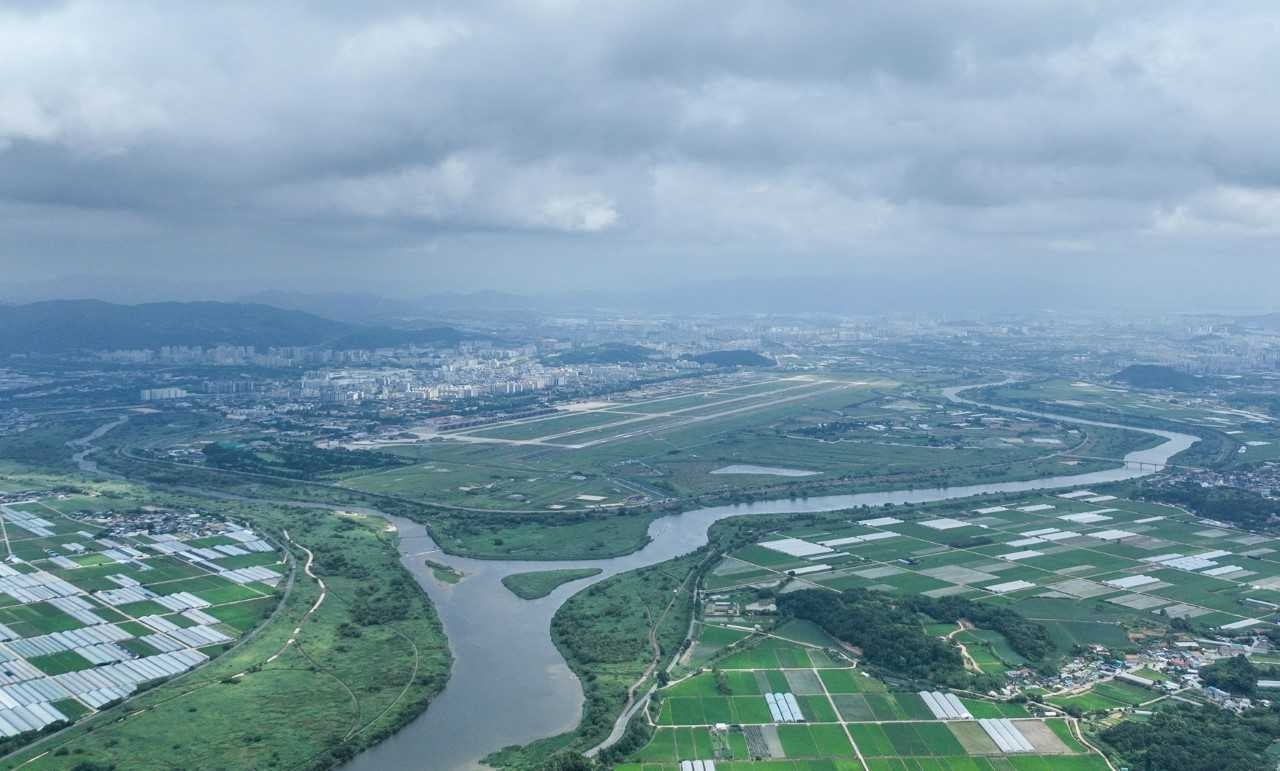
The relocation of the Gwangju military airport — the proposed site for an 800 trillion won semiconductor hub — is stumbling from the outset. Muan-gun, part of the newly integrated South Jeolla-Gwangju Special City, has refused to attend a committee meeting convened to select a candidate relocation site, drawing scrutiny to the leadership and political acumen of Min Hyeong-bae, mayor of the integrated city.
Delays in relocating the Gwangju military airport, designated as the site for a Honam-region semiconductor cluster, could also derail plans to build a semiconductor fabrication facility there.
According to Muan-gun, the county recently convened a public-private task force meeting attended by representatives of civic groups and resolved not to participate in the second candidate site selection committee — scheduled for Tuesday and hosted by the Ministry of National Defense — for the relocation of the Gwangju military airport.
Muan-gun reiterated its longstanding position that three preconditions must be met before it will take part in the relocation process: the prior transfer of Gwangju's civilian airport to Muan International Airport, 1 trillion won ($681 million) in support from the South Jeolla-Gwangju Special City and the central government, and the provision of sweeping national-level incentives.
"Without concrete details on the three conditions, we have no way to persuade county residents, which is why we decided not to attend," a Muan-gun official said. "Separately from our absence at the meeting, we will continue to consult with the special city on support plans."
Of the three demands, the most contentious is the 1 trillion won in support that the former Gwangju city government pledged before the administrative merger.
At the time, Gwangju city promised a total of 1 trillion won, comprising 350 billion won in development charges, 290 billion won in profits from redeveloping the vacated site, 150 billion won in direct cash support, and 210 billion won in government package projects.
Muan-gun argues that since the former Gwangju military airport site was designated as a semiconductor cluster site following the administrative merger, the projected profits from redeveloping that land have changed, and an alternative plan must be put forward accordingly.
Muan-gun was selected as a preliminary candidate site for the Gwangju military airport relocation in April but abruptly skipped a candidate site selection meeting on June 30.
At that time, too, the county boycotted the meeting citing the same three preconditions, but reversed course and pledged to attend future meetings after the Gwangju military airport site was designated as a semiconductor cluster location, issuing a statement welcoming the decision.
The Ministry of National Defense had planned to hold the candidate site selection committee meeting Tuesday, formally designate Muan-gun as the candidate site, and advance the relocation process — but that plan now faces inevitable delays.
"It is true that the 1 trillion won support pledge was made by the previous mayor, but it remains an ongoing matter, and Mayor Min must step up and take charge of it," a Muan-gun official said. "If a concrete support plan is presented, county residents will understand the special city's true intentions and be able to cooperate with the military airport relocation."
sij@heraldcorp.com