Global interest in Korean literature has grown since Han Kang won the Nobel Prize in Literature, and overseas sales of translated Korean works have now reached approximately 1.2 million copies for two consecutive years.
According to a survey by the Literature Translation Institute of Korea on overseas sales of titles it has supported, translated Korean literary works sold 1,197,557 copies abroad last year — up 228 copies from the previous year and the highest annual total on record.
Cumulative sales of 1,026 titles published across 40 language markets over the past five years (2021–2025) reached approximately 3.58 million copies, also a record. That figure is about 900,000 copies more than the roughly 2.68 million cumulative total recorded through 2024.
The institute said the results show that Korean literature "has built a broad readership grounded in works published across multiple language markets, rather than limiting its success to the Nobel Prize effect or a handful of buzzworthy titles."
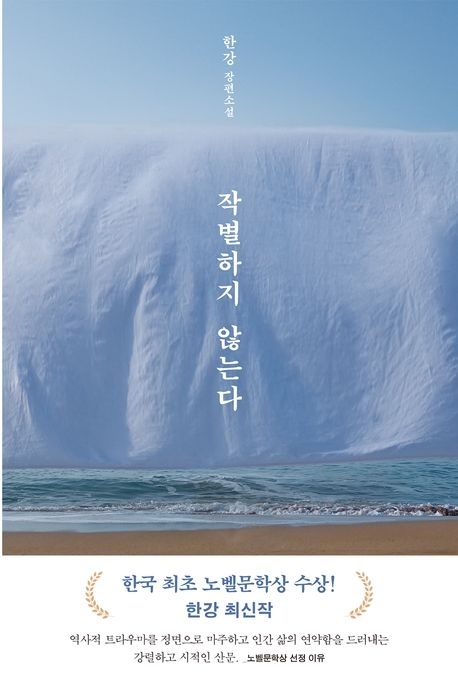
Han Kang's "I Do Not Say Goodbye" stood out in long-term cumulative sales. About 300,000 copies were sold across 13 countries — including the United Kingdom and France — between 2023 and 2025, making it the top-selling title among all works surveyed. The figures demonstrate sustained reader demand that transcends borders and language barriers, going well beyond any short-term Nobel Prize boost.
The pool of steady sellers also diversified. Fifty translated titles sold more than 5,000 copies in 2025, five more than the previous year, and 28 of those exceeded 10,000 copies. Seven titles sold more than 4,000 copies each year for three consecutive years from 2023 to 2025, establishing themselves as steady sellers: the English edition of Han Kang's "Greek Lessons," the English edition of Jeong Bora's "Cursed Bunny," the Russian edition of Son Won-pyung's "Areum's Brave Little Foxes 1 & 2 (Spooky Mission Camp)," the Spanish edition of Kim Geum-suk's "Grass," and three others.
Other titles that surpassed 10,000 copies included the English edition of Gu Byeong-mo's "The Wizard Baker," the Turkish edition of Cheon Seon-ran's "A Thousand Blues," the French edition of Lee Yeong-do's "Bird That Drinks Tears, Vol. 1," the Chinese edition of Jeong Ji-a's "Father's Liberation Diary," and the English edition of Lee Mi-ye's "The Break Room."
"Healing novels" — works exploring themes of rest, comfort and solidarity — also made a strong showing. Hwang Bo-reum's "Welcome to the Hyunam-dong Bookshop" sold about 88,000 copies across six translated editions, while Kim Ho-yeon's "The Convenience Store" sold about 66,000 copies across nine editions. Yu Yeong-gwang's "The Shop That Opens When It Rains," released in English in 2024, sold about 16,000 copies within two years of publication.
Jeon Su-yong, president of the Literature Translation Institute of Korea, said maintaining overseas sales of 1.2 million copies for two consecutive years — and surpassing 1,000 supported titles over the past five years — shows that "the global spread of Korean literature is not a passing phenomenon but is taking place on a sustainable reader base." He added that the institute would strengthen strategic translation and publishing support tailored to reader demand in each language market and to the characteristics of individual works, so that a wider range of Korean literature can consistently reach readers around the world.
pink@heraldcorp.com