The government and ruling party are moving to accelerate housing supply measures in the Greater Seoul area as their next policy step, following the announcement of the 2026 tax reform package that raises the tax burden on ultra-high-priced homes, non-owner-occupied single properties and multi-home owners.
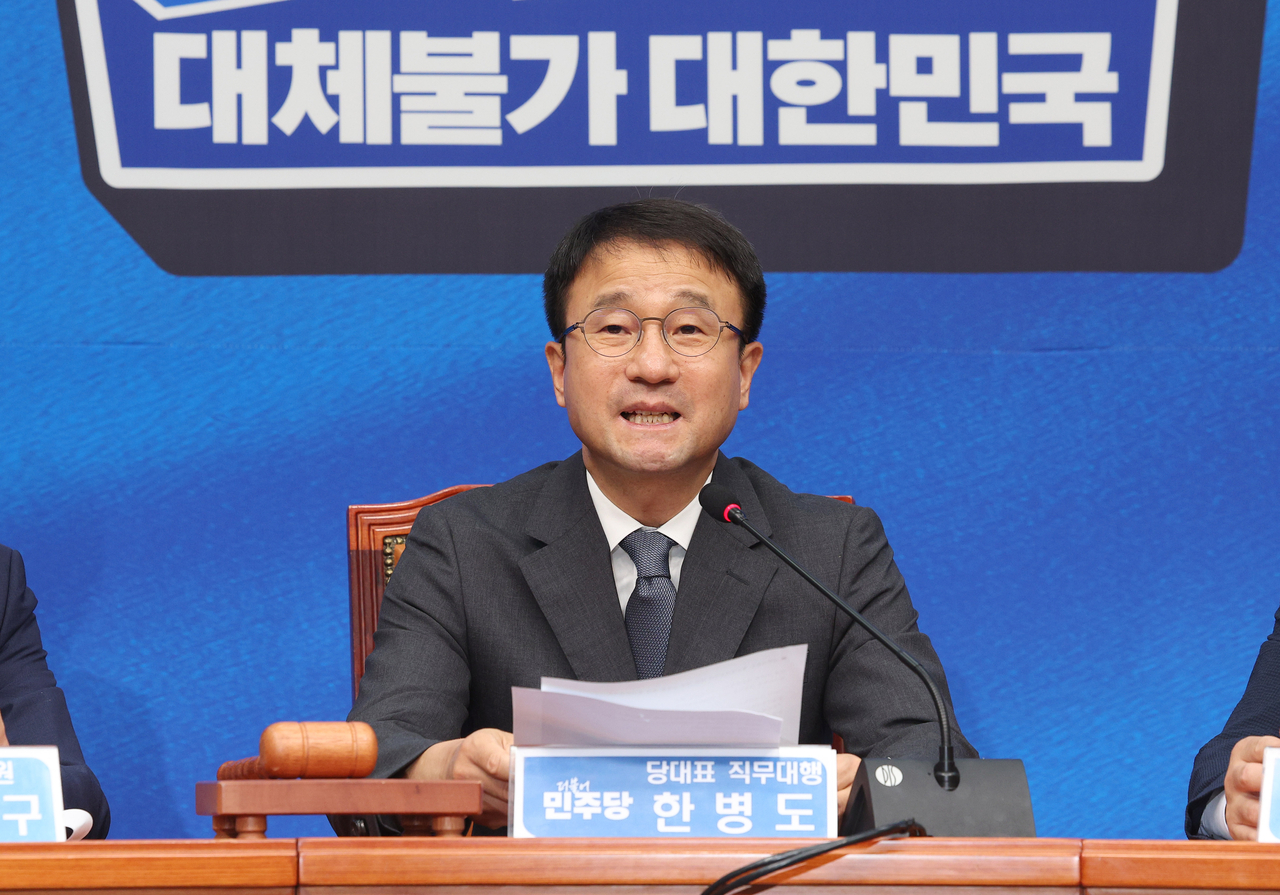
Han Byung-do, acting leader and floor leader of the Democratic Party of Korea, said at a Supreme Council meeting Wednesday that President Lee Jae Myung had directed officials at a real estate and stock market review session on Monday to conduct a full reassessment of existing housing supply measures. Han added that the Democratic Party would expand and restructure its housing market stabilization task force by mobilizing all relevant standing committees.
"We will carefully monitor the entire real estate market over the long term, with participation from the National Assembly's Land and Transport Committee and the Public Administration and Security Committee, as well as the Finance and Economy Planning Committee and the Political Affairs Committee," Han said. "We will also work to develop supplementary measures grounded in the voices of the public and concrete cases from the field."
Attention in the real estate market is now focused on when the government will announce its supply measures and what they will contain. According to political sources, the government's planned announcement of real estate supply and financial measures — originally expected in late July — has been pushed back to mid-August or later, taking into account domestic and international political conditions.
A senior official at the ruling party's policy committee said the government had originally intended to announce the housing supply measures before the tax reform package but that the plan had been delayed. "We have not yet been briefed by the government on the specifics of the supply measures, but once the party-government consultations are complete and the National Assembly's turn comes, we will of course discuss the supply measures in the Assembly as well," the official said.
While the timing has not been confirmed, the government, ruling party and Cheong Wa Dae share a firm conviction that expanding supply is the top priority for stabilizing the real estate market. Some observers expect a large-scale supply package capable of easing market concerns to be unveiled as early as this month.
Cheong Wa Dae said Wednesday that nothing has been finalized regarding the specific content of the supply measures or the timing of their announcement, but added that the government is reviewing a range of options to expand housing supply.
Industry sources say the government is considering a plan to supply more than 50,000 new homes, primarily in the Greater Seoul area. On top of the roughly 60,000-unit supply plan under the Jan. 29 Greater Seoul housing supply measures, the additional units could bring the total supply effect to around 110,000 homes. Sites under discussion include the Taereung Country Club, the Defense Counterintelligence Command headquarters and the Gwacheon racetrack.
The package is also expected to include expanded use of public land in central Seoul and the broader metropolitan area for new housing, along with deregulation of reconstruction and redevelopment projects and measures to speed up project timelines — steps intended to signal a sustained, long-term commitment to boosting supply.
Since taking office, President Lee has repeatedly stated that expanding supply is the key to stabilizing the real estate market.
At a press conference in June, he said, "Whether it is new construction, land development, or reconstruction and redevelopment, we need to move fast and get it done quickly."
Kim Yong-beom, the Cheong Wa Dae policy chief, struck a similar note last month at the Kwanhun Club forum, saying bluntly that the answer to the housing supply problem was simply to "just build" — a remark that drew wide attention.
President Lee chaired the real estate and stock market review session at Cheong Wa Dae on Monday, heading straight to the office immediately after returning from a trip to the United States and South America. The meeting ran for seven and a half hours.
A senior Cheong Wa Dae official who attended the session said the meeting examined the schedule and obstacles for each individual site "as if dissecting them one by one," and that the president expressed regret at not having delivered a stronger message on supply at an earlier real estate forum.
Shortly after the meeting, Cheong Wa Dae released a statement quoting President Lee as saying that "the prolonged housing supply slump since 2022 has created a supply cliff" and that "supply and its pace are critically important to overcoming this." The statement reaffirmed his commitment to expanding supply.
Meanwhile, calls for "extraordinary housing supply measures" have been growing among Democratic Party lawmakers from Seoul constituencies since the tax reform announcement, and observers expect their views to be substantially reflected in the forthcoming supply package.
bigroot@heraldcorp.com
addressh@heraldcorp.com
sang@heraldcorp.com