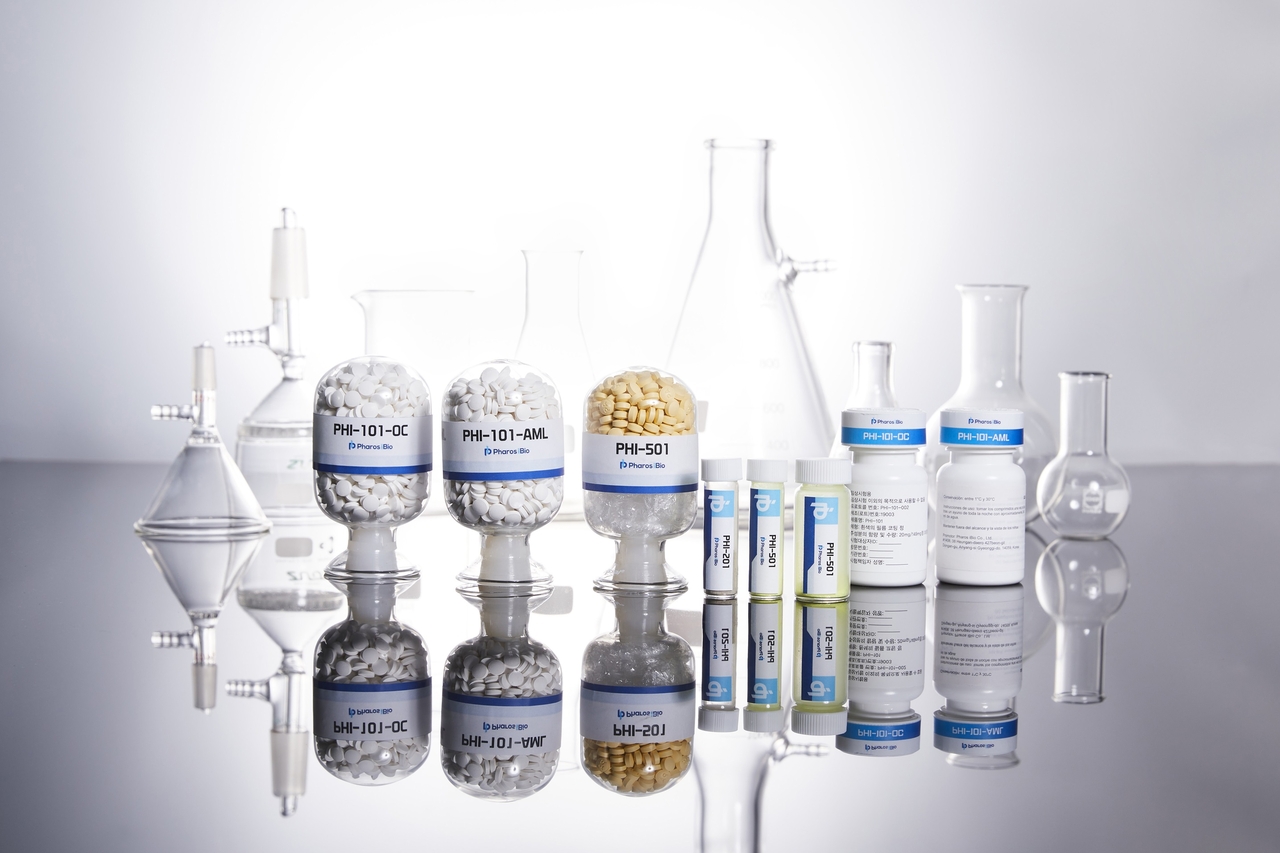
Pharos iBio, an AI-driven drug development company, has been selected for a national AI drug development project overseen by the Ministry of SMEs and Startups, partnering with Jactus Onco. The award follows earlier grants from the Ministry of Health and Welfare and the Korea Drug Development Fund, marking three consecutive national project wins and affirming the company's AI platform capabilities and research and development credentials.
Pharos iBio announced Thursday that it and Jactus Onco had been chosen for the AI-based drug candidate discovery track of the ministry's 2026 Pharmaceutical Biotech Venture Collaboration Technology Development Project.
The two companies will conduct 24 months of joint research aimed at identifying first-in-class small-molecule targeted anticancer drug candidates that inhibit IRP2, an iron-regulatory protein. Total research funding amounts to 1 billion won ($700,000), of which Pharos iBio will receive 400 million won.
Under the project, Pharos iBio will use its proprietary AI platform Chemiverse to lead candidate design and optimization, while Jactus Onco handles compound synthesis, biological validation and preclinical research. The two companies plan to apply an AI-Wet Lab feedback loop — in which AI predictions are validated through experiments and the results fed back into the AI model — to accelerate the development of preclinical drug candidates and a data package for global licensing deals.
IRP2, the target protein, regulates iron levels essential for cancer cell growth and proliferation. While existing treatments broadly reduce iron throughout the body, the research aims to selectively inhibit IRP2 within cancer cells, minimizing effects on healthy cells while maximizing cancer-suppressing efficacy. The companies will initially pursue colorectal cancer as the lead indication, with plans to expand into other major solid tumors including lung and breast cancer.
The AI-Wet Lab system creates a real-time feedback loop between AI algorithm-based predictions and experimental data validation. It reduces trial and error in early candidate discovery and sharpens the global licensing value of the pipeline.
"We are moving into full-scale open innovation with external institutions and ventures, marking the transition to Pharos iBio 2.0 this year," said Yoon Jeong-hyeok, chief executive of Pharos iBio. "We will expand strategic partnerships to deliver tangible commercialization outcomes, including global technology transfers."
silverpaper@heraldcorp.com