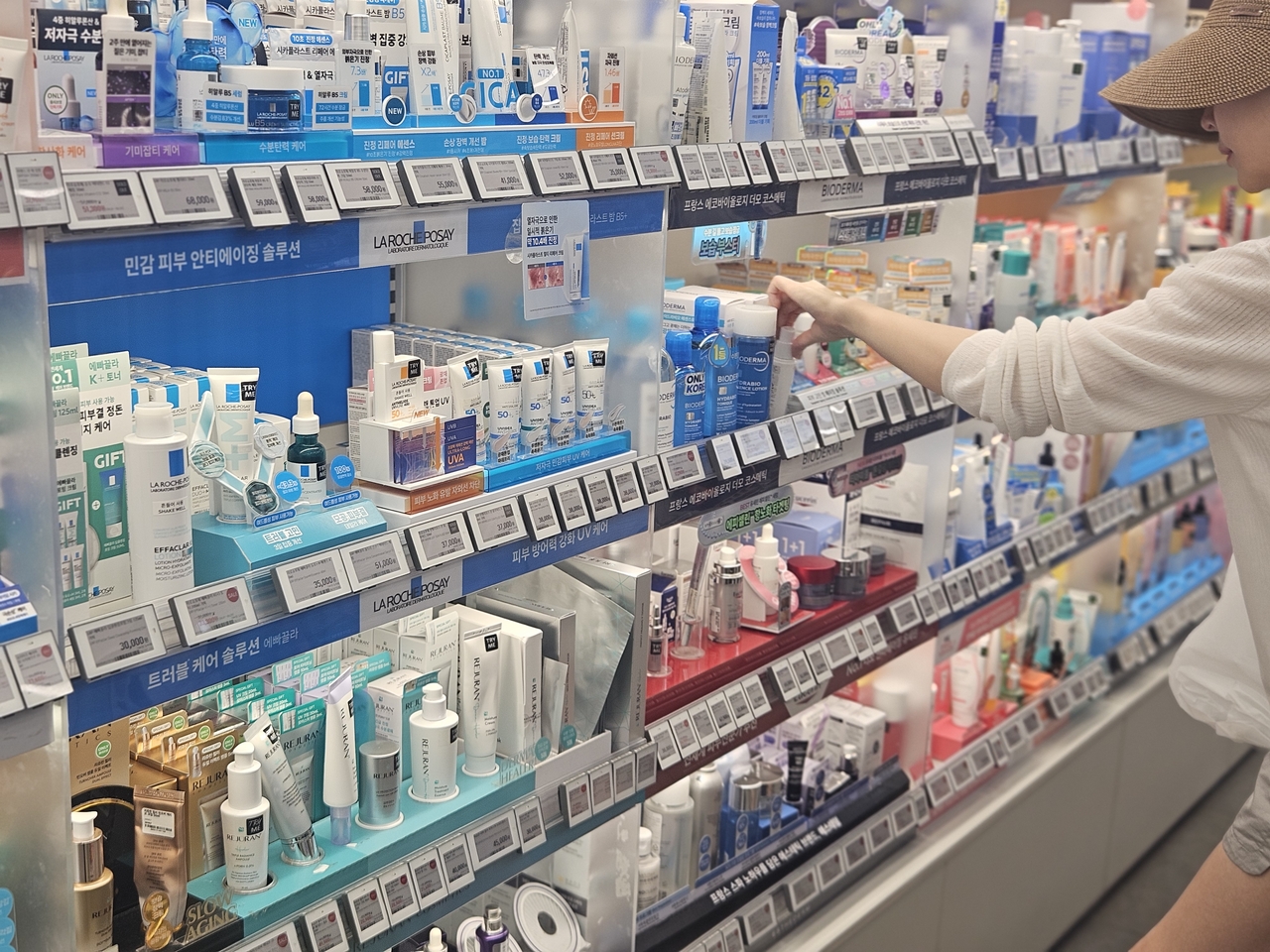
"Derma cosmetics" have emerged as K-beauty's new mainstream. As consumer interest in K-beauty shifts toward high-performance products, major pharmaceutical companies and cosmetics manufacturers are racing to launch derma lines — and those products are moving off pharmacy shelves and into mainstream retail channels.
CJ Olive Young now operates "Advanced Derma" sections at more than 650 stores nationwide, industry sources said Tuesday. The sections carry derma products co-developed with five pharmaceutical companies, including Dong-A Pharmaceutical, Dongkook Pharmaceutical and Daewoong Pharma. Since launching the Advanced Derma category in April, CJ Olive Young has expanded the dedicated sections, starting with its Central Myeong-dong Town store. Sales in June surged 260 percent from the April launch, with foreign shoppers accounting for 70 percent of revenue between April and June.
Daiso also carries derma products, including Dongwha Pharmaceutical's "Fusiderm" — a cosmetics brand built around the active ingredient in the wound-treatment ointment Fucidin. Derma brands, including Dong-A Pharmaceutical, will also take part in the Musinsa Beauty Festa, running Aug. 21 to 23. "Not just pharmaceutical companies but cosmetics manufacturers are also expanding their derma lineups and moving into channels with greater access to everyday consumers," an industry official said.
In South Korea, derma cosmetics were once distributed mainly through dermatology clinics and pharmacies, primarily for treating skin conditions or post-procedure care. The category entered a growth phase in recent years as the K-beauty wave swelled and more foreign visitors sought out Korean-style skin treatments. Products that had been premium niche items spread by word of mouth were reborn as mainstream K-beauty goods. The rise of warehouse-style pharmacies, which grew alongside an increase in foreign tourist arrivals, also helped raise the profile of domestic derma products.
Aestura, an Amorepacific brand rooted in Taepyeong Pharmaceutical, is a prime example. Aestura distributed its hospital-exclusive cosmetics line Atobarrier — launched in 2008 — through more than 4,500 clinics and hospitals. It then broadened its consumer reach by bringing the more accessible Atobarrier 365 into CJ Olive Young in 2018. The brand entered overseas markets starting with Japan in 2023 and is now sold in Vietnam, Thailand, the United States and 19 European countries.
Aestura's total sales last year rose 128 percent from the previous year. Amorepacific has set a target of growing Aestura's annual revenue to 1 trillion won ($707 million) by 2035.
LG H&H is also building up its derma portfolio, with Physiogel, CNP and Dominas as its flagship brands. Dominas, launched in 2019, draws on the active ingredient in Domina Cream — a melasma and hyperpigmentation treatment made by subsidiary Taegeuk Pharmaceutical. The brand grew primarily through home-shopping channels, which skew toward customers in their 40s and older, before expanding with the "At Clinic" line targeting consumers in their 20s and 30s. At Clinic topped the all-in-one category on Japan's Qoo10 platform last year.
Derma cosmetics are winning broad industry support because, despite their premium price points, they appeal to consumers of all ages dealing with skin concerns. According to Fortune Business Insights, the global derma cosmetics market was valued at $47.91 billion last year and is projected to reach $52.59 billion this year before growing to $117 billion by 2034 — equivalent to 166 trillion won.

soho0902@heraldcorp.com