Marking the 81st anniversary of the Korean National Police Agency, The Herald Business is introducing all 31 police stations in Seoul.
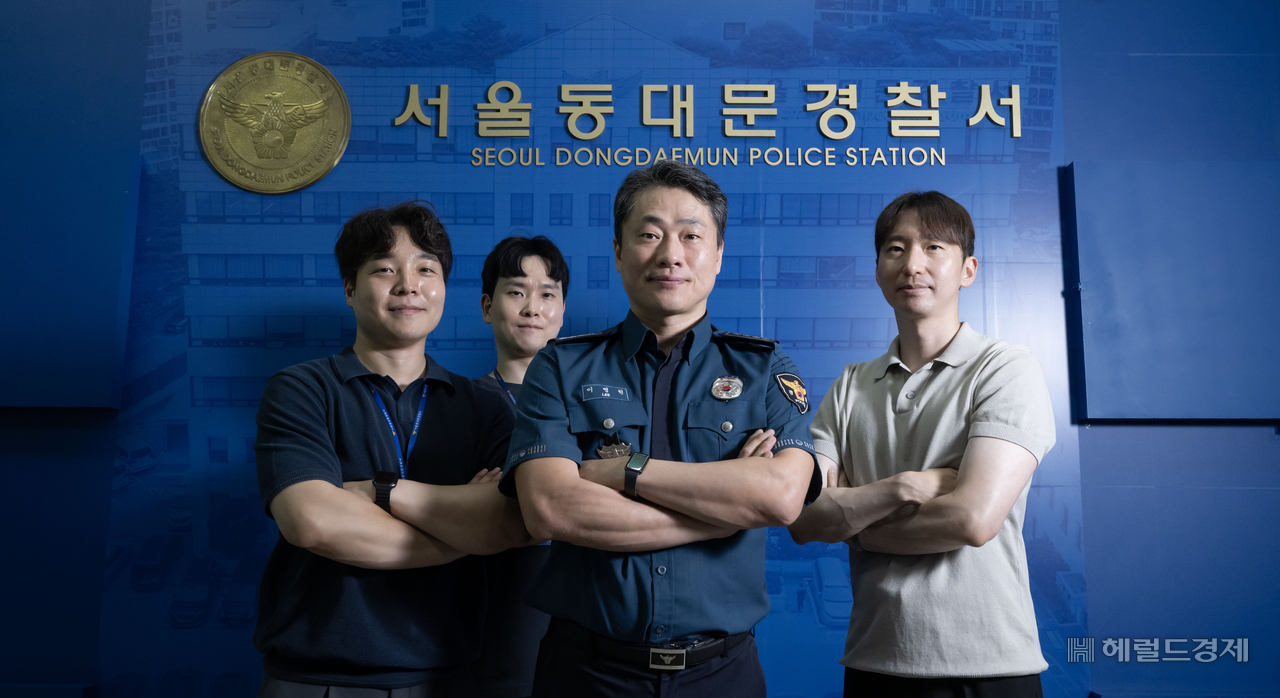
Dongdaemun-gu, home to 350,000 residents, is a district of contrasts. The Cheongnyangni and Jegi-dong areas are packed with traditional markets and draw heavy foot traffic, particularly among older residents, while Hoegi and Imun-dong — where Kyung Hee University, Hankuk University of Foreign Studies and the University of Seoul are clustered — are home to young people in their 20s and a sizable population of international students.
Cheongnyangni is also the transportation hub of eastern Seoul. Seoul's first subway line, Line 1, opened in 1974 linking Cheongnyangni and Seoul Station and still runs through the area, joined today by the Gyeongui-Jungang Line, the Suin-Bundang Line, the Gyeongchun ITX and KTX trains bound for Gangwon Province. A GTX line is also set to open in the area.
The 826 officers and staff of the Dongdaemun Police Station are responsible for public safety across the district. Because the station's jurisdiction spans both an elderly residential area and a university district, it handles an unusually wide range of policing needs — from everyday community safety to emerging crimes.
The station was established in 1957 as the Cheongnyangni Police Station and took its current name in 2006 after absorbing several areas, including Sinseol-dong, that had previously been under the jurisdiction of Hyehwa Police Station.
![The Dongdaemun Police Station in Seoul's Dongdaemun-gu. [Provided by Dongdaemun Police Station]](https://wimg.heraldcorp.com/news/cms/2026/08/15/news-p.v1.20260812.d285f3a1d5454be1942faa3fa5b4a4b5_P2.jpeg)
Lee Myung-won, who took over as station chief in June, identified the district's starkly different neighborhoods as its defining policing challenge. "The Cheongnyangni market and Jegi-dong side has a large elderly population with traditional markets and commercial districts, while Imun and Hoegi-dong are concentrated with universities and young single-person households," Lee said. "The most distinctive feature of Dongdaemun-gu is that completely different policing conditions appear right across the same boundary."
The area he watches most closely is what he calls "relationship crimes" — a category covering domestic violence, dating violence and stalking. "Relationship crimes can start as minor incidents and escalate into serious offenses, so I review the status of these cases multiple times a day," he said.
The station has been working to deepen its ties with local residents. In July, it invited 100 people — including neighborhood patrol volunteers, model drivers' association members and school parents — to the station to explain its work and hear their concerns. It also plans to expand safety forums for international students, reflecting the area's large university population. "The era of police alone being responsible for public safety is over," Lee said. "Results come when residents, district offices and related agencies move together."
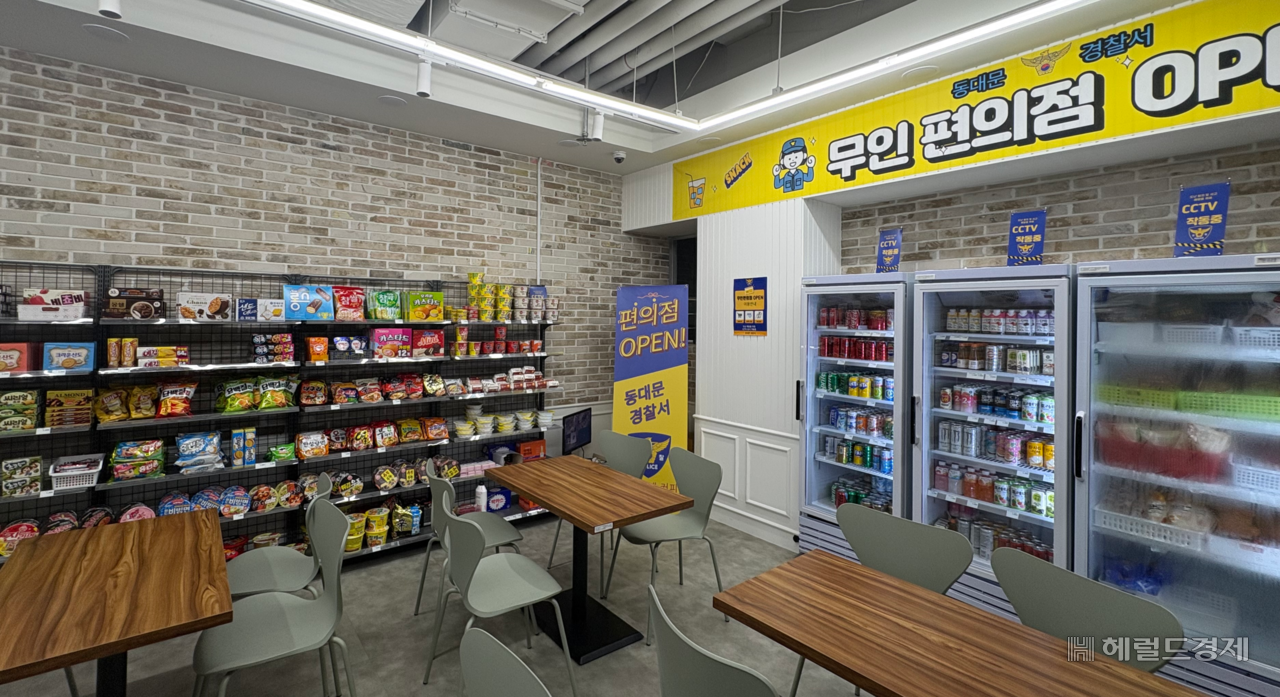
The station earned an S rating — the top grade — in the national policing performance evaluation for two consecutive years in 2024 and 2025, and ranked first among all 31 Seoul police stations in a job satisfaction survey the Seoul Metropolitan Police Agency conducted last year. It was also the first frontline station to install a 24-hour unmanned convenience store. It runs a program called "We treat staff inconveniences as bugs," which collects anonymous suggestions from employees and acts on them.
Faces of Dongdaemun Police Station: Officer rescued 79-year-old on snowy mountain at dawn
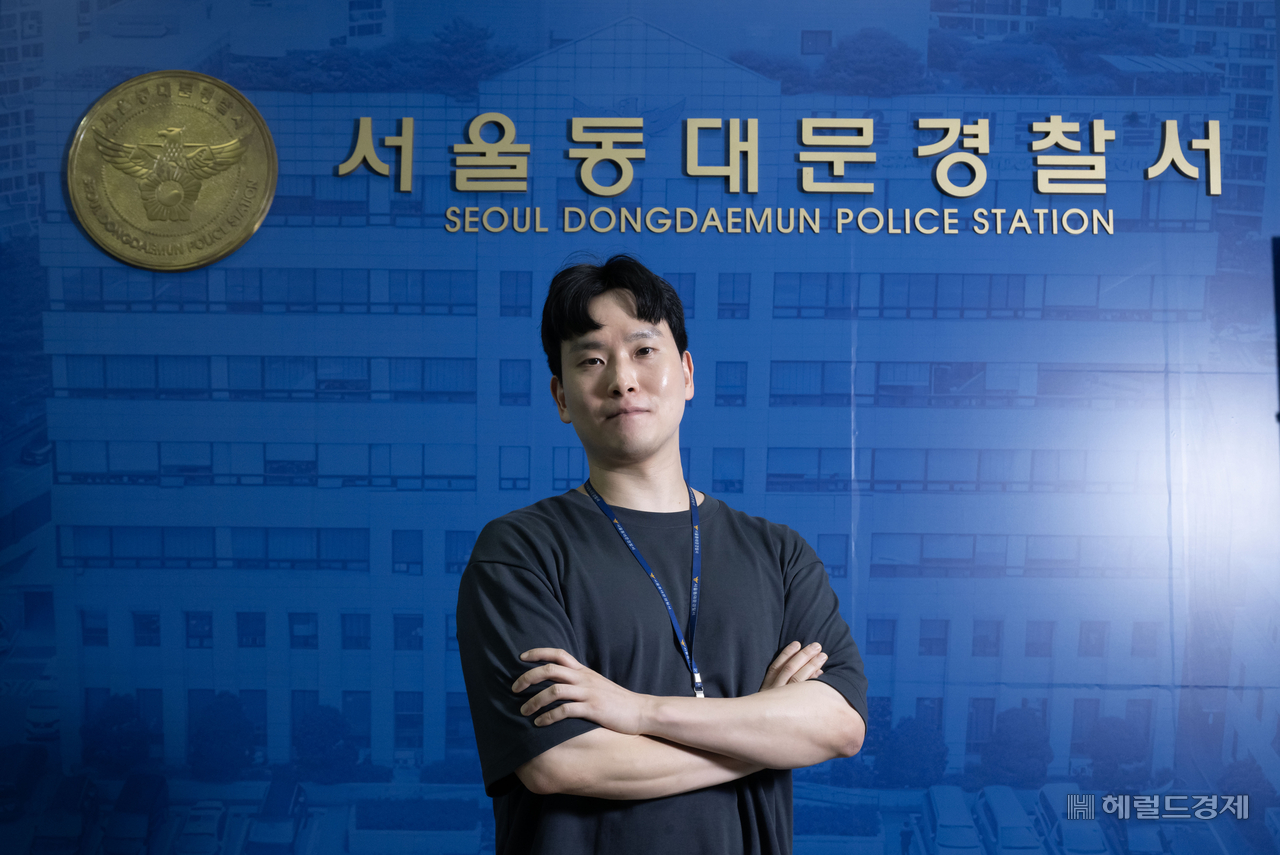
Snow was falling on Baebongsan on the night of Dec. 14, 2024. Earlier that morning, around 11 a.m., a 79-year-old man had left home after an argument with his wife, leaving his cellphone behind. When he had not returned by late that night, his son filed a missing persons report at around 11:30 p.m. Police traced the man's movements using family statements, public phone records and closed-circuit television footage, confirming that he had entered Baebongsan and had not come back down.
"We judged that the elderly missing person's life could be in danger — he had already been on the mountain for a long time in below-freezing temperatures," said Kim Jun-young, a detective sergeant with the missing persons team. Two members of the missing persons team and four local officers set out with large lanterns, sharing their search route with the district office's control center.
About four hours later, at around 3:40 a.m., the man was found in undergrowth off the hiking trail. "His body was so cold that he could barely move or speak," Kim said. "We took off our outer clothing to cover him and called 119. Because vehicles couldn't reach the spot, we carried him down the mountain on a stretcher together with the paramedics." The man was later transferred to a university hospital and recovered.
The missing persons team handles cases ranging from vulnerable groups — dementia patients, children and people with intellectual disabilities — to adult disappearances. Officers track movements using CCTV, cellphone location data and on-the-ground inquiries, and can issue missing persons alert messages when needed.
The work is heavily shaped by the seasons. In the dead of winter, but also during the intense heat of summer, elderly people and dementia patients can face life-threatening situations simply from being outdoors for extended periods. The team regularly walks the streets in person to trace routes that CCTV cameras do not capture.
"The most important thing in a missing persons case is a fast report and an early response," Kim said. "Rather than thinking 'let's wait a little longer,' please report immediately if someone is out of contact in a way that seems unusual."
Working with residents to catch illegal flyer distributors — and the people who print them
Even a single flyer scattered on the street is a policing matter for Dongdaemun. When complaints about illegal loan-shark flyers flooding the Sinseol-dong and Jangan-dong areas mounted last February, the station's public order unit moved in alongside residents.
Officers visited 29 merchants' associations and print shops, handing out notices and contact information and asking them to report anyone seen distributing flyers. Joint patrols with residents ran in parallel. Two tip-offs from residents proved decisive: the witnesses provided specific details on the time, location and physical description of the distributors, allowing police to identify them through CCTV footage and trace the supply chain back to the printer, who was arrested on March 30. Officers recovered 2,100 flyers in total.
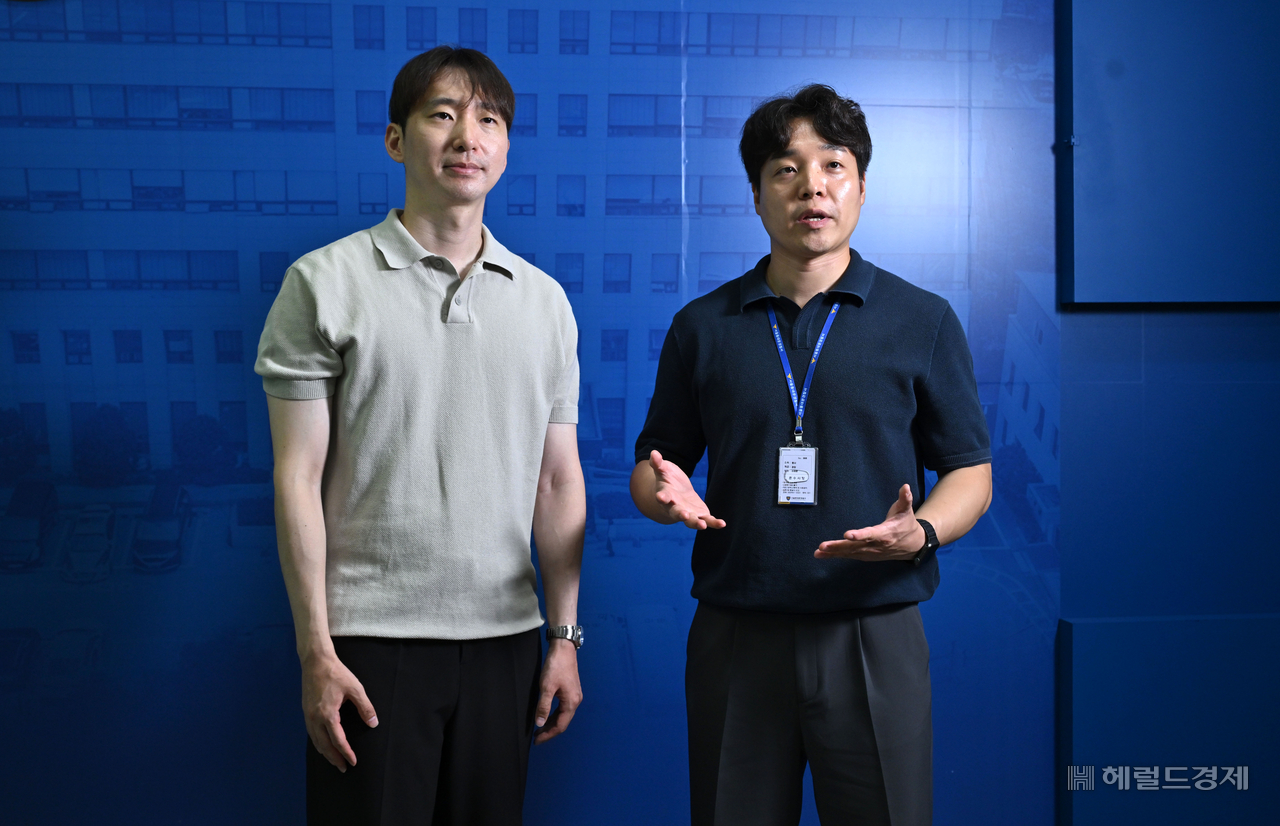
"If we only crack down on the distributors, someone else can be sent in to scatter flyers again," said Jung Chang-yoon, head of the public order unit. "It was thanks to the residents' detailed reports that we were able to trace the operation all the way back to the production stage." The crackdown also eased residents' daily frustrations: complaints filed through the national civil petition system fell from 93 to 54, and reports related to adult entertainment violations dropped from 248 to 222.
The public order unit handles matters closely tied to residents' daily lives: lost-and-found management, summary trial proceedings, firearms and explosives oversight, and adult entertainment establishment enforcement. The station processed 6,661 lost-and-found cases annually — ranking 14th among Seoul police stations — and handled 318 summary trial cases, placing it sixth.
The enforcement landscape is also shifting. Where street touting and densely clustered establishments were once the main targets in Cheongnyangni and Jangan-dong, operators have increasingly moved to recruiting clients online or running businesses out of closed spaces such as officetels. "Recent vice crimes are becoming increasingly covert, using online channels or enclosed spaces," said Detective Sergeant Lee Jae-hoon. "It's important not just to conduct on-site enforcement but to identify the actual operators and the structure of the illegal business."
Jung said the real reward of working in the public order unit comes not from high-profile cases but from moments when residents notice a change in their everyday lives. "I feel a sense of fulfillment when residents say the streets look cleaner after a flyer crackdown, or when someone thanks us for recovering a lost item," he said. "The role of the public order unit is to reduce the small hazards around people's daily lives so that citizens can get through an ordinary day without any particular inconvenience."
jookapooka@heraldcorp.com