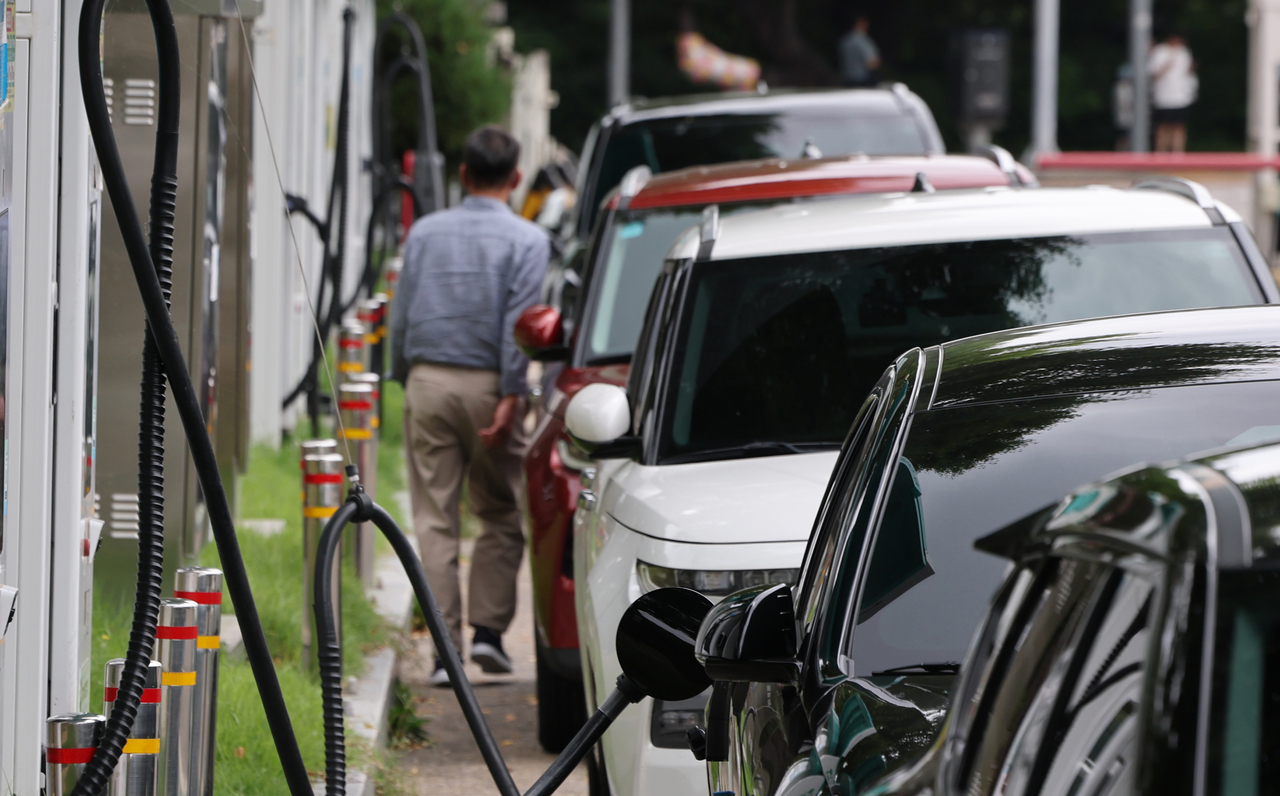
The South Jeolla-Gwangju integrated special city announced Monday it will provide additional subsidies for 413 electric vehicles for residents of Gwangju's five autonomous districts and others.
By vehicle type, the allocation covers 360 passenger cars, 50 trucks and three vans. Cities and counties in South Jeolla Province will run their own separate distribution programs.
Eligible applicants include citizens aged 18 or older who have been registered at an address in one of Gwangju's five autonomous districts for at least 30 days prior to the application date, as well as businesses and organizations with operations there.
Applications for passenger cars open Thursday at 10 a.m., while trucks and vans will be accepted from Monday at 10 a.m. Recipients will be selected in the order vehicles are released and registered.
The combined national and local government subsidies vary by vehicle performance and size: up to 7.54 million won ($5,330) for mid- to large-sized passenger cars, up to 13.65 million won for small trucks, and up to 91 million won for large vans.
Additional support equivalent to a set percentage of the national subsidy will go to near-poverty households, small business owners, farmers, first-time young buyers and delivery vehicles. Electric taxis will receive an extra 2.5 million won, and households with multiple children will receive up to 3 million won in additional support.
The city supported the distribution of 2,643 electric vehicles across two rounds of applications in the first half of this year.
sij@heraldcorp.com