Seoul's Dongdaemun-gu said Tuesday that a social worker and a visiting nurse rescued a resident in his 60s who had stopped responding to welfare check-in calls during a heat wave, discovered he was suffering from heat illness and arranged emergency transport to a hospital via 119.
The man, identified only as Mr. A, a resident of Jeonnong 1-dong in Dongdaemun-gu, showed no signs of trouble when his assigned social worker reached him by phone on Aug. 4. The following day, however, he did not answer a call from the district's AI welfare check service, and the missed-call alert was automatically forwarded to the social worker at the neighborhood community center.
The social worker called Mr. A more than 10 times on Aug. 6 without reaching him. Rather than treating the silence as a simple absence, the worker went to his home in person, accompanied by a visiting nurse.
When they arrived, Mr. A was in poor condition due to heat illness. The social worker immediately called 119, and Mr. A was transported to a hospital for treatment. His condition has since improved, and he was scheduled to be discharged Sunday.
After a major heat alert took effect in Dongdaemun-gu on Aug. 4, the district immediately activated welfare checks every two days for vulnerable residents, including those at high risk of dying alone. The protocol had been established at an expanded senior staff meeting on July 23, which set tiered response measures for strengthening welfare checks on vulnerable residents according to the level of heat advisories in effect.
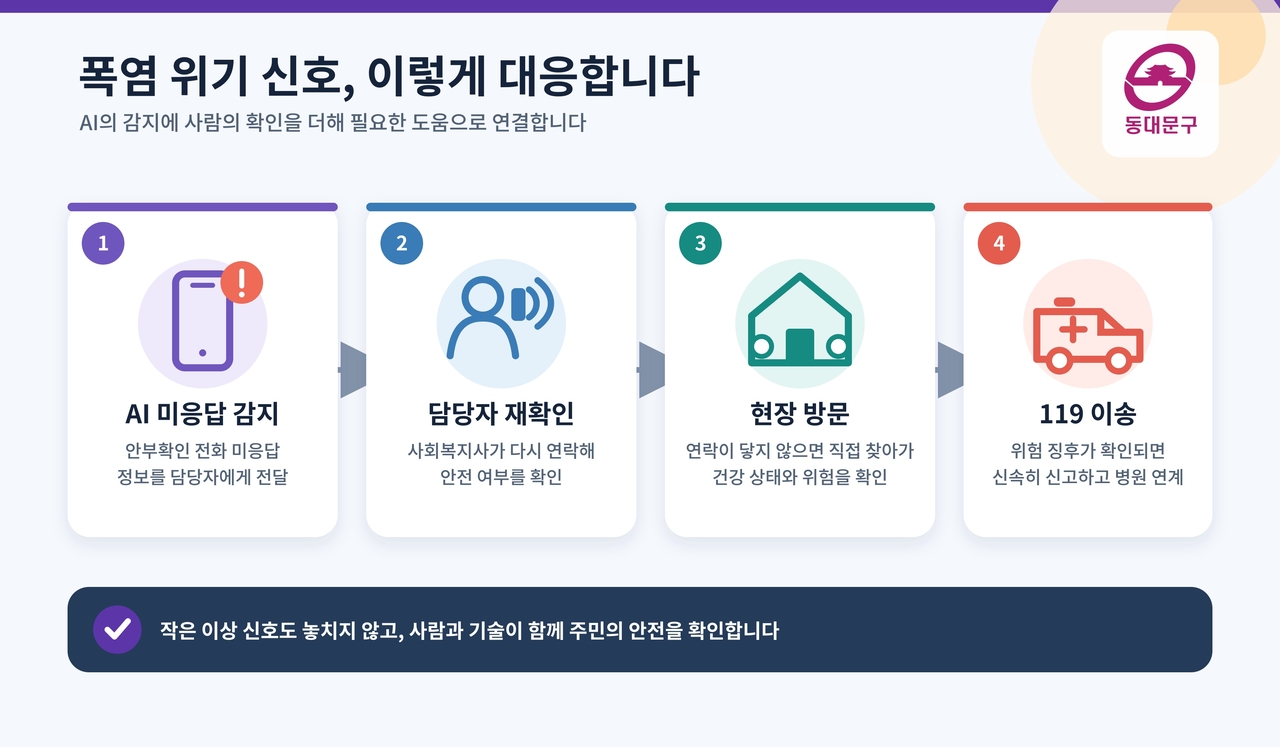
The case illustrates the district's response chain working as intended in a real crisis: a social worker's routine check-in, detection of a missed AI call, a follow-up by the case manager, an in-person visit and finally emergency transport.
Dongdaemun-gu operates a human safety network — comprising neighborhood care teams, honorary social welfare civil servants and daily living support workers — in tandem with smart welfare systems including an AI check-in service and an all-care welfare monitoring service. When a missed call or abnormal sign is detected, the assigned worker follows up directly and visits the resident in person if necessary.
The welfare checks every two days for households at risk of solitary death will continue until the major heat alert is lifted. If warning signs are found, the district plans to respond swiftly with in-person visits, 119 emergency calls and, where needed, Seoul-type emergency welfare support including cooling supplies and living expenses. Daily tallies of welfare check contacts, missed calls and detected warning signs will also be compiled and monitored.
"We were able to find a resident in crisis in time because we did not overlook a small signal — an unanswered phone call — and went to check in person," Dongdaemun-gu Mayor Choi Dong-min said. "While the heat wave continues, we will combine human care with smart technology to keep a close watch so that no warning sign from households at risk of solitary death or vulnerable to extreme heat goes unnoticed."
seouldream01@heraldcorp.com