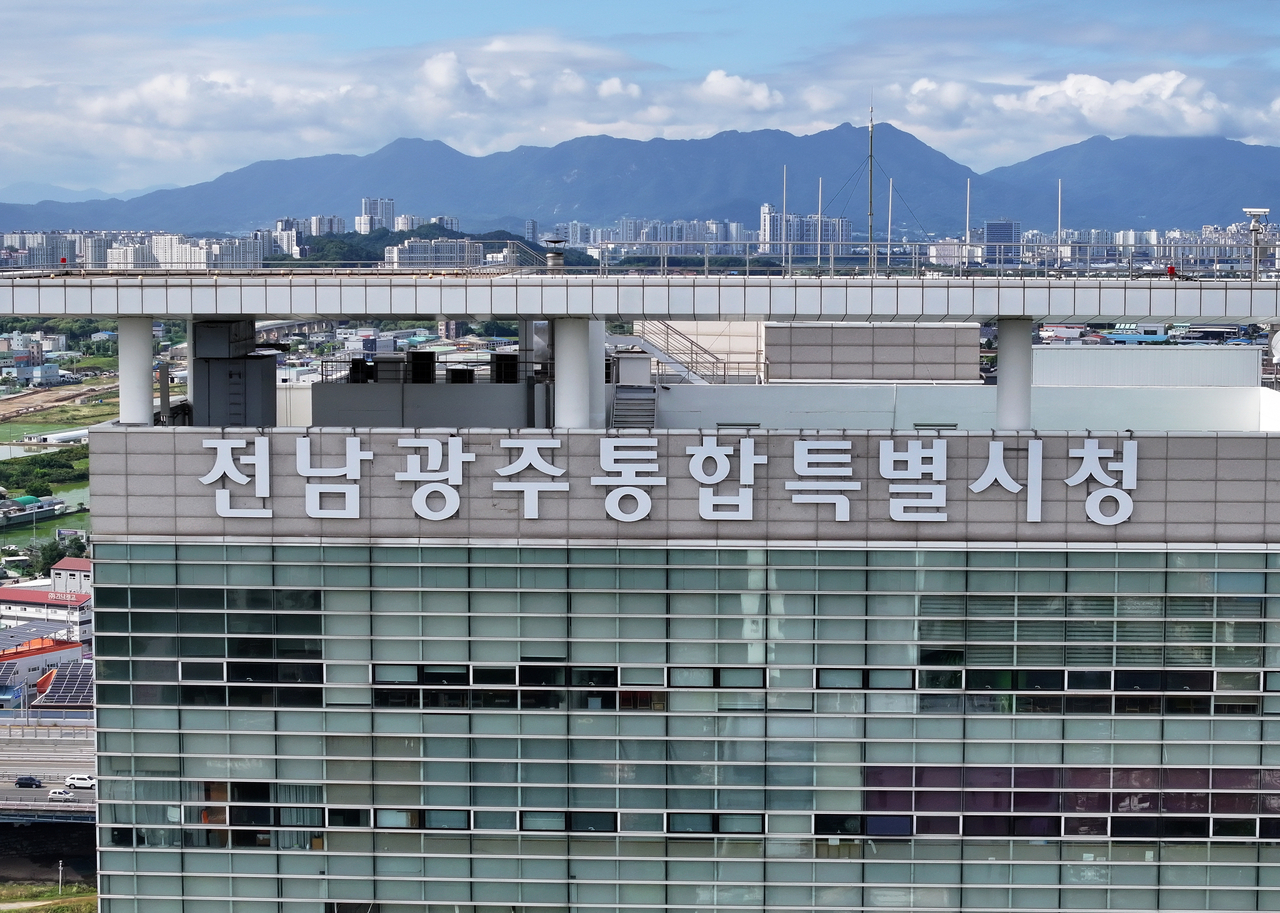
The South Jeolla-Gwangju Integrated Special City said Wednesday it will repay its existing debts on schedule and manage its consolidated finances in a stable manner through revenue expansion and spending efficiency measures.
As of the 2025 fiscal year-end, the city's combined debt stands at 3.65 trillion won ($2.64 billion) — comprising 1.43 trillion won from the former South Jeolla Province and 2.23 trillion won from the former Gwangju Metropolitan City. The debt ratio, which stood at 25.61 percent under the former Gwangju city alone, has fallen to 16.25 percent under the integrated city's combined fiscal base.
The city attributed the drop in the debt ratio to the merging of both entities' debts and fiscal scales, and said it plans to systematically track the original purpose, outstanding balance and annual repayment schedule of each inherited obligation.
Debt under the former Gwangju city grew between 2023 and 2025 as a real estate downturn and broader economic slowdown reduced revenues, while spending on social welfare, legally mandated costs and large-scale investment projects continued to rise.
A significant portion of the debt funded public infrastructure — including urban railway Line 2, long-deferred parks and roads. Along with the debt itself, the integrated special city will inherit the public assets created through that spending, including the railway, parks and roads.
These infrastructure assets serve as public resources essential to maintaining urban functions, improving residents' mobility and enhancing their living environment.
While the merger has increased the total debt load and annual repayment obligations, the revenues and expenditures of both former entities have been consolidated into a single fiscal framework, meaning the debt ratio and municipal bond issuance ceiling are now calculated against the integrated city's full fiscal scale.
Debt from the former Gwangju city will be repaid according to the annual schedules set at the time each municipal bond was issued. The merger does not accelerate repayment timelines or require drawing on the former South Jeolla Province's budget to cover Gwangju's obligations.
The city plans to establish a dedicated fiscal innovation task force to review central government funding, integration incentive grants, spending restructuring and next year's fiscal outlook, and to develop sector-by-sector response measures.
It will also strengthen local tax collection and delinquency management to boost self-generated revenue, and will continue urging the central government and lawmakers to raise the statutory rate of local allocation grants and expand other forms of national fiscal support.
New municipal bonds will be issued only for large-scale essential projects, and resources secured through revenue growth and spending efficiency will be directed toward principal repayment and the early retirement of high-interest bonds, reducing both debt and interest burdens.
"Next year, the expansion of local allocation grants driven by the semiconductor industry's strong performance, combined with the full deployment of the 5 trillion won annual integration subsidy, will also broaden our investment capacity," budget director Lee Deok said. "We will protect fiscal soundness without cutting the former South Jeolla Province's budgets for agriculture, fisheries, welfare and social overhead capital, and we will disclose debt levels and repayment progress transparently."
sij@heraldcorp.com