
"The prices are cheap, but there isn't all that much to buy."
A housewife in her 50s surnamed Kim visited the newly reopened Homeplus after hearing about its discount promotions. Her cart held just one pack of beef and a bag of lettuce. "Most of what they sell you can find at any other supermarket," she said. "I don't think I'll be coming back."
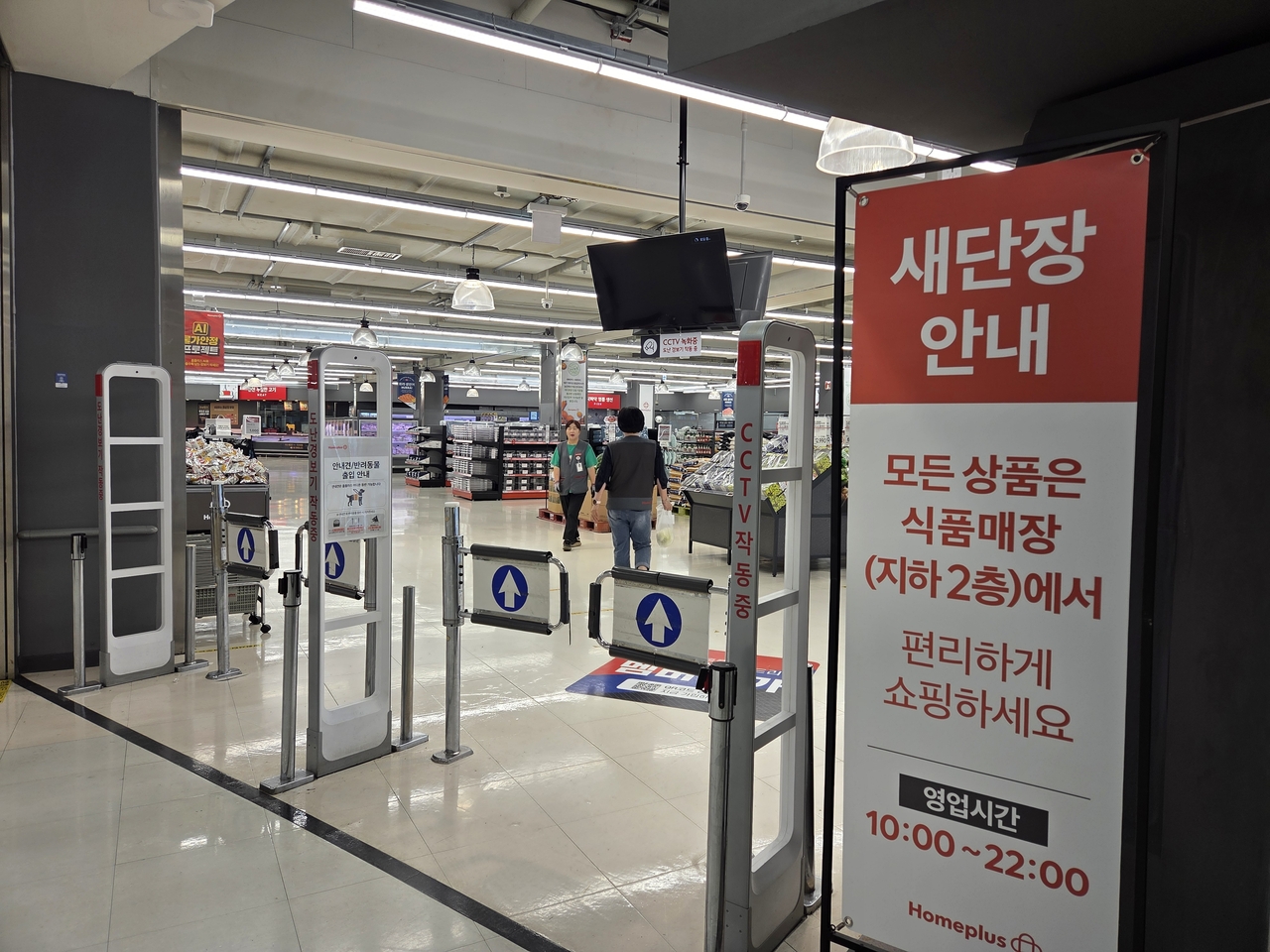
A visit to the Homeplus Namhyeon store in Gwanak-gu, Seoul, around 5 p.m. Wednesday — one week into its reopening — found the aisles quiet. With the dinner hour approaching on a weekday afternoon, only about 10 customers were browsing the shelves. The three-story store was operating only its below-ground second floor, which carries fresh and processed food. Of six checkout lanes, just one was staffed by an employee; the rest were self-checkout machines.
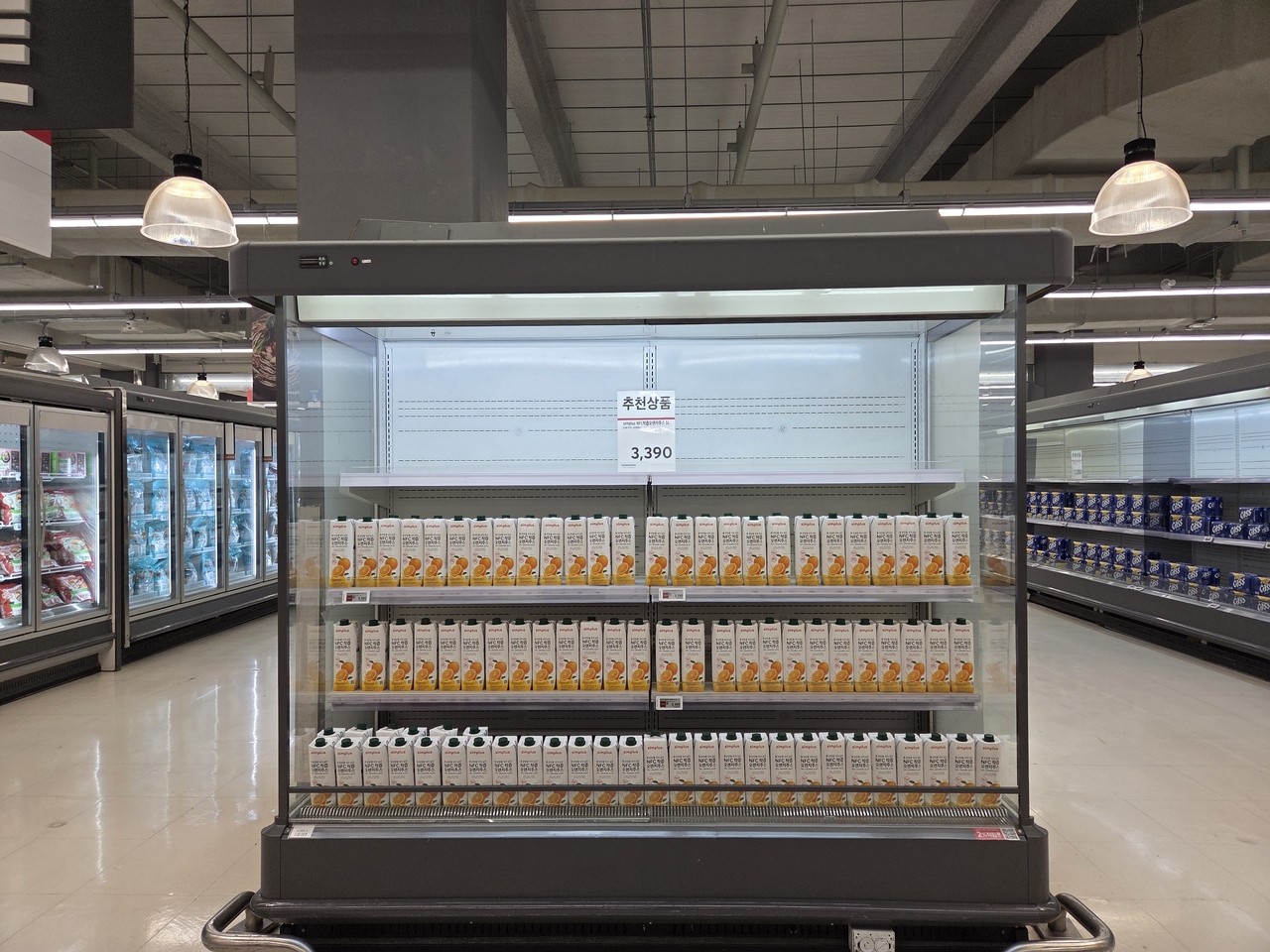
Stock levels at the Namhyeon store were relatively high around the food aisles, but the overall product variety was thin. Some shelves that should have held food items were instead stocked with cutting boards and bowls. Large sections of the floor space had been taken over by Simplus, Homeplus's private-label brand.
A man in his 30s surnamed Park said he had come in because of the sale. "I wanted to pick up some quick meal items, but the selection isn't big enough to make it easy to choose," he said. Park left with only two Simplus frozen pizzas in his cart.
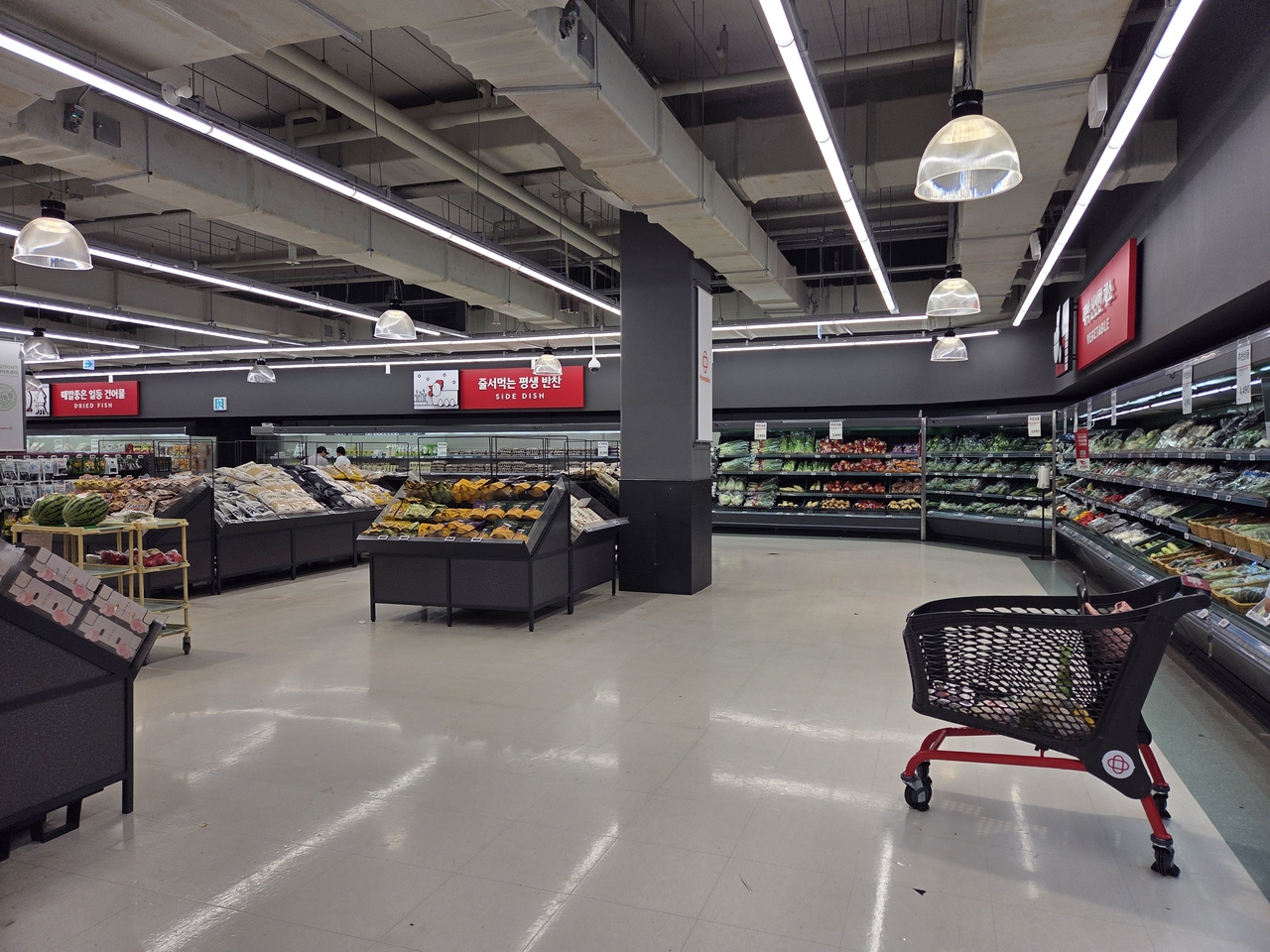
The fresh food section told a different story. Unlike the rest of the store, it was reasonably well stocked — eggs, watermelon, leafy greens and meat were all on display. Trays of 30-count eggs lined the shelves, and vegetables including green onions, napa cabbage, radish and onions looked fresh. The seafood corner, which once carried abalone and flounder, sat empty, though a notice softened the disappointment: fresh crab of the season would begin arriving in stages starting Friday.
Prices on available items were low. Membership holders received discounts of 20 to 40 percent on select products, including meat. Domestic pork samgyeopsal (belly slices, 360 grams) was on sale for 6,930 won ($5) at the membership price, while Australian sirloin and shoulder (500 grams) was marked down 40 percent to 12,000 won. A couple in their 60s said they had loaded up on meat because of the low prices. "It's cheap, so we just grabbed a lot," the husband said. "But if business is this slow, I wonder whether they can keep running normally selling things this cheap."
Homeplus reopened all 67 of its stores nationwide on Aug. 13. A week has already passed. Shoppers turned out in force, drawn largely by a sweeping promotional campaign called "Homeplus is Back." Cumulative sales from Aug. 13 through Aug. 17 came to 43.7 billion won, a 191 percent increase from the pre-suspension period of July 2 through July 6. Daily average customer traffic also rose about 74 percent over the same comparison period, from 138,200 to 239,600.
With membership discounts at the center of the strategy, usage of Homeplus's own app, MyHomeplus, jumped sharply. According to IGAWorks' Mobile Index, the app's daily average active users from Aug. 13 through Aug. 16 — the days immediately following the reopening — stood at 284,231, up 130.7 percent from 123,182 during the equivalent days before the suspension, July 2 through July 5. Daily new app installations surged 693.2 percent over the same comparison period, from 1,033 to 8,194.
Homeplus plans to roll out additional flash sales starting Friday. It will sell autumn crab — chilled live crab — exclusively in physical stores at 690 won per 100 grams, and offer US-produced white fresh eggs in 30-count trays at 4,990 won, limited to two trays per customer. On Friday it will offer US-origin galbi (short rib) at half price, and on Saturday it will do the same for grade-2 domestic Hanwoo beef. The company plans to keep rotating discounted items through the end of August.
Whether the chain of sales can translate into sustained revenue is an open question. Deep discounts may draw customers in the short term, but improving profitability is a different matter. Product supply and the resumption of online delivery also remain challenges. Online operations restarted at 59 stores on Aug. 13, but shortages have led to orders going unaccepted or being canceled even after payment was completed.
Settlement disputes with suppliers and small-business tenants continue to simmer. Vendors who supplied Homeplus but have not been paid submitted a brief to the court Wednesday urging that a repayment plan for roughly 793.9 billion won in public-interest claims be incorporated into the company's rehabilitation plan. According to the Homeplus Tenant Merchants Association, the company has withheld sales settlement payments to some tenants since May.
"The prerequisite for running a retail model like Trader Joe's is product variety," said one industry official. "Maintaining relationships with suppliers is what allows you to keep shelves stocked. Given that, the current approach of throwing discounts at customers to drive foot traffic is unlikely to help much in the long run."
Homeplus suspended store operations after running out of operating funds following a court decision on July 3 to terminate its rehabilitation proceedings. It subsequently secured 200 billion won in debtor-in-possession financing and resumed business. The company has submitted a second revised rehabilitation plan to the court. The deadline for the plan's approval is Sept. 4, by which point Homeplus must demonstrate a recovery in sales to prove it can return to normal operations.
korean@heraldcorp.com





