
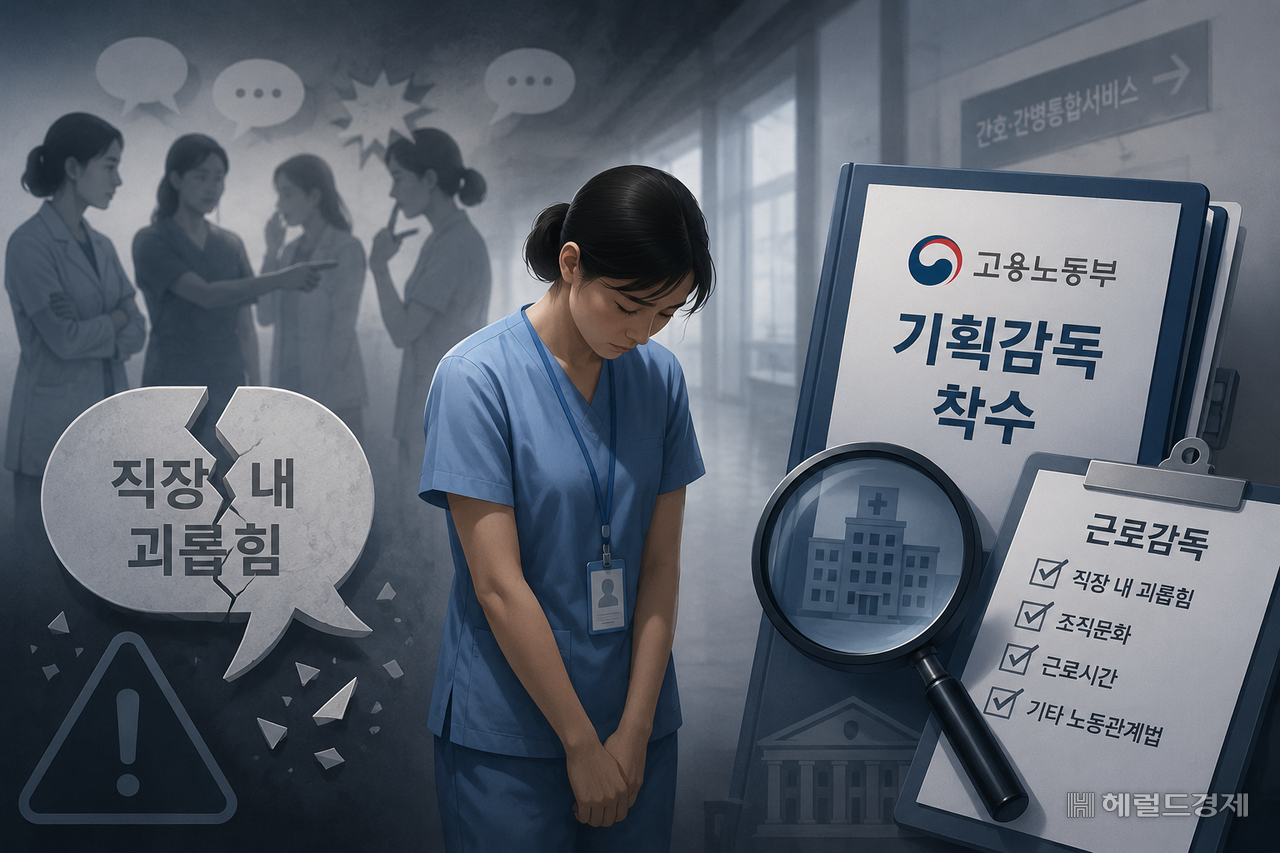
The government plans to build a region-led labor education system to curb entrenched workplace abuses, including unfair treatment of young part-time workers and the practice known as "taeeum" — a form of severe workplace bullying targeting junior nurses.
Rather than having the central government deliver uniform programs, local governments, labor and management groups, and regional education offices will directly analyze their own labor environments and develop the training they need.
The Ministry of Employment and Labor and the Korea Employment and Labor Education Institute announced Tuesday that they will establish "regional labor education councils" together with metropolitan governments to lay the groundwork for a region-led "lifelong labor education" framework. The councils will be piloted in nine regions this year before expanding to all metropolitan governments nationwide in 2027.
The initiative is part of a government policy agenda item called "lifelong labor education and the spread of a labor-respecting culture." It aims to reconnect labor education that had been fragmented across central government agencies and individual organizations, and to deliver it systematically, tailored to each region's labor environment and educational needs.
The approach differs notably from the existing model, in which the central government hands down fixed programs to local areas. The regional councils will operate in conjunction with existing tripartite dialogue bodies — the regional labor-management-civil society councils. Local governments, regional labor offices, and school boards will participate alongside labor, business, and academic representatives, workers' rights centers, and civil society groups to identify and pursue the education each region actually needs.
Each council will set regional labor education goals and priorities, conduct surveys of the current state of labor education, and identify unmet needs. The councils will also connect local instructors and budgetary resources, propose policies based on field-level input, share successful education models across regions, and discuss ways to raise awareness of workers' rights.
Each council is expected to have between eight and 15 members. Participants will include local governments, regional labor offices, metropolitan and provincial education offices, and the Korea Employment and Labor Education Institute, as well as regional chapters of the Federation of Korean Trade Unions and the Korean Confederation of Trade Unions (KCTU), regional employers' federations, chambers of commerce, the Korea Federation of SMEs, and small-business associations. University professors, workers' rights centers, and civic groups representing women, youth, and migrants are also eligible to participate.
The Ministry of Employment and Labor and the Korea Employment and Labor Education Institute will develop and provide life-stage-tailored education content to ensure the regional councils translate into actual training. They will also train specialist instructors and support curriculum operations. Programs that prove effective in one region will be rolled out to others.
This year's pilot will run through nine regional councils covering South Jeolla Province, Gwangju, South Chungcheong Province, Gyeonggi Province, Gangwon Province, Jeju, South Gyeongsang Province, Busan and Sejong. The first event takes place Tuesday, with the launch of a "lifelong labor education subcommittee" under the South Jeolla Province tripartite council. Councils in Gwangju, South Chungcheong, Gyeonggi, Gangwon and Jeju will hold their inaugural meetings from September, while Busan, Sejong and South Gyeongsang Province are set to begin operations in October. Some regions will use existing subcommittees within their tripartite councils, while South Jeolla, South Chungcheong, South Gyeongsang, Busan and Sejong will establish separate subcommittees or task forces.
Based on the pilot results, the government plans to support the expansion of regional labor education councils to all metropolitan governments starting in 2027.
"Harmful practices such as unfair treatment of young part-time workers and nurse 'taeeum' bullying have yet to disappear from the workplace," Deputy Minister of Employment and Labor Kwon Chang-jun said. "Properly understanding labor law and developing the right perspective on work are essential to preventing conflict in the workplace and fostering a culture of labor respect in our society."
"Since labor environments differ from region to region, it is important for regions — which know their own labor conditions and educational needs best — to take the lead in identifying and delivering the training they need," Kwon added. "We will actively support the creation of a good model for labor education that is built by the regions and carried out by the regions."
fact0514@heraldcorp.com





