Hwa-byung — also written "hwatbyung" — is widely regarded as a condition that afflicts Koreans in particular. The American Psychiatric Association once recognized it as a culture-bound syndrome unique to Korea, listing "hwa-byung" in its Diagnostic and Statistical Manual of Mental Disorders as a condition in which alexithymia becomes somatized.
However, the fifth edition of the DSM, revised in 2013, removed hwa-byung as a formal diagnostic category, concluding that existing psychiatric diagnoses could adequately describe the condition. It has since been classified under "Other persistent mood disorders" (ICD-10: F34.8) in the International Classification of Diseases compiled by the World Health Organization.
The Encyclopedia of Korean Culture defines hwa-byung as an umbrella term for a range of symptoms — including pain, fatigue and insomnia — caused by the prolonged, forcible suppression of anger and resentment. Because it stems from an inability to release pent-up fury, it is also called "ulhwabyung." The condition is a syndrome in which stress arising from feelings of injustice, frustration and distress accumulates over a long period and eventually manifests as physical symptoms, setting it apart from depression, anxiety disorders and panic disorder. Kim Yeol-gyu, widely regarded as a towering figure in Korean studies, once described hwa-byung as "a malignant tumor that parasitizes the Korean mind."
Medically, hwa-byung is characterized by the simultaneous presence of emotional symptoms — such as anger and resentment — and physical symptoms, including chest tightness and a sensation of internal heat, all arising from the prolonged suppression of grievance and rage. Because its symptoms frequently overlap with those of depression, anxiety disorders and other psychiatric conditions, accurate identification and differentiation are considered critical. A comprehensive assessment tool known as the Hwabyung Comprehensive Test, which examines both emotional and physical symptoms together, has been developed for this purpose, but its ability to screen for hwa-byung and distinguish it from other psychiatric disorders in actual clinical settings had not been clearly validated.
Many specialists attribute the prevalence of hwa-byung in Korea to the suppressive structures of Confucian culture. The condition is particularly common among middle-aged women, a pattern experts link to family dynamics and social structures that demand sacrifice and endurance. While hwa-byung has long been associated primarily with middle-aged women, it also appears among middle-aged men. Gangdong Kyung Hee University Hospital reported in 2014 that the number of male patients aged 40 and older treated at its hwa-byung clinic rose from 54 in 2011 to 139 just one year later — a 2.6-fold increase. The picture is no different for office workers. A January 2015 survey of 448 workers by the job portal Career found that 90 percent had experienced hwa-byung at some point during their working lives. The most commonly cited cause was conflict with supervisors or colleagues, at 63.80 percent, followed by stress from excessive workloads and performance pressure (24.89 percent), disadvantages in performance evaluations and promotions (3.62 percent), sleep deprivation from early starts and overtime (3.17 percent), and anxiety over layoffs and restructuring (2.71 percent).
The diagnosed prevalence of hwa-byung is also strikingly high. According to the Health Insurance Review and Assessment Service, about 14,000 patients visited traditional Korean medicine hospitals for hwa-byung in 2019. Patients in their 20s numbered 1,895 — a 1.5-fold increase over four years. When the scope broadens to include all patients who sought care for stress reactions and adjustment disorders, the figure rises to roughly 160,000. As of 2026, no updated figures have been published, but given the persistence of an oppressive social structure alongside entrenched inequality, hyper-competition and political extremism, the numbers are widely expected to have climbed sharply. Research indicates that alongside these social factors, individual genetic, personality and physiological traits also play a role. Neuroticism, low extraversion and limited intellectual openness are among the personality factors associated with hwa-byung, as are excessive self-deprecation and physical illness.
A survey by the Seoul National University Graduate School of Public Health found that more than half — 54.9 percent — of 1,500 adults aged 18 and older surveyed nationwide were in a state of prolonged embitterment, meaning they experienced persistent suffering from a sense of injustice. A further 12.8 percent were in a state of severe embitterment. Meanwhile, 69.5 percent believed the world was fundamentally unfair. On overall life satisfaction, 25.6 percent said they were dissatisfied and 40.1 percent said they felt neutral, while only 34.3 percent reported being satisfied.
How, then, should hwa-byung be treated? Until recently, guidance on the condition focused largely on prevention rather than treatment. Preventive advice includes learning to express one's emotions regularly and keeping an "emotion diary" to gain an objective perspective on one's feelings and restore a sense of control. Crying aloud is also recommended, on the theory that stress hormones produced in excess by hwa-byung are released through tears, bringing a sense of calm.
A research team led by Kim Jong-woo, a professor in the department of neuropsychiatry at Gangdong Kyung Hee University Korean Medicine Hospital, recently analyzed the accuracy of the Hwabyung Comprehensive Test (HCT) in actual patients and found that it can serve as a supplementary tool for screening for hwa-byung and distinguishing it from other psychiatric disorders. The findings were published in the international academic journal Diagnostics.
The research team sought to assess the HCT's screening accuracy and its potential for differential diagnosis in a patient group resembling a real clinical setting, and to identify clinically applicable cutoff scores. A prospective study enrolled 182 adults who visited a university hospital in Seoul between February and June 2025 and reported hwa-byung-related symptoms such as anger, a sense of injustice, chest tightness and sensations of heat.
Participants underwent structured clinical interviews with specialist clinicians and were divided into a hwa-byung group of 100 and a non-hwa-byung group of 82. The non-hwa-byung group included 36 patients diagnosed with other psychiatric conditions — such as depressive disorder, anxiety disorder, post-traumatic stress disorder and insomnia disorder — and 46 individuals without any psychiatric diagnosis. The HCT used in the study was a jointly developed assessment tool by the Kim Jong-woo research team, comprising six items on physical symptoms such as chest tightness and heat sensations, and seven items on emotional symptoms such as resentment and anger.
Analysis to identify a cutoff score for screening hwa-byung found that hwa-byung patients scored higher on the HCT than those with other psychiatric conditions or no psychiatric diagnosis. The HCT has a maximum score of 52, and the research team set 33.5 points as the cutoff for screening hwa-byung. When applied to the two groups classified through clinical interviews, 71 of the 100 patients in the hwa-byung group (71.0 percent) were identified as likely hwa-byung cases. Among the 82 in the non-hwa-byung group, 68 (82.9 percent) were correctly classified as not having hwa-byung. The results confirmed that the HCT can serve as a preliminary screening tool for hwa-byung in actual clinical practice.
The physical symptom subscale — which assesses chest tightness, heat sensations and related complaints — also played a supplementary role in distinguishing hwa-byung from other psychiatric conditions such as depression and anxiety disorders. Using a cutoff of 16.5 out of a maximum 24 points on the physical symptom subscale, the test correctly classified 83.3 percent of patients with other psychiatric disorders as not having hwa-byung. The research team proposed a two-step evaluation approach: first applying the total score cutoff of 33.5 to screen for hwa-byung, then using the physical symptom score of 16.5 as a secondary check. However, the HCT is not a definitive diagnostic tool, and its results should be used as a reference to support clinical interviews and judgment by specialist clinicians.
The study is notable for evaluating the test's clinical applicability not only in healthy individuals but also in patients with other psychiatric conditions whose symptoms may overlap with hwa-byung. It also proposed specific criteria for examining emotional and physical symptoms together and applying the total score and physical symptom score in stages according to clinical purpose. Limitations include the fact that the study was conducted at a single medical institution and that most participants were middle-aged women. The research team plans to conduct follow-up multi-center studies to further validate the test's applicability across broader clinical settings.
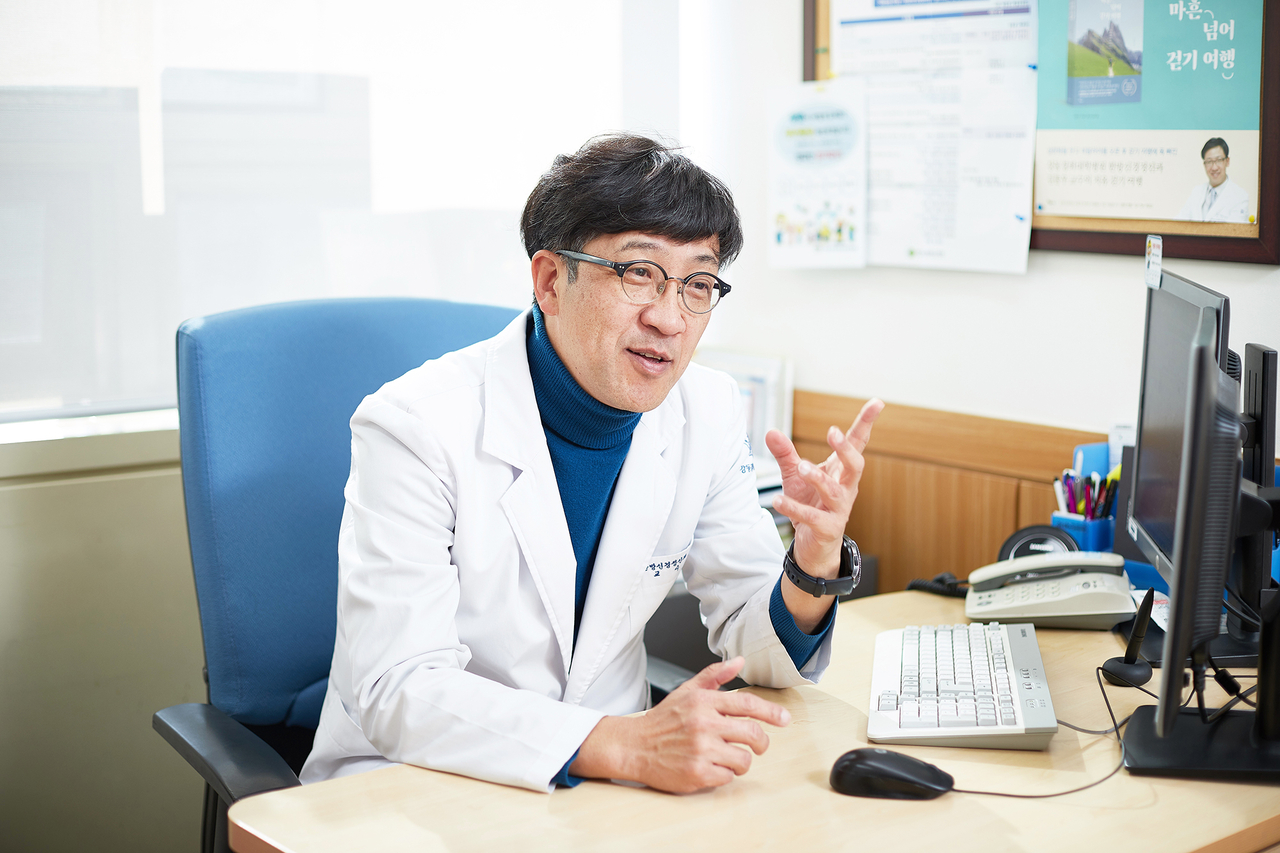
"The Hwabyung Comprehensive Test is an assessment tool we jointly developed to examine both the emotional and physical symptoms of hwa-byung together," Kim said. "This study is significant in that it proposed a two-step evaluation framework — first using the total score to screen for hwa-byung, then applying the physical symptom score as an additional check." He added that the HCT is not a standalone diagnostic tool but a supplementary aid to support clinical interviews and diagnosis, and said the team would continue to expand its clinical applicability through follow-up studies encompassing a wider range of ages, genders and medical institutions.
kty@heraldcorp.com