Chief Justice Jo Hee-dae set to retire at 70 in June next year
Two Supreme Court justice vacancies now all but certain
Ruling party pushes for resignation, impeachment and judicial reform legislation
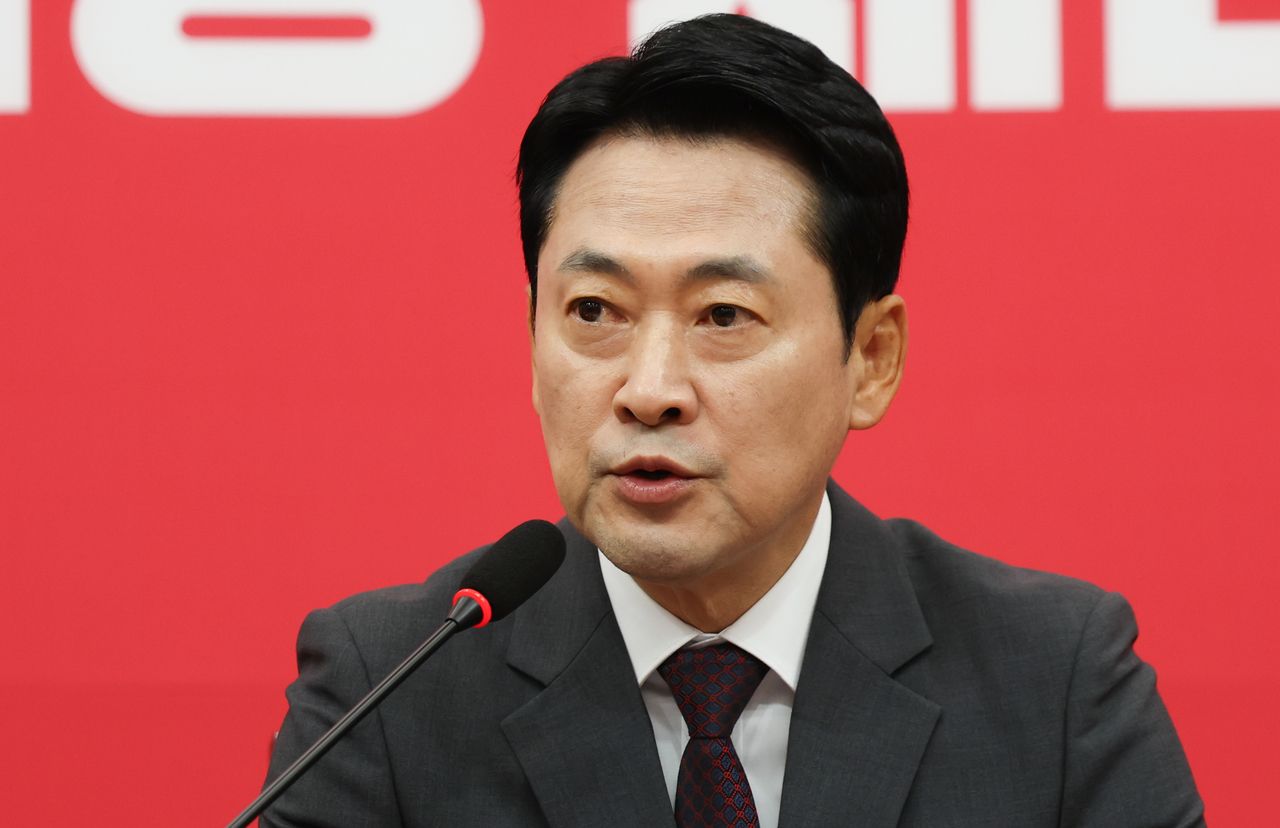
![Chief Justice Jo Hee-dae arrives at the Supreme Court in Seocho-gu, Seoul, on Tuesday. [Yonhap]](https://wimg.heraldcorp.com/news/cms/2026/08/26/rcv.YNA.20260825.PYH2026082503210001300_P1.jpg)
Tensions between the government and the judiciary have reached a peak with roughly nine months left in Chief Justice Jo Hee-dae's tenure before his mandatory retirement in June next year. A conflict that began after the Supreme Court's en banc ruling last year overturned and remanded President Lee Jae Myung's conviction on charges of violating the Public Official Election Act has deepened further, most recently over a controversy surrounding Jo's written nomination of Supreme Court justice candidates.
The road ahead for Jo is expected to be anything but smooth. With justice vacancies already threatening to disrupt major appeals proceedings, he must also contend with mounting pressure from the ruling camp to resign or face impeachment, as well as proposed judicial reform legislation. Observers warn that if the standoff over justice appointments drags on, the damage to the court's ability to function could be severe.
Jo, who took office in December 2023, was born on June 6, 1957, and will reach the mandatory retirement age of 70 in June next year. While the Constitution sets the chief justice's term at six years, the Court Organization Act caps the retirement age for both the chief justice and associate justices at 70.
The most pressing challenge facing Jo with about nine months left in his term is the growing vacancy problem on the bench. Former Justice Noh Tae-ak stepped down in March, and Justice Lee Heung-goo will complete his six-year term and retire on Sept. 7. Given the time constraints, it has become all but certain that Lee's successor will not be appointed before his departure, leaving two seats simultaneously empty.
On Monday, Jo submitted written nominations to President Lee for two candidates to fill the vacancies: Sohn Bong-ki, a senior judge at the Daegu District Court, to succeed Noh, and Kim Seong-su, a senior judge at the Seoul High Court, to succeed Lee Heung-goo. The dispute erupted over the nomination of Sohn, with Cheong Wa Dae objecting that the written submission was made without a face-to-face consultation between the president and the chief justice. The presidential office is even reviewing options that would in effect require Jo to resubmit the nomination. If the conflict is not resolved, Noh's seat could remain empty for a considerable period. Since the written-nomination controversy broke, the clock on filling Lee Heung-goo's seat has also stopped.
A prolonged vacancy will weigh heavily on the court's operations. The Supreme Court handles most appeals through three small panels of four justices each, excluding the chief justice and the court administrator. Two simultaneous vacancies would disrupt panel composition, case assignment, deliberations and sentencing alike. Cases are also piling up before the en banc court, which includes all justices and is presided over by the chief justice. The court has already referred to the en banc panel the case involving Kim Keon Hee on charges including stock-price manipulation at Deutsch Motors. Cases against former Prime Minister Han Duck-soo and former Interior and Safety Minister Lee Sang-min on insurrection charges have also been sent to the en banc court.
The caseload heading to the Supreme Court is expected to grow further. Major cases brought by the three special prosecutor teams — covering insurrection, Kim Keon Hee and the Marine Corps corporal — are expected to work their way through the lower courts and arrive at the Supreme Court in succession. Because special prosecutor cases tend to involve complex factual and legal questions and carry significant political and social consequences, observers say the burden on the court will only intensify.
Pressure on Jo from the ruling camp is mounting. Within the Democratic Party of Korea, calls for Jo to step down voluntarily have grown louder since the written-nomination controversy. The National Assembly's Legislation and Judiciary Committee voted Monday, led by the ruling party over opposition objections, to summon Jo as a witness for a current-issues hearing on Aug. 31. Some within the ruling camp have gone further, arguing that impeachment should be considered if Jo refuses to appear.
The Democratic Party's push for a second round of judicial reform legislation also looms as a burden for Jo. The party has floated proposals to abolish the National Court Administration — the body that oversees judicial personnel and budgetary affairs under the chief justice's direction — and replace it with a judicial administration committee. A related amendment to the Court Organization Act, introduced last December under the leadership of the party's TF on overcoming judicial distrust and normalizing judicial administration, is already pending before the Assembly. Because abolishing the National Court Administration would curtail the chief justice's administrative authority, many observers say a head-on clash between the judiciary and the ruling camp would be unavoidable if the legislation moves forward in earnest.
If Jo proceeds to nominate a successor for Justice Cheon Dae-yeop, whose term expires in May next year just before Jo's own retirement, a fresh clash with the political establishment over the appointment is likely. The conflict over the nomination process for Noh's successor has already brought into the open the tensions surrounding consultations between Cheong Wa Dae and the Supreme Court, and there is no ruling out the same problems recurring when the time comes to select Cheon's replacement.
yg@heraldcorp.com