Nation divided into 11 zones for differentiated pricing; southern Greater Seoul to stay at current rates
Wholesale pricing to vary by region too; critics warn of double benefits, regional friction and burden on Korea Electric Power
![Attendees watch a presentation by Cheon Hyeon-min, head of Korea Electric Power's rate strategy division, at a public hearing on the industrial regional electricity rate system held at Korea Electric Power's South Seoul headquarters in Yeongdeungpo-gu, Seoul, on Wednesday. [Yonhap]](https://wimg.heraldcorp.com/news/cms/2026/08/26/rcv.YNA.20260826.PYH2026082612840001300_P1.jpg)
Under a proposed regional electricity pricing system for industrial users, rates in southern regions such as Honam would fall by up to about 10% from current levels. Rates in the Chungcheong and Gangwon Province areas would drop by up to about 8%, while those in northern Greater Seoul — including Seoul's Gangbuk area and Incheon — would fall by up to about 5%. Even in areas receiving the steepest discounts, however, industrial electricity rates would still remain higher than those in China.
Southern Greater Seoul — including Seoul's Gangnam area and southern Gyeonggi Province, where power demand is concentrated — would see no change from current rates.
The Ministry of Climate, Environment and Energy and Korea Electric Power held a public hearing on the industrial regional rate system Wednesday at Korea Electric Power's South Seoul headquarters in Yeongdeungpo-gu, Seoul.
The system would work by adding a new "regional adjustment charge" component to the existing rate structure.
The regional adjustment charge level was set by factoring in each area's power self-sufficiency ratio, balanced regional development goals and transmission costs. Under the plan unveiled Wednesday, the country would be divided into four broad zones with differing industrial electricity rates.
In the southern zone, industrial electricity rates would fall by 13 to 18 won per kilowatt-hour. Based on last year's average industrial electricity selling price of 181.9 won per kWh, that translates to a reduction of 7 to 10%.
The central zone, covering Chungcheong and Gangwon Province, would see rates drop by 10 to 15 won (5 to 8%), while northern Greater Seoul would fall by 6 to 10 won (3 to 8%).
Southern Greater Seoul would have its regional adjustment charge set at "0 to 1 won," meaning industrial electricity rates there would remain effectively unchanged.
Even within a single zone, rates would vary depending on the administrative district.
The current proposal calls for each of the four zones to be further subdivided into four tiers using a "regional preference index" being developed by the Ministry of Interior and Safety, resulting in differentiation by administrative district.
The regional preference index is being designed with distance from Seoul as its core metric, incorporating each area's socioeconomic indicators and whether it faces population decline risk.
Whether a district is designated an industrial crisis zone would also factor into the additional four-tier subdivision.
The Ministry of Climate, Environment and Energy said the combined system would divide the country into 11 zones with differentiated industrial electricity rates.
The primary rationale for differentiating industrial electricity rates by region is to break the one-way structure in which electricity generated outside Greater Seoul is transmitted through large-scale grids to the capital region, and to ease the concentration of economic activity there.
Authorities say lower industrial electricity rates would create opportunities to attract advanced industries and revitalize regional economies outside Greater Seoul, while reducing social costs at the national level — including investment and operating expenses for transmission infrastructure and related disputes.
About 40% of domestically generated electricity is consumed in Greater Seoul. Of the 549.41 million MWh sold last year, the capital region accounted for 222.79 million MWh, or 40.6%.
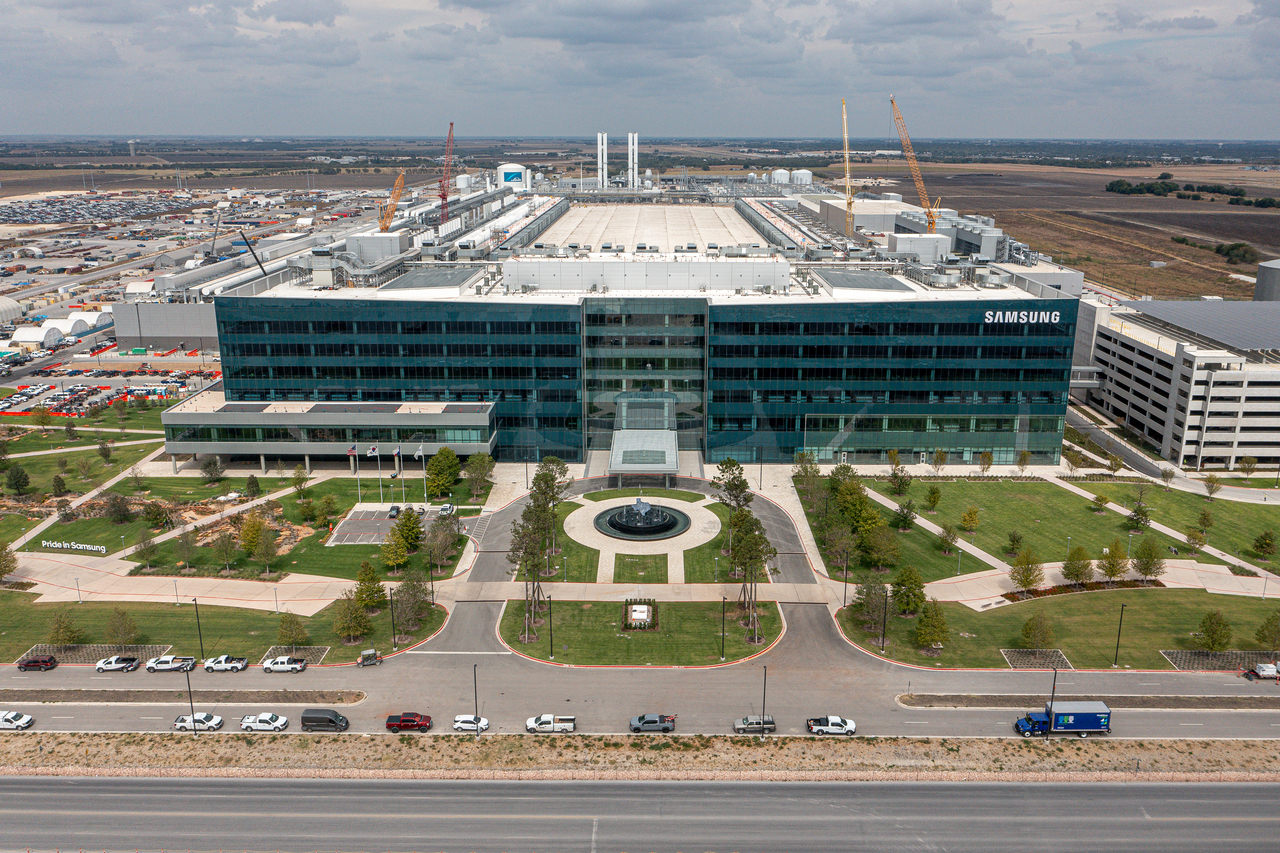
The concentration of power demand in Greater Seoul is expected to intensify further as a semiconductor cluster takes shape in Yongin, Gyeonggi Province, and data centers continue to cluster in the metropolitan area.
The Yongin Advanced System Semiconductor National Industrial Complex, where Samsung Electronics semiconductor fabs are to be built, and the Semiconductor Cluster General Industrial Complex, where SK hynix fabs will be established, are expected to require 14 gigawatts of power by 2041 — equivalent to the output of 10 large nuclear reactors.
For data centers in Greater Seoul, a report released last month by commercial real estate services firm CBRE Korea projected that supply would grow at an average annual rate of 20%, surpassing 1.45 GW by 2028.
Against this backdrop, Greater Seoul's power self-sufficiency ratio stands at only about 66%.
That figure is propped up by Incheon, which has a self-sufficiency ratio of 172.6% — fifth highest among the country's 17 metropolitan and provincial governments — thanks to large power plants including the Yeongheung thermal power station. Seoul and Gyeonggi Province, by contrast, have self-sufficiency ratios of just 6.8% and 59.1%, respectively, ranking second and sixth lowest among all metropolitan and provincial governments.
The need to counter China's low-price competition — particularly in the petrochemical sector — is another reason authorities cite for introducing the regional industrial rate system.
According to the Ministry of Climate, Environment and Energy, China's average industrial electricity rate is around 120 won per kWh, about 66% of South Korea's level.
The plan to vary electricity rates by region has drawn considerable concern. Critics point to a technical limitation: South Korea operates a single national grid, and electricity physically follows the path of least resistance, making it difficult to say that power generated at a specific plant is consumed within that plant's administrative district.
In fact, no country that has introduced regional electricity pricing has legally specified "administrative-district power self-sufficiency" as a rate-calculation criterion.
Critics also note that the regional differentiation in this proposal relies primarily on power self-sufficiency ratios and balanced-growth considerations — statistics that could be seen as administratively arbitrary — rather than on transmission loss factors, which would more accurately reflect the cost of long-distance transmission from non-capital regions to Greater Seoul.
The structure leaves electricity rates vulnerable to shifts in government policy priorities. The government said, however, that it would maintain the regional rate differentials for a set period — four years or similar.
Applying different rates by administrative district also raises concerns about regional friction, as businesses on opposite sides of a single road could face different electricity bills.
At the metropolitan government level, Incheon — which generates more electricity than it consumes — may object to being grouped in the same zone as Seoul's Gangbuk area, which has a low self-sufficiency ratio.
The problem becomes more complex at the level of basic local governments, where disparities in power self-sufficiency ratios become extreme.
A 2023 paper published in the Journal of the Korean Economic Geography Society, examining spatial units for applying a regional differentiated electricity rate system, found that of 229 cities, counties and districts, only 38 had self-sufficiency ratios of 100% or above, while 191 did not — a wider disparity than when measured at the level of the 17 metropolitan and provincial governments, where the split was seven to 10.
"Countries that operate regional rate systems share a common feature: they draw regional boundaries based on power grid flows, not administrative districts," said Cheon Hyeon-min, head of Korea Electric Power's rate strategy division. "We concluded that immediately introducing a regional rate system in the same way as foreign countries would be difficult, given that a single transmission operator sets rates here."
There are also concerns that reducing electricity rates for areas with power plants would amount to a double benefit.
A review report issued in March by the senior expert adviser to the National Assembly's climate, environment, energy and labor committee on a proposed amendment to the Distributed Energy Act noted that some local governments, including Daegu, had argued that areas with concentrated power plants already enjoy population inflows, increased tax revenues and benefits under the Act on Support for Areas around Power Plants — and that further cutting electricity rates based on self-sufficiency ratios could undermine inter-regional equity by constituting a double benefit.
Effectiveness and the burden on Korea Electric Power are also concerns surrounding the industrial regional rate system. Even in areas receiving the maximum discount under the current proposal, industrial electricity rates would still be higher than in China.
Critics say the rate cuts under the regional system may be too modest to counter China's low-price competition, while still adding to Korea Electric Power's financial burden.
With the wholesale electricity price — the system marginal price — threatening to exceed 146 won per kWh, the level at which Korea Electric Power would run a deficit, due in part to the impact of conflicts in the Middle East, cutting rates for industrial users, who account for 51% of electricity sales, would inevitably strain the utility.
Authorities estimate that the industrial rate cuts would reduce Korea Electric Power's revenue by around 2 trillion to 3 trillion won ($2.17 billion).
Korea Electric Power said it had raised industrial electricity rates seven times between 2022 and last year, establishing a cost-recovery foundation.
Industrial electricity rates have risen by about 80% since 2022.
The government also plans to introduce regional differentiation in the wholesale rates Korea Electric Power pays to power generators, to ease the utility's burden.
This would involve adopting a locational marginal pricing (LMP) system, under which rates vary by region to reflect grid congestion costs and transmission losses when transmission constraints arise.
In practice, when the grid is saturated, electricity from generators in Greater Seoul — where demand exceeds supply — would be purchased at higher prices, while power from generators outside the capital region, where supply exceeds demand, would be bought more cheaply. The aim is to incentivize greater generation where electricity is most needed.
LMP is expected to face pushback from the power industry, as it could hurt the profitability of thermal power generators outside Greater Seoul in particular.
Minister of Climate, Environment and Energy Kim Sung-hwan also said the government would shift to direct state funding for costs of a public nature that Korea Electric Power has been absorbing — such as energy vouchers for low-income households.
The government and Korea Electric Power plan to complete the procedures for introducing the industrial regional rate system before the end of this year.
oskymoon@heraldcorp.com