'Climate disasters don't wait — we must shift to prevention and adaptation'
Seoul must move from post-disaster recovery to proactive risk management on heat waves and heavy rain
Han River ferry needs balance between transit and tourism, with Seoul setting operational standards first
Connecting neighborhood green spaces to build an urban ecological network, starting in Mapo-gu and expanding westward
"Areas that are immediately visible to citizens — like the Han River or parks — matter, but there are also areas that are far less visible yet far more closely tied to people's daily lives, such as drinking water and the climate environment."
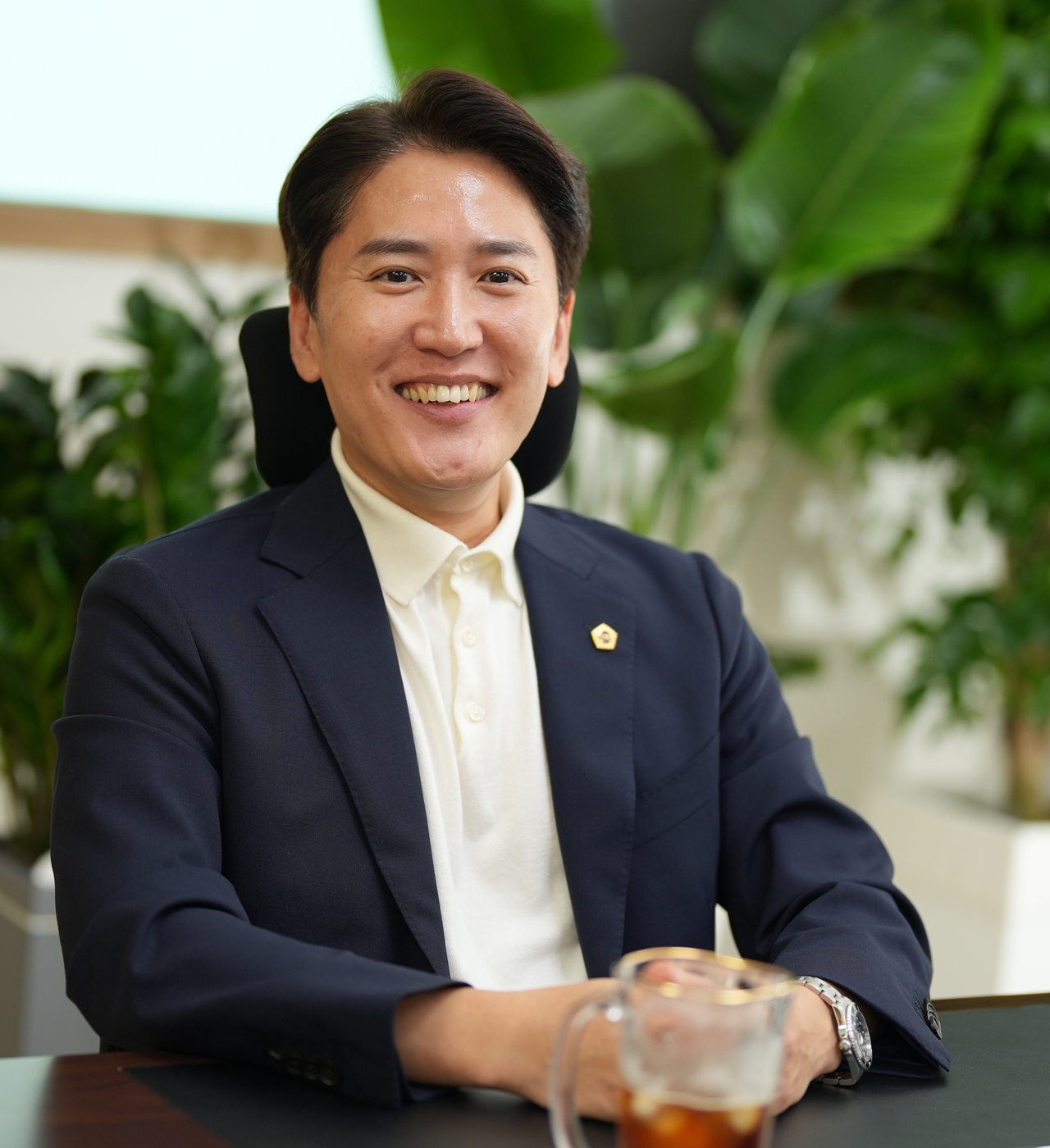
Lee Min-seok, chair of the Seoul Metropolitan Council's Environment and Water Resources Committee and a People Power Party lawmaker representing Mapo District 1, named "proactive response" as a central priority for his legislative work when he sat down for an interview Wednesday at the council. With extreme heat and torrential rain becoming routine and the nature of disasters shifting, he said relying solely on after-the-fact recovery is no longer sufficient to keep citizens safe.
The Environment and Water Resources Committee oversees areas that touch directly on daily life — climate and environment, water resources, parks and green spaces, and the Han River. Lee said the committee must look beyond visible changes to the urban landscape and pay equal attention to infrastructure that citizens rarely notice in ordinary times but that directly determines their safety when disaster strikes: Arisu tap water, sewage and flood-control facilities, and climate crisis response systems.
Recurring heat waves and downpours: 'Build a city that reduces risk, not just one that recovers'
The heavy rain and extreme heat hitting Seoul in recent years have exceeded the thresholds that existing weather patterns and infrastructure standards were designed to handle. The case for shifting urban disaster management away from post-damage recovery and toward prevention and adaptation — reducing risk before it materializes — is growing stronger as a result.
Lee said the city needs to both increase the capacity of existing flood-control infrastructure such as sewer lines and stormwater pumping stations, and adopt a more distributed approach to managing rainwater across the city. The goal, he said, is a water-cycle system in which parks, roads and buildings are equipped to store or absorb rainfall, spreading the load across multiple points rather than concentrating it.
He also identified tailored, area-specific responses as a key challenge. Rather than looking only at past flood records, he said the city should conduct comprehensive analyses of topography, land use, drainage systems and surrounding infrastructure to map out vulnerable zones in finer detail and build response frameworks calibrated to each area's risk level.
Lee particularly stressed that climate disasters do not affect all citizens equally. Residents of semi-basement units, the elderly and people with disabilities can suffer disproportionately from the same storm or heat wave, he said, making it essential to build a tighter safety net that ensures water supply and basic welfare support remain uninterrupted for vulnerable groups when disaster strikes.

From Arisu to the supply chain: strengthening 'water security' in an era of climate change
Lee said water supply policy must also be approached through the lens of climate change. He called for strengthening the stability of the entire supply chain — from intake sources and water treatment plants to distribution and service pipes — alongside more robust water-quality monitoring systems.
The aim, he said, is to ensure that citizens can use tap water with confidence even under unpredictable climate conditions such as prolonged heat waves and drought, by raising the overall resilience of the water supply system.
He added that water resource policy should not be viewed simply as the administrative task of delivering water, but as a foundational policy connecting climate disaster preparedness with urban safety. Stable water supply, water quality management and emergency water distribution during disasters should all be managed as a single, integrated system, he said.
Lee also emphasized that the Environment and Water Resources Committee's mandate extends well beyond the parks and the Han River that citizens most readily associate with it. The quality of management in areas citizens rarely think about — water and sewage systems, flood-control facilities, and the climate environment — ultimately determines a city's safety and the quality of life it offers, he said.
Beyond tourism: making the Han River an everyday waterfront for all citizens
On Han River policy, Lee said the city must simultaneously strengthen cultural and tourism use of the waterfront and improve citizen accessibility and ecological function.
Cultural and tourism offerings along the Han River have expanded in recent years — the Han River ferry, cruise boats, various festivals and a garden expo among them — raising the river's overall urban utility. Lee said sustaining that momentum requires a parallel effort to make the Han River genuinely easy for citizens to reach.
Major arterial roads such as the Gangbyeon Expressway and the Olympic Expressway cut between the river and residential areas, leaving some neighborhoods physically close to the waterfront yet effectively cut off from it.
He proposed expanding pedestrian access infrastructure and improving connections between the Han River and public transit — subway lines and buses. The goal, he said, is to transform the river from a destination people visit only for special events into an everyday living space where citizens naturally go for their commute, a walk, exercise or cultural activities.
On the Han River ferry controversy: 'Look at operating standards and public benefit, not politics'
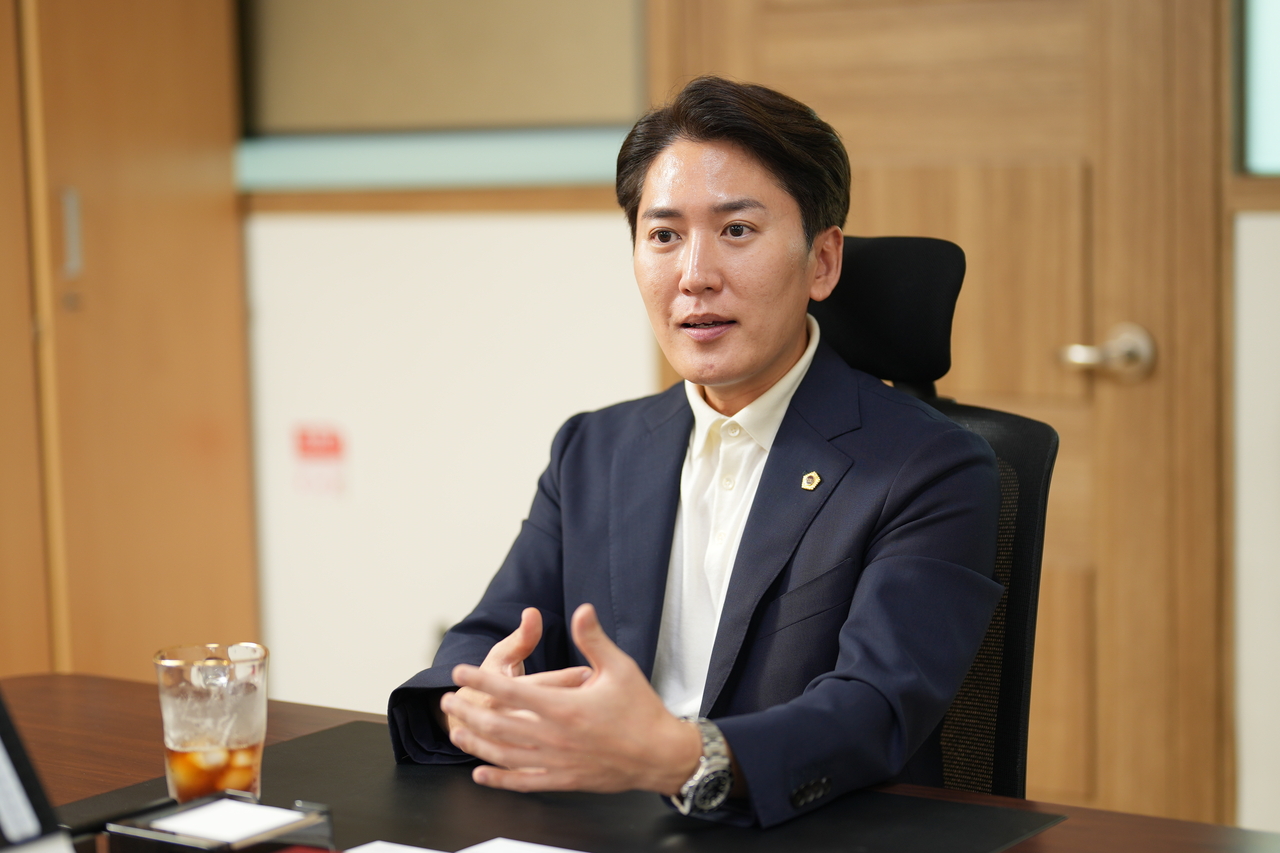
On the ongoing controversy surrounding the Han River ferry, Lee said both its function as a transit mode and its value as a tourism asset need to be considered together.
"The direction needs to be set in a way that combines transit demand and tourism demand," he said. "Rather than being pushed into a conclusion by political back-and-forth, the Seoul Metropolitan Government needs to proactively establish its own operating direction and standards."
For the ferry to establish itself as a reliable transit option, he said, the city must take a comprehensive look at actual ridership patterns, accessibility and operational stability. On the tourism side, he added, it is worth exploring ways to increase the ferry's appeal by linking it to waterfront attractions along the Han River.
Ultimately, he said, what matters is not whether one supports or opposes the project itself, but how conveniently citizens can actually use it and how effectively the transit and tourism functions can be combined.
'Connectivity over quantity': turning entire neighborhoods into a single green network
On parks and green space policy, Lee proposed focusing the city's efforts on improving the connectivity of existing green areas rather than creating large new parks from scratch.
The vision is to link major anchor parks, pocket parks, children's parks, neighborhood rest areas and street greenery through streams, pedestrian paths, cycling routes and greenways, so that entire residential areas function as a single, integrated green network.
This is a fundamentally different approach from simply increasing the total area of green space. It aims to improve accessibility so citizens can reach green space close to where they live, while also connecting fragmented patches of greenery to enhance the mobility and resilience of the urban ecosystem.
Lee said urban green space should be seen not as a collection of individual parks but as a connected ecological infrastructure. Green space serves as a place of rest for citizens, he said, but it is also a critical environmental foundation for the city — moderating heat waves, absorbing rainfall and sustaining biodiversity.
World Cup Park, Gyeongui Line Forest Park, Han River: making Mapo-gu a hub of Seoul's urban ecological axis
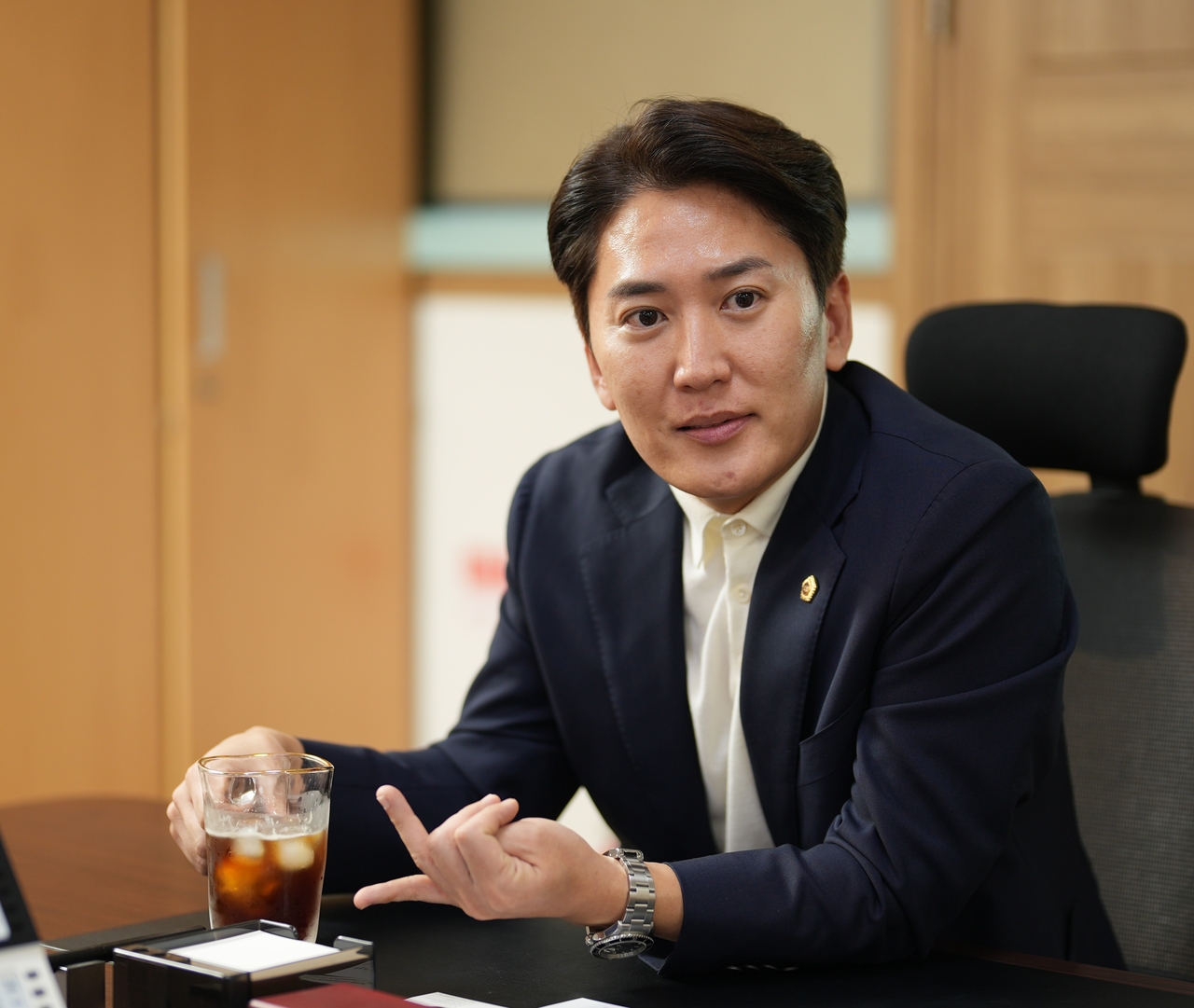
Lee said his constituency of Mapo-gu is rich in environmental assets well suited to this green connectivity strategy. He proposed linking major green resources — World Cup Park, the Nanji and Mangwon Han River parks, and Gyeongui Line Forest Park — into a residential green corridor, and over the long term extending that network to connect with major green spaces across Seoul, including Ansan, Yongsan Park and Namsan Park, to build a citywide ecological network.
He said World Cup Park holds particular significance as a leading example of environmental regeneration — a former landfill on Nanjido transformed into an ecological park. The experience of converting a waste disposal site into a large public green space should be treated as a valuable asset for urban environmental policy, he said.
However, he noted that outside the large parks, some parts of central Mapo-gu lack sufficient everyday green space for residents, making a strategy of organically connecting existing resources all the more important.
Building a dense network of connections — from World Cup Park to the Han River, and from Gyeongui Line Forest Park outward to surrounding neighborhood green spaces — would allow the entire area to develop into a single green living zone that goes beyond what any individual park can offer, he said.
Carbon neutrality and resource recycling need citizen and business participation
Lee identified carbon neutrality and resource recycling as areas the Environment and Water Resources Committee must continue to monitor closely.
The Seoul Metropolitan Government is pursuing a target of cutting greenhouse gas emissions 40 percent from 2005 levels by 2030 and achieving carbon neutrality by 2050. Lee said those goals cannot be met through government policy alone.
Regulations and budgets must be structured to enable citizens to reduce energy use and practice resource recycling in their daily lives, while also encouraging businesses to invest in clean technology and eco-friendly operations, he said.
Because environmental policy cannot sustain itself through regulation alone, he said, it is essential to create incentive systems that bring citizens and businesses on board and to expand public-private cooperation. The Environment and Water Resources Committee, he added, will play its part by strengthening policy implementation through the enactment and revision of relevant ordinances and through budget reviews.

'The council must do more than check power — it must improve policy'
On the role of the city council, Lee said it must not limit itself to oversight and checks on the executive. The council should actively cooperate on necessary policies and provide support through budgets and regulations, he said, while rigorously scrutinizing whether projects are being carried out in line with their original objectives.
Lee said what matters is not the moment a policy is announced but what tangible change it ultimately produces in citizens' lives. The council must go beyond verifying project scale or budget execution rates and continuously assess whether citizens are actually experiencing the results, he said.
He also identified the slow pace of results in environmental work as a challenge to address. Projects such as green connectivity, climate adaptation infrastructure and water management improvements require a long-term perspective, he said, making it one of the council's important responsibilities to ensure policy continuity.
'One side is rarely 100 percent right': finding solutions through cross-party cooperation
Lee reflected on how his understanding of the role and responsibilities of local government has evolved as he serves his second term on the Seoul Metropolitan Council, having previously served on a district council.
The scope and scale of policy at the city council level differ vastly from those at the district level, he said, and working through issues with fellow council members who bring expertise across a wide range of fields has deepened his sense of the weight of responsibility that comes with the position.
On relations between the ruling and opposition parties, he placed greater emphasis on coordination than confrontation. Each policy issue may involve different interests and perspectives, he said, but complex urban problems cannot be solved by one side's position alone.
"I don't think there are many issues where one side is 100 percent right," Lee said. "I place great importance on finding a reasonable middle ground between different positions and working toward agreement."
He added that in the areas of environment and water resources in particular, many issues call for prioritizing citizen safety and quality of life over political debate, making it essential to pursue legislative work focused on finding practical solutions.
'A policy is complete only when daily life actually changes'
What Lee said he will keep his eye on throughout his term as committee chair is not simply whether policies are announced and projects launched, but whether real change is showing up in citizens' everyday lives.
His vision encompasses three tracks: shifting climate disaster response from damage reduction toward early risk identification and greater urban resilience; developing the Han River into a space that balances transit, tourism, ecology and citizen accessibility; and expanding parks and green space from individual sites into ecological infrastructure that connects the entire city.
"My role as chair is not to set policies in motion and walk away, but to follow through to the end — to see whether citizens' daily lives have actually changed and whether their quality of life has genuinely improved," he said. "I want to grow a little at a time, building change that citizens can feel, one step at a time, and pursue legislative work that is truly fulfilling."
In an era when climate crisis and urban environmental change have become the norm, Lee said the results of environment and water resource policy are not determined solely by adding one more visible facility. What will define the success of future policy, he said, is how much risk is reduced in advance, how tightly green spaces and water management systems are woven together across neighborhoods, and how consistently the city works to create an urban environment that is safe and convenient for all citizens.

7toy7@heraldcorp.com