LNG fuel costs rise 46% over five months, with 82% of annual usage concentrated in winter months
CEO Hwang Bo-yeon vows to protect safety and heat supply while cutting unnecessary spending, launching four-pronged emergency management plan
Seoul's district heating supply has been put on alert following a sharp surge in liquefied natural gas import prices.
Seoul Energy Corp., which supplies energy to Seoul residents, has sounded the alarm over soaring city gas prices for cogeneration use.
The company said that while international oil prices have recently stabilized, the earlier spike in crude prices is being passed through to LNG import costs with a lag, pushing city gas tariffs for cogeneration up 46% over the past five months.
The development is a particular concern for President Hwang Bo-yeon, who only managed to turn the chronically loss-making company profitable last year.
With the heating-intensive winter season — November through December — approaching, the company expects cost pressures to intensify further for district energy providers that rely on city gas as their primary fuel.
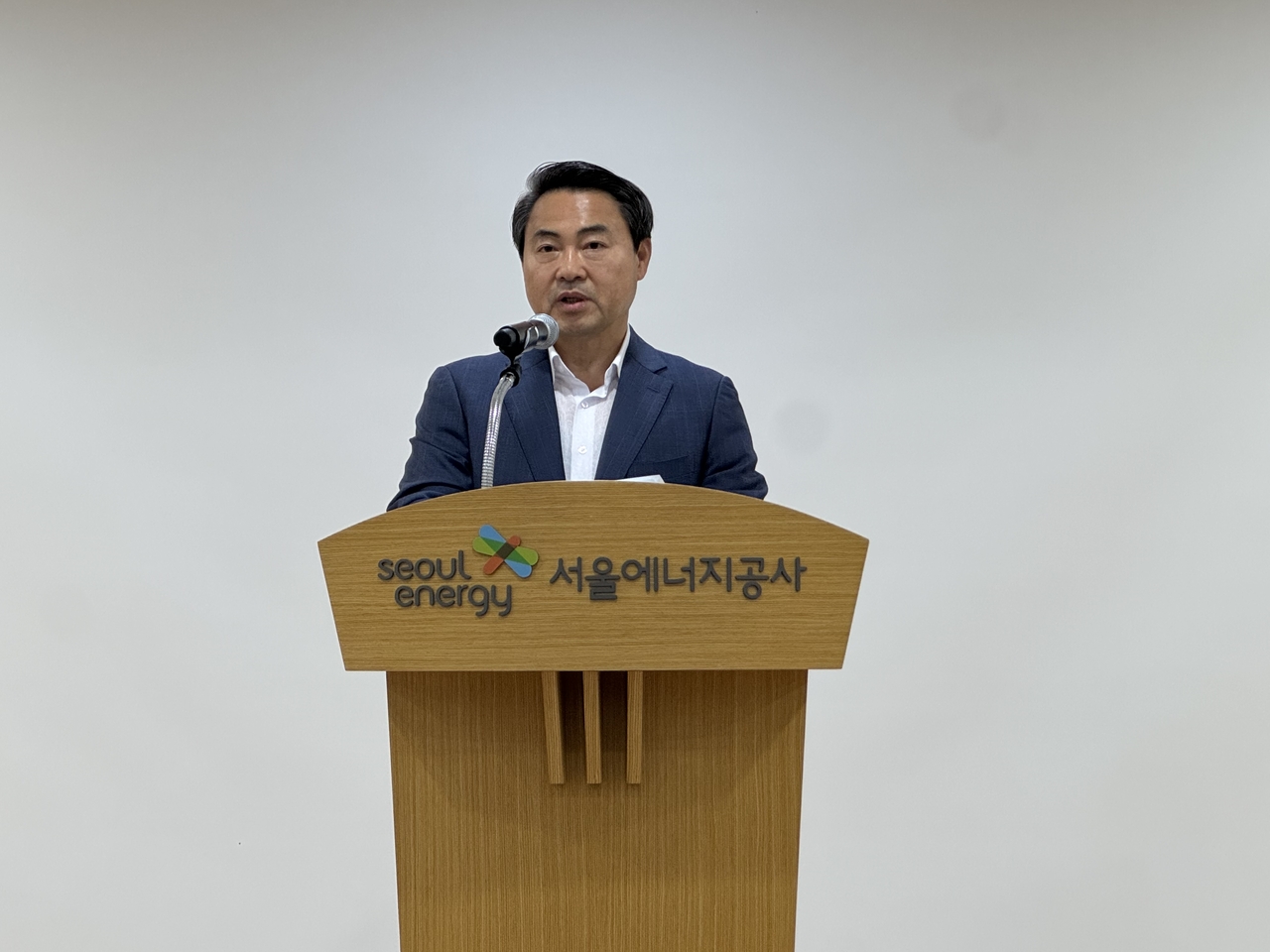
In response, Seoul Energy Corp. held a company-wide briefing Thursday on emergency management measures in response to surging city gas prices, sharing the second-half business outlook and response strategy amid recent international energy market and fuel cost fluctuations, and declaring the activation of a company-wide emergency management regime.
The company said it views this emergency management drive not merely as a cost-cutting exercise or short-term profit defense, but as a proactive, company-wide response to the external shock of surging city gas prices.
The company aims to ensure that the hard-won profitability achieved through management improvement efforts does not remain a one-off result driven by external factors such as international energy prices and fuel costs. It plans to strengthen overall management resilience — across costs, revenues, facility operations and demand management — to build a sustainable management foundation that can withstand shifts in the external environment.
City gas tariffs up 46% even as crude falls 36% — a four-to-five-month lag effect
The primary driver behind Seoul Energy Corp.'s preemptive emergency management push is the structural lag with which international oil price movements feed through to actual city gas tariffs.
Dubai crude, which surged amid Middle East tensions in March this year, has since fallen about 36%, from $128.52 per barrel to $82.36 in August.
By contrast, the city gas tariff for cogeneration that the company uses to produce heat rose about 46% over the same period, from 16.6 won per megajoule to 24.4 won per megajoule. Although international oil prices have stabilized, the impact of the earlier price spike continues to feed through to city gas tariffs with a delay.
Under the contract structure, there is a lag of roughly four to five months before the benchmark oil price is reflected in actual tariffs, meaning approximately 50 to 60 percent of the final city gas price is subject to oil-linked contract terms.
Because of this pricing structure, even after international oil prices fall and stabilize, the effects of past high crude prices can continue to be reflected in city gas tariffs for some time. If elevated gas prices coincide with the winter season — when LNG consumption surges — the impact on the company's material costs and operating results could be significantly amplified.
32% of annual LNG use concentrated in November–December; winter cost burden set to grow
Based on a three-year average, about 32% of the company's annual LNG consumption is concentrated in November and December alone. Winter months overall — January through March and November through December — account for 82% of annual LNG usage, more than 10 times the 8% consumed during the summer period from June through October. Given this business structure, the level at which city gas unit prices are set during winter is expected to be the key variable determining the company's annual profit and loss.
In response, the company plans to set multiple unit-price scenarios reflecting possible future city gas tariff movements, revise its annual profit and loss projections accordingly, and proactively manage areas where it can respond before fuel cost pressures fully materialize.
The company also plans to move away from a reactive approach to external price changes and instead strengthen a "preventive management system" that analyzes and manages anticipated business risks in advance, with the aim of minimizing the impact of external environment changes on operating performance.
457.9 billion won ($331 million) budget under review; four-pronged emergency plan activated
The company will pursue its emergency management measures across four areas: cost reduction, profit improvement, loss control and demand management.
The focus is not simply on cutting spending, but on expanding areas where revenue can be increased and on preventing losses such as equipment failures through preventive maintenance — in short, on raising overall management resilience.
For cost reduction, the company will conduct a full review of its existing 457.9 billion won budget and draw up a strategic supplementary budget that reprioritizes projects and adjusts their timing based on importance and urgency.
Projects that must proceed this year will go ahead without disruption, while lower-priority projects whose timing can be adjusted will be deferred, and unnecessary expenditures will be cut as much as possible to make more efficient use of limited resources.
However, the company made clear that safety and stable heat supply must not be compromised. Budgets for safety, legally mandated projects and the stable supply of heat to residents will be protected as the top priority, with efficiency measures focused on other adjustable projects and expenses.
To improve profitability, the company will maximize the use of heat receivable from the Dobong fuel cell facility. The strategy is to actively utilize this relatively low-cost external heat source during the winter months — when LNG consumption peaks — to reduce reliance on high-cost LNG and ease material cost pressures.
The company also plans to complete overhauls of its combined heat and power facilities on schedule to ensure stable operation during winter. Because equipment failures would require switching to peak load boilers, which carry higher unit production costs, preventive maintenance will be used to minimize the risk of additional cost increases.
Demand management will also be upgraded. The company plans to explore moving beyond its current approach of requesting voluntary cooperation and introducing a systematic demand management framework modeled on the power sector's demand response regime.
Building a stronger management foundation — 'We will fulfill our duty as Seoul's energy public enterprise'
The company said it will use this emergency management drive as an opportunity to further strengthen a management foundation resilient to external changes, while fulfilling its core role as Seoul's specialized energy public enterprise — ensuring stable heat supply to residents through any energy crisis.
"International energy prices and city gas tariffs are external variables beyond the company's control, which makes proactive response all the more critical," Seoul Energy Corp. President Hwang Bo-yeon said. "We will cut unnecessary spending while standing firm in our commitment to safety and stable heat supply."
"We will not rest on our current results, but will further strengthen our management foundation so it can withstand changes in the external environment," Hwang said. "As Seoul's specialized energy public enterprise, we will do our utmost to ensure stable heat supply and protect the daily lives of residents through any energy crisis."
seouldream01@heraldcorp.com