Bear attacks injured 238 people last year, the most in history; sightings topped 50,000
More than 14,600 bears were culled in a year — nearly triple the previous year's total
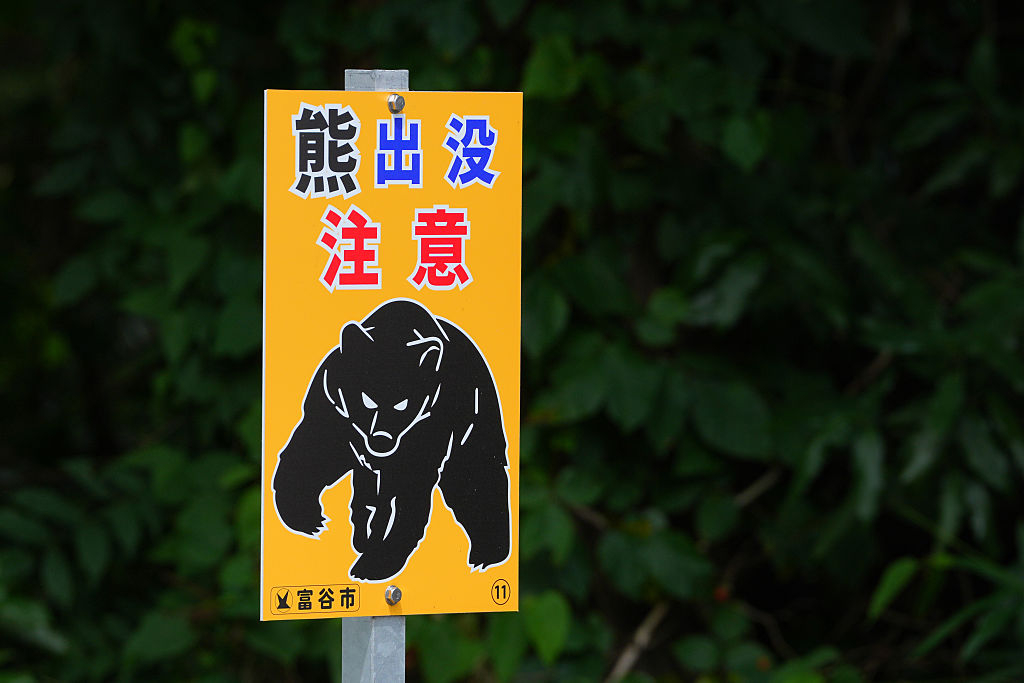
After bears killed a record 13 people in Japan last year, the government launched what amounts to a war on bears, culling more than 14,000 of the animals in a single year. But critics warn that relying on mass culls without addressing the root causes driving bears into human settlements will not prevent further conflict and could threaten bear populations in some regions.
Bears attacked 238 people in Japan during fiscal year 2025, which ran from last April through March, killing 13 of them, according to Britain's Guardian and Japan's Ministry of the Environment. Both the death toll and the total number of victims were the highest since records began.
Bear sightings also surged. Confirmed sightings of Asian black bears across Japan reached 50,776 last year — roughly 2.5 times the 20,513 recorded the previous year.
The government responded with a sweeping cull. A total of 14,601 bears were captured and killed between last April and this March, a record high. That figure is nearly triple the previous year's total and far exceeds the roughly 9,000 bears culled in fiscal year 2023, which had been the previous record.
Of the approximately 14,000 bears culled from last April through January, about 12,000 were Asian black bears and roughly 2,000 were brown bears, found mainly on Hokkaido.
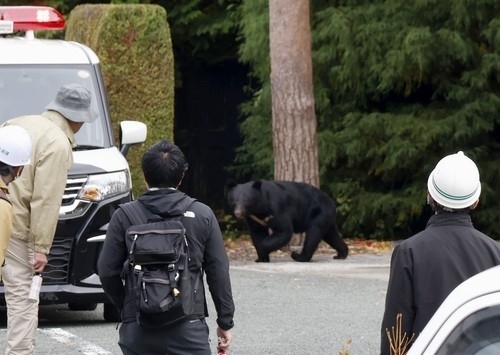
Japan's mass culls reflect a rapid expansion of bears' range from mountain forests into human settlements.
Last year, bears were repeatedly spotted in residential neighborhoods, schools, parks and shopping streets. Residents were attacked outside their homes, and elderly farmers were mauled in their fields.
Food shortages are driving bears down from the mountains. Japanese forests saw poor harvests of acorns and beechnuts last year — the foods bears rely on before hibernation. Experts say record heat waves and broader climate change have destabilized forest food supplies, pushing hungry bears to forage in villages.
A growing bear population is also a factor. Japan's Asian black bear population is estimated to have risen from about 15,000 in 2012 to roughly 44,000 in recent years. Hokkaido's brown bear population exceeded 11,500 as of 2023, more than doubling over the past three decades.
At the same time, the rural buffer zone that once separated bears from people is rapidly disappearing.
Aging and depopulation have emptied mountain villages and left farmland abandoned, blurring the boundary between human settlements and forest that residents once maintained. As forests expand into areas where people no longer travel, bears can approach inhabited areas far more easily.

Japan also faces a shortage of people to catch bears. The country's hunters, who have long handled wildlife culls, are aging and their numbers are dwindling. In areas hardest hit last year, the Self-Defense Forces were called in to assist with bear captures, and police were deployed to shoot bears with rifles.
The government designated bears as a population-management species in 2024 and last year strengthened regulations to allow local governments to order bears shot on sight when they appear in residential areas.
But the killing of more than 10,000 bears is drawing growing debate over whether mass culls are a sustainable solution.
Asian black bears are classified as Vulnerable on the International Union for Conservation of Nature's Red List of Threatened Species. Because Japan is one of the species' key habitats, conservationists warn that indiscriminate mass culling could sharply reduce bear populations in some regions.
There are examples of reducing bear-human conflict through separation rather than slaughter.
In Karuizawa, Nagano Prefecture, trained specialists track bear movements and use dogs to herd bears that approach inhabited areas back into the forest — teaching them to avoid people rather than simply shooting them on sight.
Experts say prevention-focused management is essential: rigorously securing food waste, removing fruit from abandoned orchards, and restoring buffer zones between forests and residential areas.
sjy@heraldcorp.com