'The power of fine arts lies behind K-culture's success'
AI integration expands across film, music and other majors
'Measuring arts schools by the same yardstick as comprehensive universities has limits'
Student-centered education broadens into career development, entrepreneurship and convergence arts
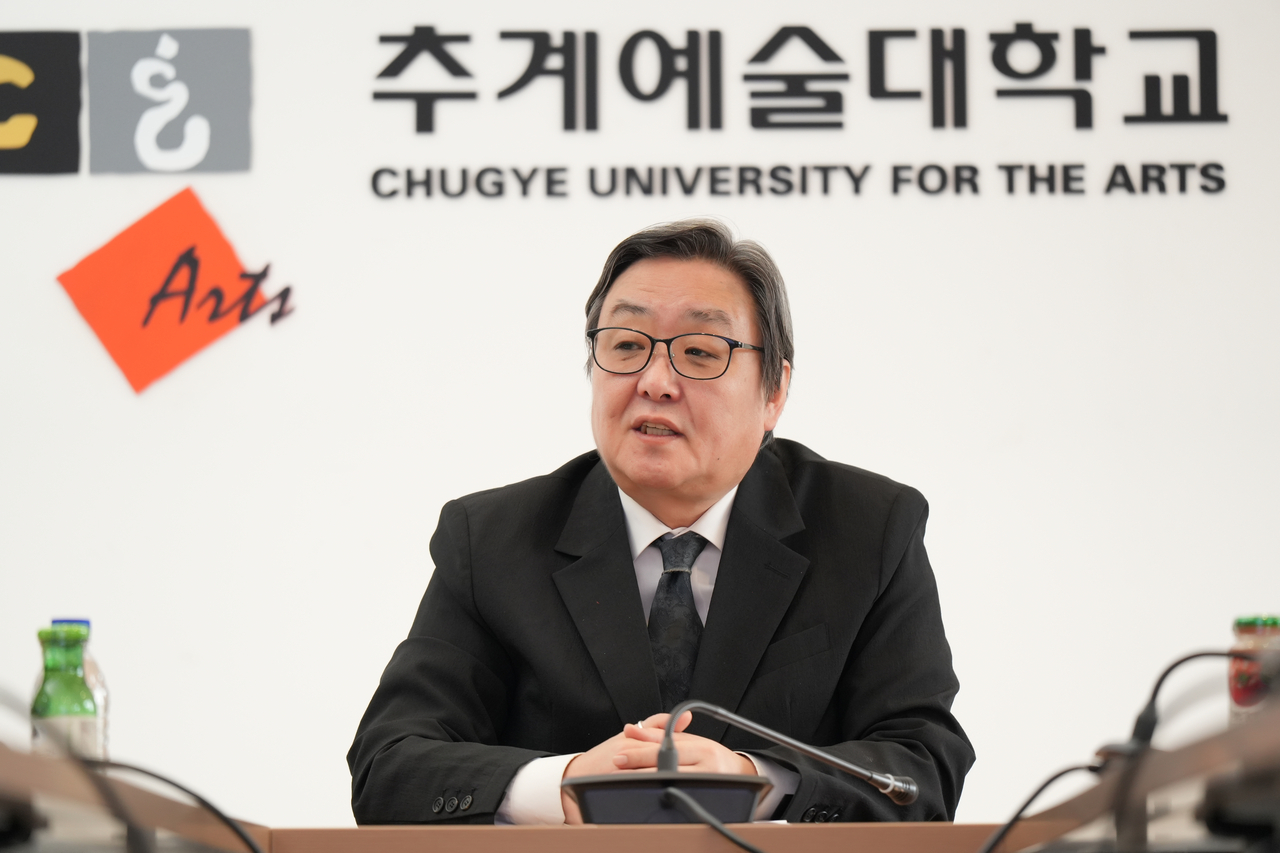
"K-pop would have struggled to grow the way it has without the foundation of classical music and composition. Film and content are also built on the bedrock of fine arts, literature and music."
Im Sang-hyeok, president of Chugye University for the Arts, sat down for an interview on Friday and described fine arts as the root of K-culture. Higher education is changing rapidly amid a shrinking school-age population and the spread of AI, he said, but the foundations of basic arts must not be eroded in the process of adapting to those changes.
Founded in 1974, Chugye University for the Arts offers curricula specialized in music, fine arts, literature, and film and content. Music majors account for roughly 60 percent of the total student body, and the university has trained professional talent through small-group, performance-focused instruction.
The reality facing a university now more than 50 years old is different from the past. The challenge goes beyond a simple decline in the number of students entering higher education. The pool of students who spend years from childhood preparing on instruments or in art — and then choose to enroll in an arts university — is itself shrinking.
Enrollment rates for incoming and current students remain at around 100 percent, but the admissions competition ratio has fallen from roughly 10 to 1 in the past to around 7 to 1 recently. Im views this not as a temporary phenomenon but as a long-term trend of declining applicants to arts programs.
Chugye's response is "convergence" — maintaining the identity of fine arts while actively incorporating AI and other new technologies into the creative and educational process.
"Integration with AI is something we must pursue," Im said. "Rather than having the university set a single answer for everyone to follow, what matters is creating an environment where faculty and students can use technology in ways suited to their own majors and attempt new forms of creation."
In the film and content department, courses are already applying technology to video production using AI, as well as to screenwriting and stage work. In music, the university is exploring ways for students to use AI during practice and performance — comparing and analyzing their own playing to identify and address weaknesses.
The university also subsidizes AI tool subscriptions so students can use the technology in their actual creative work. The aim is to weave AI naturally into the creative process of each major, rather than treating it as a separate technical subject.
Rather than imposing a uniform approach on all faculty, the university is also placing emphasis on supporting students — who are already comfortable in digital environments — to experiment freely on their own. The approach broadens the use of technology while preserving the character of each major.
The goals of arts education are shifting as well. Instead of focusing narrowly on the few who achieve success as professional performers or artists, as in the past, the university is expanding its educational scope so graduates can build sustainable careers in society using their majors.
For piano majors alone, the traditional career paths were once seen as studying abroad, pursuing graduate school, giving private lessons or teaching at a hagwon. More recently, the university has been using extracurricular programs and university innovation support projects to widen those options to include entrepreneurship, content creation and convergence arts.
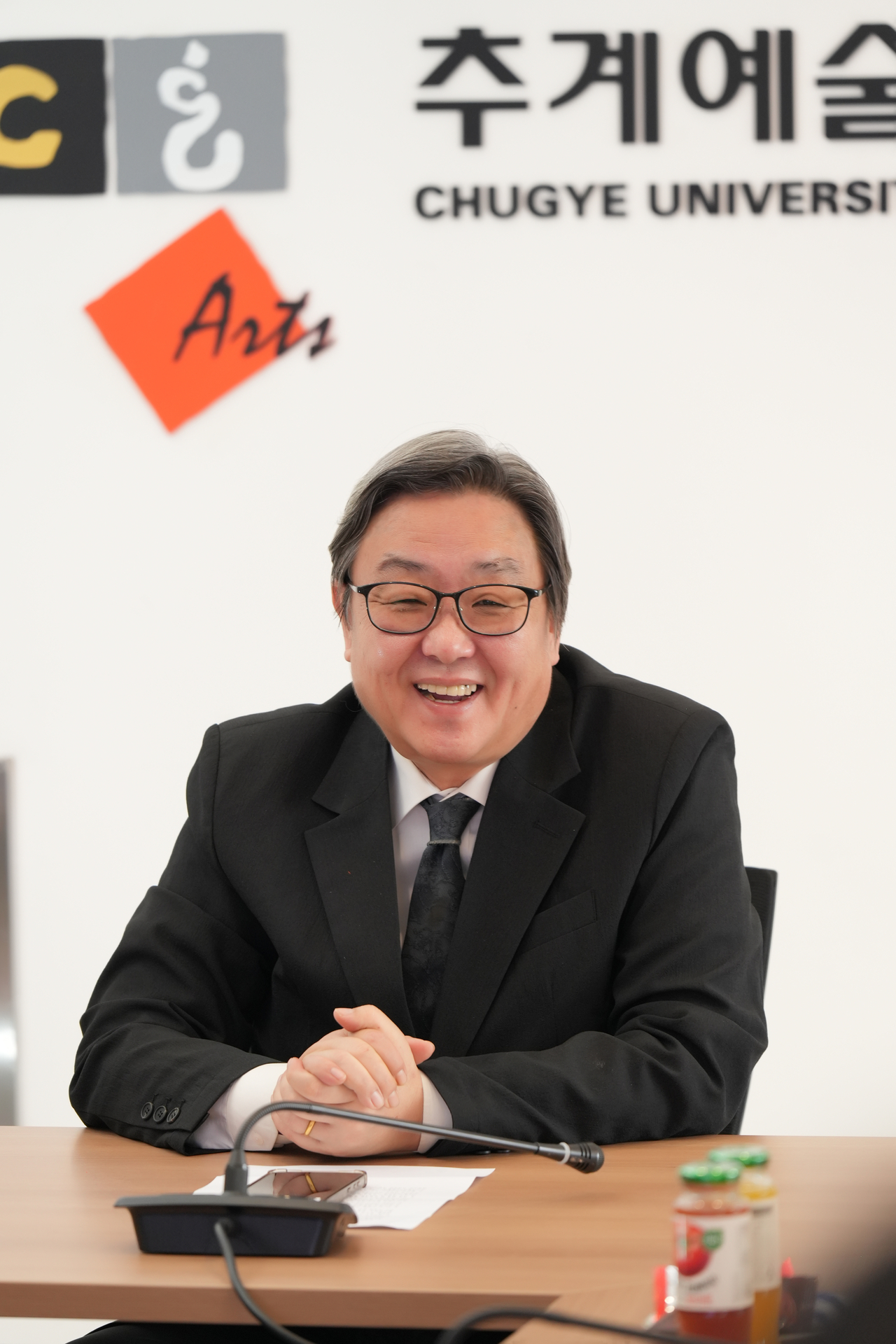
'Don't measure us by the same yardstick' — arts universities need tailored support
Alongside AI, Im emphasized the structural cost challenges that arts universities face.
Music and fine arts rely heavily on one-on-one performance instruction rather than large lectures. They also require ongoing maintenance of facilities and equipment — instruments including pianos, practice rooms and studio spaces. A smaller student body does not proportionally reduce the cost of delivering that education.
Yet those distinctive needs are not adequately reflected in university evaluations and government fiscal support, Im said. Large comprehensive universities have opportunities to participate in a wide range of government projects in science, engineering and other fields, but an arts university with around 1,000 students has a far more limited set of projects it can join.
"Rather than simply categorizing arts universities by whether they are in the greater Seoul area or the regions, or by size, we need to look at the nature of the education each university provides, its social role, and the educational conditions invested in each individual student," Im said.
On the background to Chugye recently being placed on a list of universities subject to partial restrictions on government fiscal support, Im said the main factor was a temporary cash gap that arose when a compensation payment from the university's foundation for income-generating assets crossed over a fiscal year boundary.
The relevant funds have since been secured, he said. Starting this year, the university is reviewing its personnel costs and various expense structures as part of a broader overhaul of its financial operations. It is also preparing its own support measures to ease the burden on students who could be affected by restrictions on government scholarships and student loans for new and transfer students in the 2027 academic year.
For Im, the survival of arts universities is not simply a matter of individual institutional existence. Because foundational arts — classical music, fine arts, literature — underpin the creative capacity of popular culture and the content industry, he believes that if this foundation is shaken, it will ultimately affect the competitiveness of K-culture as well.
"The most important thing is for students to feel, after they graduate, that they received a good education at Chugye and were treated with respect," Im said. "The university's role is not just to produce one star, but to open a path for more students to find their place in society and build a life grounded in the arts."
7toy7@heraldcorp.com