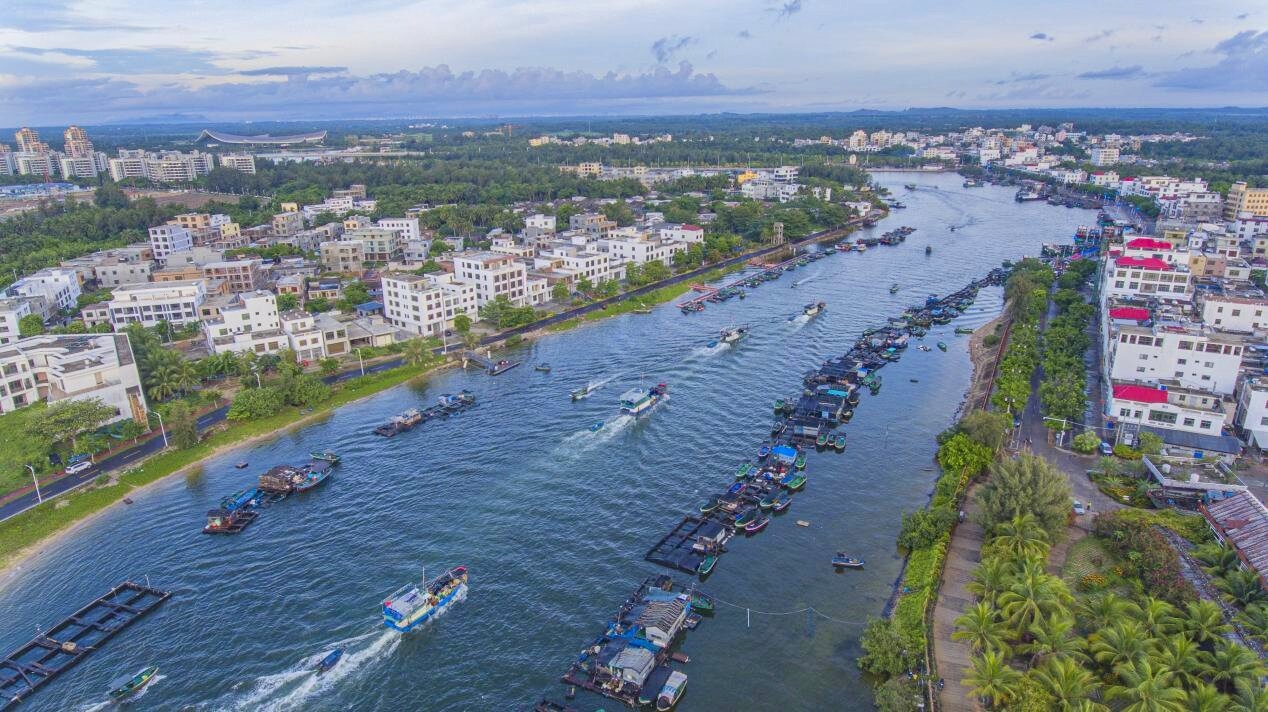

Global travelers tend to gravitate toward major cities — Seoul, Busan and Jeju in South Korea, and Beijing, Shanghai, Chongqing, Qingdao and Guangzhou in China. The same pattern holds for Hainan, where most visitors head straight for the island's two main urban centers, Haikou and Sanya.
Yet Hainan — roughly the size of Taiwan — harbors a constellation of lesser-known destinations quietly drawing visitors with their own distinct appeal. Cities and towns such as Chonghai, Tanmen, Wanning, Fenjie Island, Lingshui and Baoting are among the hidden gems waiting to be discovered.
Wanning's Zhonglv Zhulang Surf Resort: where global youth culture takes root
About a two-hour drive south of Haikou lies China's only dedicated surf resort — the Wanning Zhonglv Zhulang Resort, also known as Wanzhe Zhonglv Zhulang Island Holiday Area.
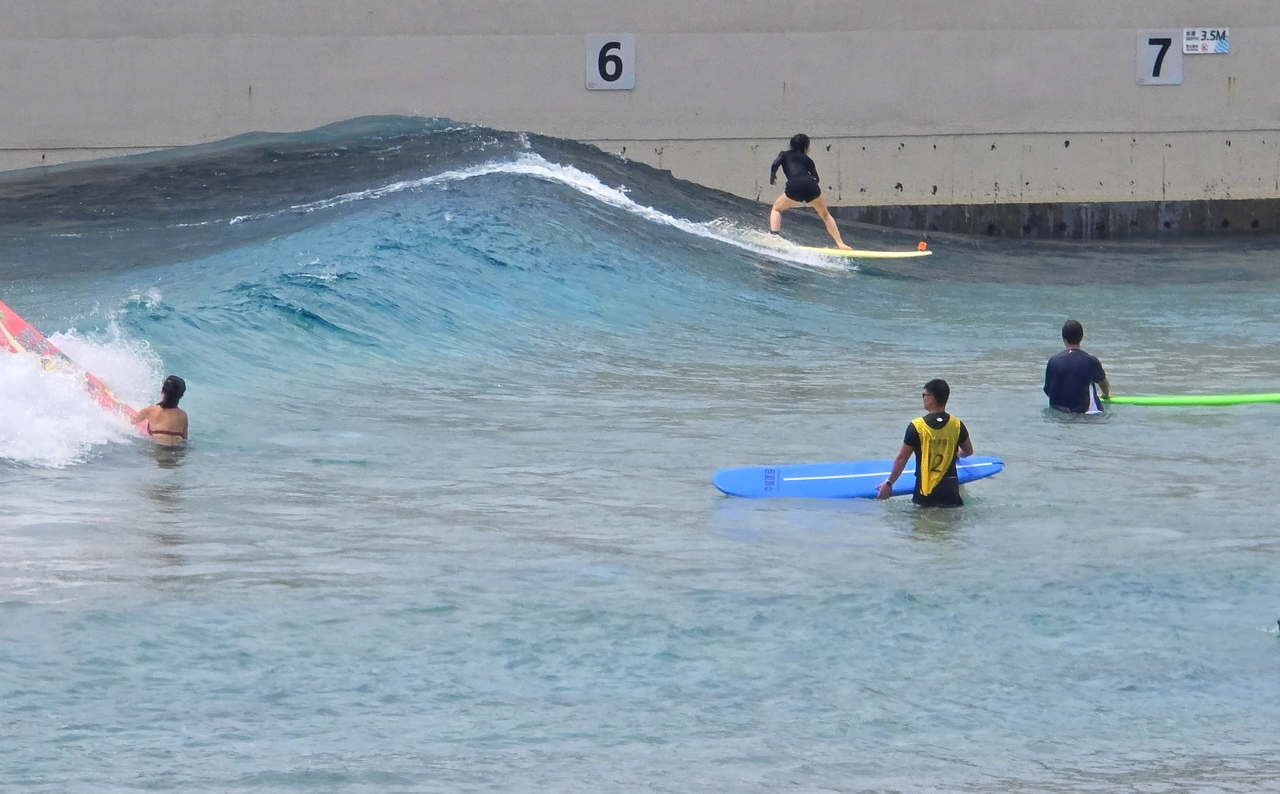
Developed by China Tourism Group, this is China's first surf-themed resort and one of Hainan's trendiest destinations. The centerpiece is an Olympic-standard, all-season artificial wave pool that serves as the Hainan provincial surf team's training base — yet it is equally welcoming to children and complete beginners.
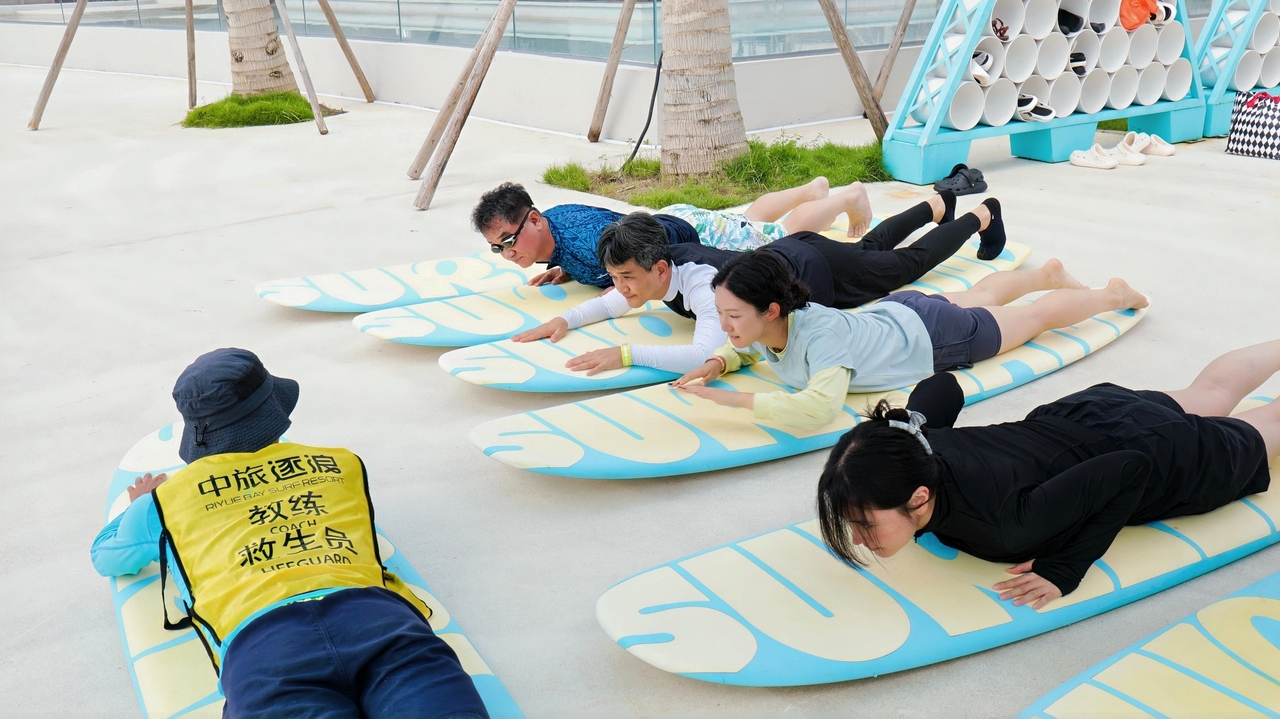
Surfing rewards only those willing to take the plunge. On dry land, instructors spend 30 minutes walking beginners through the basics, and the movements seem manageable enough. In the water, however, it is a different story.
The drill goes like this: lie flat on the board, fold one leg perpendicular to it, wait for a wave to build directly behind the board, then straighten the bent knee while swinging the other leg upright — and repeat. Simple on land, elusive on water.
Then comes the real thing. Just climbing onto the board in the churning pool is a challenge. When the instructor signals the start, every technique practiced on land seems to vanish — keeping both feet balanced on the moving board proves far harder than it looked.
The pool generates 23 different wave types, including three-meter swells designed for experts, offering plenty of variety for building core strength and balance. But as the Korean saying goes, even three mal of pearls are worthless until they are strung — and standing up on the board is the first pearl that needs stringing.
One nimble, quick-reflexed member of the group managed to stay upright for two seconds after five or six attempts, then stretched that to five to seven seconds on the next try. The rest could only watch in envy.
Inspired, another member eventually held a three-second stand. One, however, had to settle for a half-second balance before turning away from the pool with a vow to return — and a lingering sense of unfinished business.

Instructors guide everyone from first-timers to seasoned surfers through year-round training that simulates a wide range of natural wave conditions.
The resort has also evolved into a full wellness and lifestyle destination, making it one of the most popular spots among young East Asians today.
Surfers and lesson-takers alike can stay at the surf-themed hotel, which offers 239 rooms across two styles — enthusiast and family. The concept is captured in its tagline: "Fall asleep beside the waves."
Visitors shop along a trendy arcade, savor local cuisine, and join music parties and art workshops — all of which organically build a community bonded by a shared love of surfing.
A new kind of leisure culture is taking shape in Wanning, one that speaks directly to the varied desires of a younger generation.
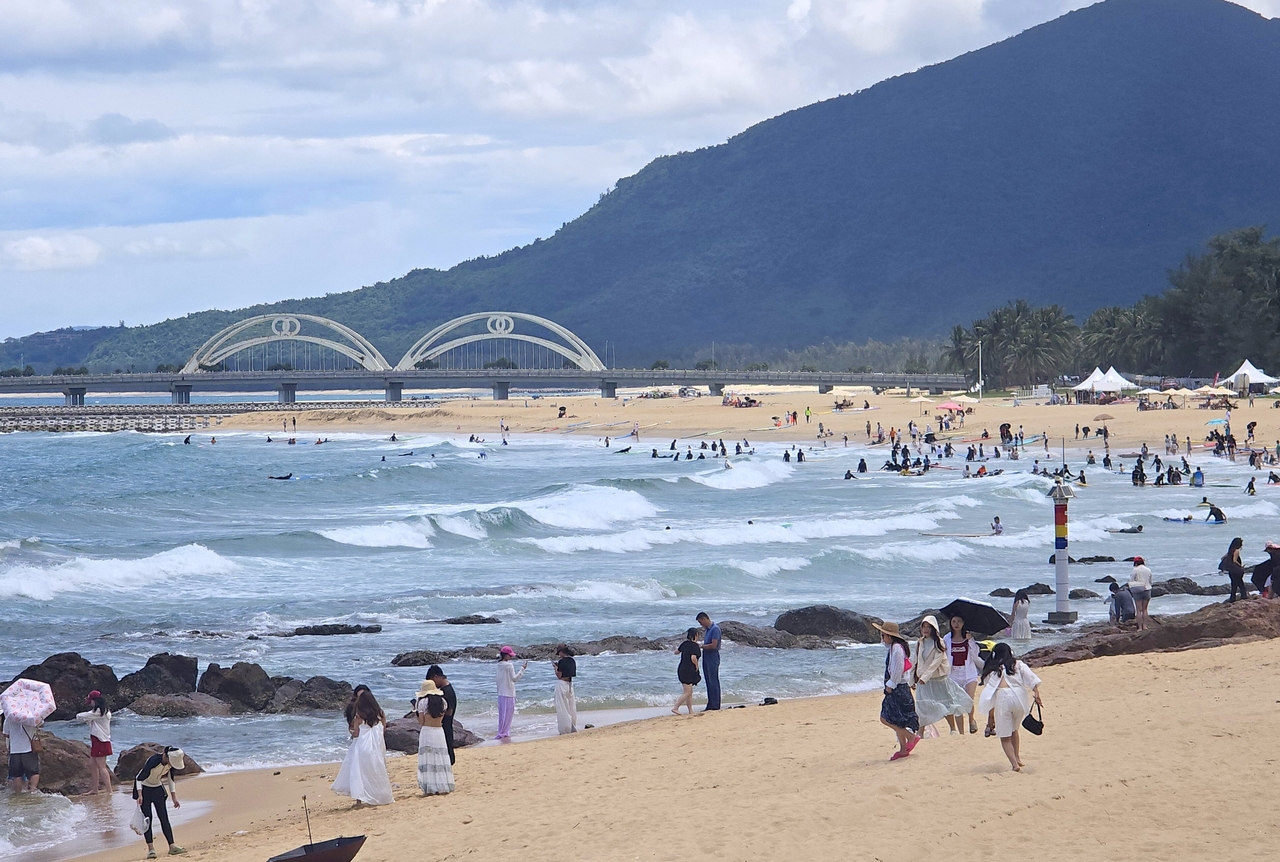
Beyond the Zhonglv Zhulang complex, Wanning offers several natural surf beaches, including Riyue Bay, and hosts a range of surfing competitions throughout the year.
Chonghai: a breath of fresh air, and the mystery of Tanmen
The Boao Lecheng International Medical Tourism Pilot Zone — an ambitious, regulation-free medical and wellness district that the Chinese government is actively developing — falls within the boundaries of Chonghai.
Because Boao Lecheng draws so much attention, Chonghai itself risks being overshadowed, much like a supporting dancer upstaged by the star — the way Hebei Province is eclipsed by Beijing, or Gyeonggi Province by Seoul.

Yet long before Boao Lecheng put Chonghai on the map, the city had already earned a reputation as a place of culture, civilization, longevity and clean air — a reputation it has maintained for generations.
Chonghai is a pristine ecological city that encompasses mountains, forests, hot springs, rivers, lakes and sea — a "roofless natural geology museum," as locals call it. It also sits at the crossroads of Hainan's coastal ring road.
The city is a hub for tropical fruit and home to the South China Sea Museum, which holds a comprehensive collection of South China Sea cultural artifacts. In recent years it has also gained recognition as the host city of the Boao Forum for Asia.
Chonghai boasts Guantang Hot Spring, rated a Grade 1 spring, along with the Baishiling tourist resort, and offers distinctive activities such as jungle adventures and rock climbing.

Also within Chonghai are Liuke Village, designated one of China's most beautiful leisure rural villages; Huzai Village, known as the "window of tropical fruit" for successfully cultivating 750 rare tropical fruit varieties sourced from around the world; and a Boao fishing village where a mysterious shipwreck lends atmosphere to sunrises and sunsets alike.
Perhaps the most striking of all is Tanmen, a millennium-old fishing port where the sea reaches deep inland — blurring the line between river and ocean — much like Beopseongpo in South Korea's South Jeolla Province. Tanmen draws geologists, folklorists and photographers from around the world, and ranks among Hainan's premier destinations for landscape photography.
Fenjie Island: a former pirate stronghold reborn, its coral coming back to life
Fenjie Island marks the climatic divide between the surf city of Wanning to the north and Lingshui to the south. The Wuling ridge — said to resemble the head of an ox drinking from the sea — serves as the boundary separating Hainan's northern and southern weather patterns.
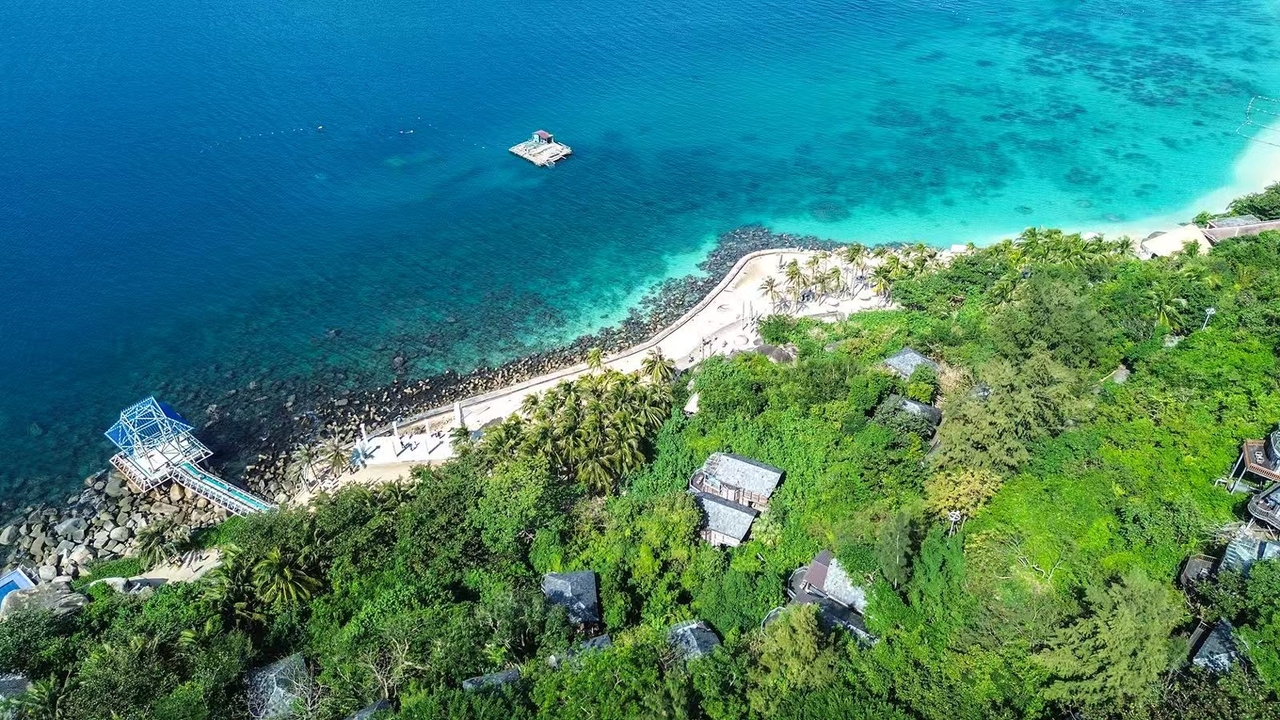
A local saying captures the divide perfectly: "The ox's head is dry, but its tail is wet" — meaning the weather north of Wanning and south of Lingshui can be entirely different. Rain on Wanning's surf beach is no reason to give up. Pass through the Wuling tunnel and the skies near Fenjie Island may well be clear.
A 10-minute boat ride from the mainland, Fenjie Island offers crystal-clear water and abundant coral reefs, with snorkeling, scuba diving and a variety of other marine activities on offer, alongside subtropical drinks and local health food.
Once a pirate stronghold, the island opened to tourists in 2004 and was redesigned as a resident-free retreat — a paradise reserved entirely for visitors. It holds China's first uninhabited island national 5A-level tourist designation, the country's highest scenic area rating.
Stepping off the boat, visitors are greeted by flyboard performers shooting water into the air in vertical, diagonal and S-shaped arcs. On the other side of the island, a striking lighthouse and sculptural installations welcome tourists to the scenic zone.
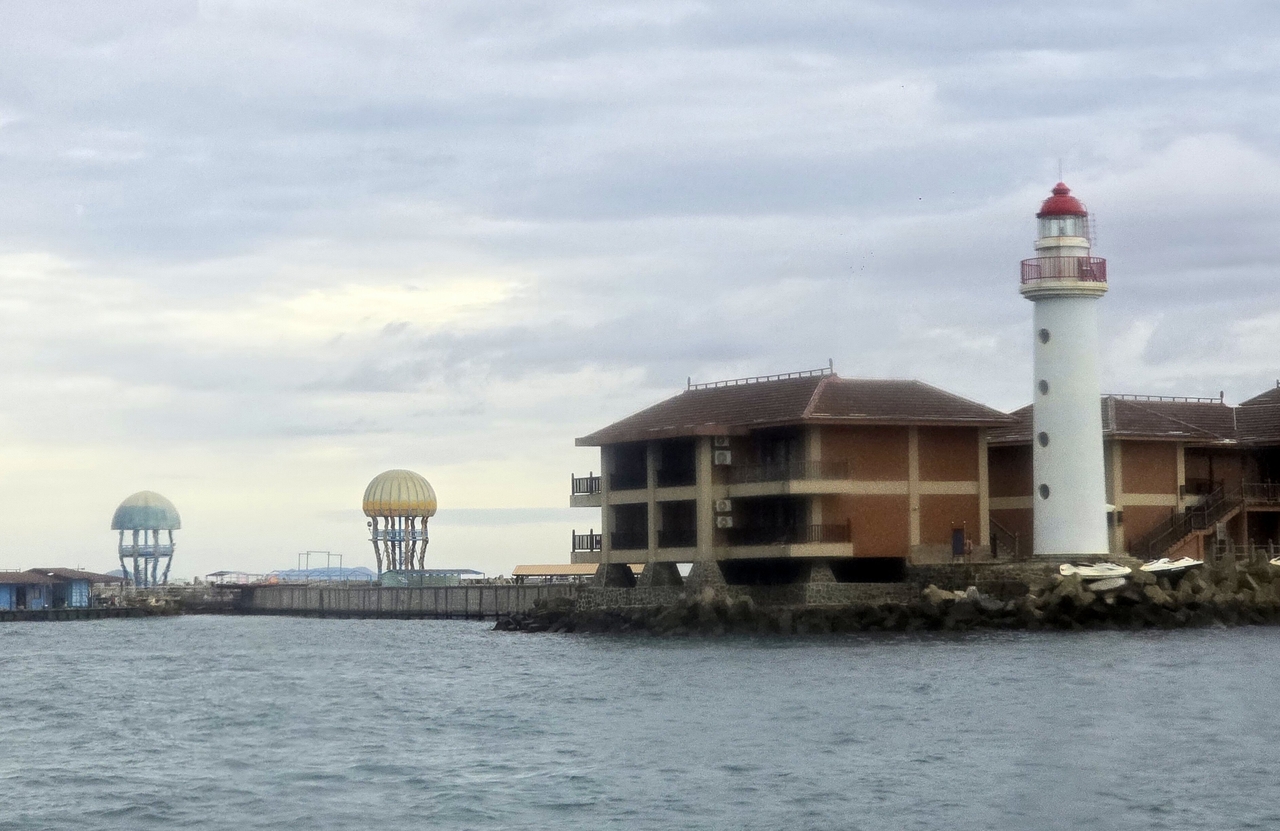
The island covers barely one-seventh the area of Seoul's Yeouido, yet it is packed with marine activity centers, cliff-top walking trails, quirky eateries and cafes, sculptures including a replica of the Monkey King's staff and a giant brush evoking a Chinese calligraphy master, a snorkeling zone, a stingray feeding and education area, and a resort village perched above the sea cliffs. Small in size, it delivers a full travel experience.
What stands out is the commitment of Hainan's public and private sectors to environmental restoration and sustainable tourism.
By channeling income from tourism into local communities and encouraging a shift away from fishing, authorities have protected marine stocks. After more than a decade of effort, coral restoration has reached a recovery rate of around 40 percent. As marine life gradually returns, the surrounding waters have become so clear they have earned the name "Glass Sea."
abc@heraldcorp.com