Shin Hyun-song: financial stability requires acting early
BOK governor holds briefing for Seoul correspondents in Jackson Hole
Consecutive hike breaks with convention; delayed action risks higher costs
Academics divided on merits of preemptive monetary policy
Fed rate move in September? Warsh's hawkish remarks draw attention
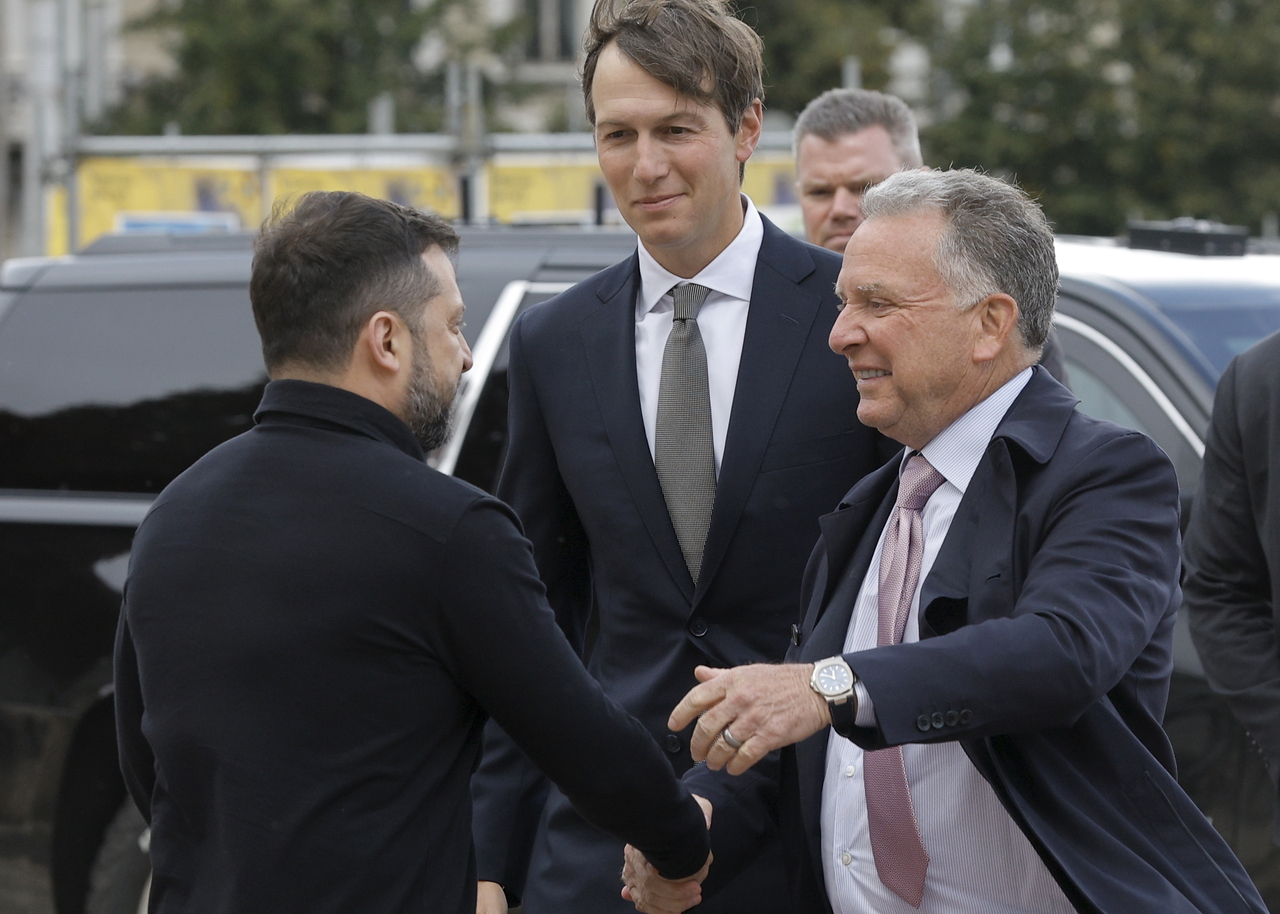
![Bank of Korea Governor Shin Hyun-song speaks at a briefing for Seoul-based foreign correspondents held on the sidelines of the Federal Reserve's Jackson Hole economic policy symposium in Wyoming. [Bank of Korea]](https://wimg.heraldcorp.com/news/cms/2026/08/30/news-p.v1.20260830.a94b3bf19a514621bbcaae063801d33e_P1.jpg)
After the Bank of Korea's Monetary Policy Board raised the benchmark interest rate for the second consecutive meeting — from 2.75 percent to 3 percent on Thursday — Governor Shin Hyun-song has repeatedly stressed the need for preemptive action. The back-to-back increase was, by Shin's own admission, "a departure from convention."
The message is clear: even if economic indicators such as inflation do not yet demand an immediate rate increase, acting early is preferable to allowing problems to grow larger.
Speaking at a briefing for Seoul-based correspondents on the sidelines of the Federal Reserve's Jackson Hole economic policy symposium in Wyoming on Thursday (local time), Shin said housing prices were rising at a double-digit pace and household debt was climbing. "Financial stability requires preemptive action — catching the problem while it is still small — because broad liquidity is expanding and market-based funding could increase further," he said.
On the won-dollar exchange rate, Shin said the rate is influenced by the interest rate differential between South Korea and the United States, and that the BOK had acted preemptively by raising rates this time.
Shin had made similar remarks at a press conference following Thursday's policy decision, saying that "the majority of research findings show that preemptive monetary tightening helps stabilize inflation expectations more quickly, reduces the degree of tightening needed, and eases the burden on growth." He added that such action "will also help cool housing prices in the Greater Seoul area," and went on to say that the BOK had chosen to act early rather than wait until a much larger intervention became necessary.
Shin's repeated emphasis on the rationale for preemptive action reflects the skepticism that has surfaced both inside and outside the BOK over the consecutive hike. Before the meeting, market opinion was evenly split between a hike and a hold. A Korea Financial Investment Association survey found that eight out of 10 bond market participants had predicted the BOK would keep rates unchanged.
Within the Monetary Policy Board itself, board member Hwang Geon-il dissented in favor of a hold. The full details will be released in the minutes in about two weeks, but the dissent appears to have centered on whether it was necessary to tighten preemptively — potentially weighing on the real economy and increasing the burden on vulnerable borrowers — at a time when the growth path remains uncertain and the scale of demand-side inflationary pressure is still unclear.
The board nonetheless pressed ahead with the consecutive hike, judging that rates needed to rise before demand-side pressure from a strong semiconductor sector began pushing inflation higher in earnest. While current indicators do not signal an emergency requiring an immediate increase, the BOK concluded that failing to act early could mean paying a much steeper price later.
Shin added that "the majority of research findings show that reducing the degree of tightening and easing the burden on growth" supports the case for preemptive action.
In academic circles, views on preemptive monetary policy are divided. The Federal Reserve's handling of monetary policy after the COVID-19 pandemic in 2021 has drawn sharply contrasting assessments.
One study supporting Shin's position is "Soft Landing and Inflation Scares," co-authored by James B. Bullard, former president of the Federal Reserve Bank of St. Louis. Bullard argues in the paper that what matters in monetary policy is not the intensity of the response but its timing. The longer a rate increase is delayed, he contends, the more long-term inflation expectations among market participants erode — deepening inflation fears.
Bullard cited the Fed's 2021 tightening as a case study in failed preemptive action, estimating that had the Fed acted preemptively at the time, it could have lowered the peak of inflation by roughly 3 percentage points compared with what actually occurred, at almost no cost.
On the other side of the debate, some argue that the side effects of preemptive monetary policy can outweigh its benefits. David Reifschneider, a former Fed economist, said in a recent report that while an earlier and more aggressive rate increase in 2021 might have brought inflation back to target somewhat faster, it would have come at the cost of higher unemployment and lower real wages. Preemptive action may be effective when viewed through the narrow lens of inflation alone, but its overall impact on the broader economy could be negative.
Shin also urged the Fed to act preemptively, saying it should try to address problems early but use stronger tools if necessary.
Market attention is now turning to the Fed's FOMC meeting next month. While the BOK has raised rates at consecutive meetings, the Fed has held steady, watching incoming data. But expectations for a September increase are building.
Fed Chair Kevin Warsh said at the Jackson Hole symposium on Thursday (local time) that inflation-related indicators were "increasingly concerning" and that the Fed "must be confident that underlying inflation is moving toward the target at a clear and sufficient pace." He added: "If not, we have work to do. That is our mission, our mandate and our task." Warsh also described the price stability target as "firm and fixed" and said current financial conditions could not easily be described as restrictive.
Warsh's hawkish remarks fueled expectations of a September hike. According to the CME Group's FedWatch tool, the probability of a 25-basis-point increase at the Fed's next meeting stood at 57 percent as of Saturday — up 17.1 percentage points from 39.9 percent a month earlier.
Shin said Warsh's remarks represented a significant shift from his tone in July, calling them "a fairly strong signal about the September meeting."
kimstar@heraldcorp.com