Park Hyun-joo: 'Big tech will enter blockchain payments — they can't ignore finance'
Hecto Financial eyes forex and settlement after cross-border payments
Kakao Pay leans on broad online-offline network for stablecoin distribution
Toss leverages 30 million users and 440,000 merchant base
NHN KCP, Payco push toward VASP status for stablecoin payments
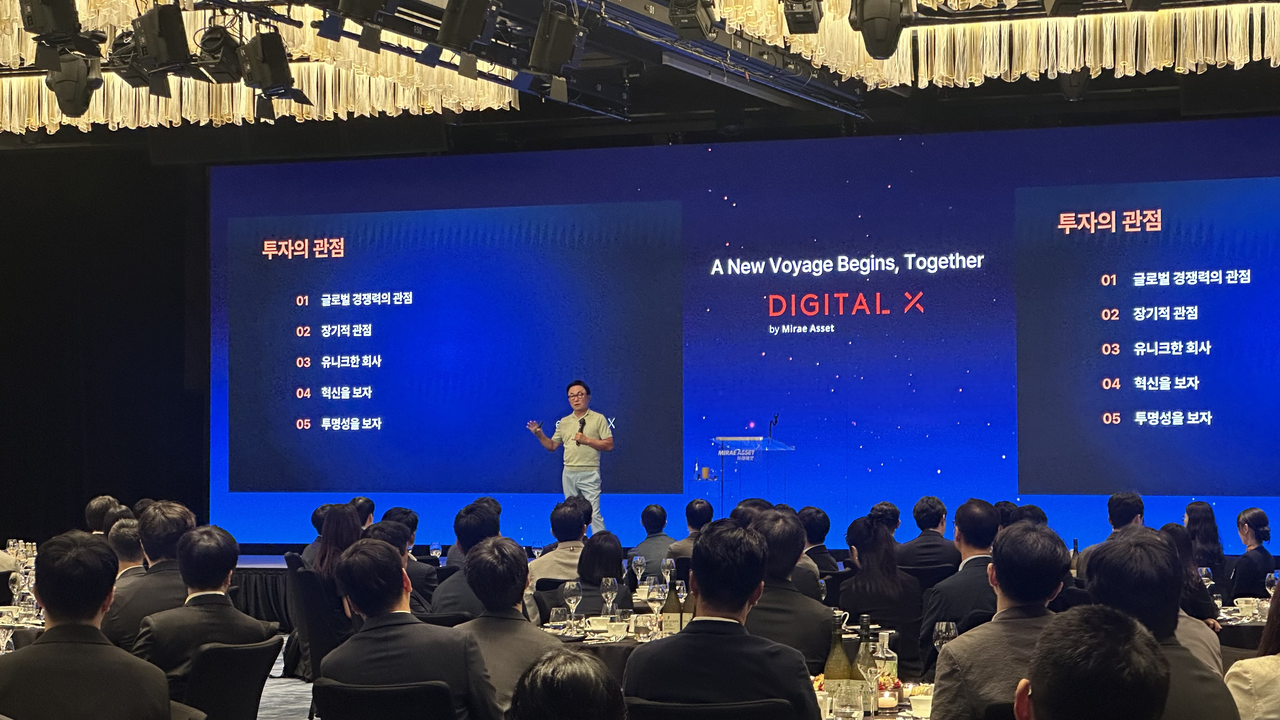
"What Elon Musk is trying to build is payments. Korea has a few companies in that space, and I don't think people fully appreciate their value."
Park Hyun-joo, chairman and Global Strategy Officer of Mirae Asset Group, made the remarks at a recent staff gathering for DigitalX. His point was that the key question is not whether stablecoins or other digital assets will dominate the future payments market, but how conveniently financial consumers can send money and make payments. The comments were widely read as a call to pay closer attention to the user bases and payment networks already held by established payments operators.
Musk's social media platform X, formerly Twitter, has already moved in that direction. After partnering with Visa in January last year to announce the financial and payments service X Money, X began rolling it out in the United States in July this year. The service supports peer-to-peer transfers, bill payments and a Visa debit card — a model similar to established American money-transfer services such as Venmo and Zelle.
Park also flagged the likelihood that global big-tech companies will move directly into the payments market. "Big tech will enter the blockchain payments market," he said. "Even if they can't replace SWIFT, I believe they have no choice but to enter. There's no way they pass up finance." The implication is that even if companies have already staked out positions in blockchain-based payments and remittances, the competitive landscape could be reshuffled once big tech makes a serious push.
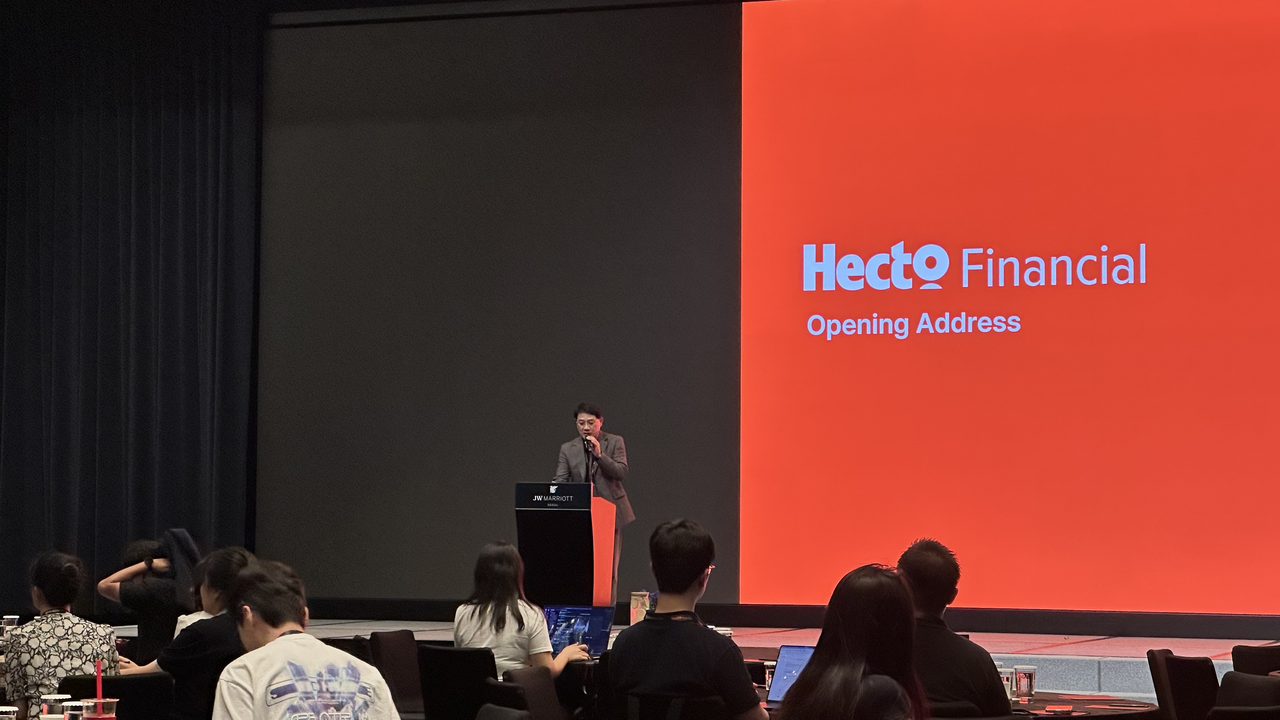
Against that backdrop, domestic payments companies are using their existing networks as a springboard to target overseas markets. Hecto Financial has identified digital wallets, country-specific payment method integration, buy-now-pay-later and crypto and stablecoins as the major trends shaping the global payments market ahead.
The company notes that payment preferences vary sharply by country, making it difficult to simply export Korea's credit-card-centric model abroad. According to Worldpay's Global Payments Report 2026, published earlier this year, digital wallets and account-to-account transfers accounted for 42 percent and 34 percent, respectively, of Indonesia's online payments last year — far outpacing credit cards at 5 percent. In the United States, digital wallets including Google Pay and Apple Pay held the largest share at 40 percent, with BNPL accounting for another 6 percent.
Hecto Financial announced plans to support more than 154 payment currencies and more than 250 global digital payment methods through its partnership with Worldpay, which said it processes roughly 11 percent of all Visa and Mastercard transactions worldwide. Building on that, Hecto Financial aims to give its clients access to local payment networks without having to set up overseas subsidiaries or negotiate individual contracts with payment providers in each country.
The area Hecto Financial is placing particular emphasis on is foreign exchange and settlement after the payment itself. The company plans to identify incoming overseas funds through virtual accounts assigned to each client, cutting the receipt time — which can take one to two days through conventional international transfer networks — to as little as about two hours. It also intends to let clients hold received foreign currency by denomination rather than converting it immediately to won, so it can be redeployed for outbound payments abroad.
Currency conversion will be offered in two modes: real-time exchange rates and fixed rates. When volatility is high, clients can lock in a rate to fix the settlement amount in advance. The system is designed so that the entire process — from checking the exchange rate to entering recipient details and submitting a transfer request — can be completed in under five minutes through a single portal. The service also provides dedicated accounts per counterparty, a "smart memo" function that logs the purpose of each transaction, and multi-level approval controls.
Crypto is also a pillar of the company's global payments strategy. Hecto Financial, which has a partnership with Circle — the issuer of the dollar stablecoin USDC — is preparing a global remittance and settlement structure using the OhaiWallet operated by its VASP-licensed affiliate Hecto Wallet One, and plans to expand its business scope in step with regulatory developments.
"We process more than 50 trillion won ($36.2 billion) in virtual account transactions annually, and global companies including Google, TikTok, Meta, AliExpress, Temu and Agoda run their Korean operations through Hecto Financial's services," said Choi Jong-won, CEO of Hecto Financial. "As the sole payments partner of Circle Payments Network, we stand at the forefront of the global payments network."

Kakao Pay has also recently signed an MOU with Circle to explore cooperation in the stablecoin business. The company believes its domestic user base and broad online and offline payment network position it well to compete in stablecoin distribution going forward.
Toss signed an MOU with Circle last month and is keeping open a range of potential applications, including merchant payments, overseas payments and cross-border remittances. The company says it has the infrastructure to deploy stablecoins across payments and transfers broadly, backed by affiliates including Toss Place — which operates more than 440,000 offline merchant locations — as well as payment gateway Toss Payments and Toss Bank, with a combined user base of about 30 million.
"The possibility of linking Circle's CPN with Toss's online and offline payment channels was also among the areas discussed when the MOU was signed, and we plan to explore it within the scope of future cooperation," a Viva Republica official said. Toss is also developing a digital asset wallet. Neither Kakao Pay nor Toss currently has a Korea Financial Intelligence Unit-registered VASP among their affiliates, making VASP licensing a key variable as both companies look to expand in this space.
NHN KCP has gone a step further and is actively pursuing VASP registration. The company is currently preparing for an Information Security Management System certification review, after which it plans to file for VASP registration with KoFIU. NHN KCP, which has developed an Avalanche-based payments-focused mainnet, held a stablecoin demo day last month, demonstrating live payments using digital assets through the Payco app. During the demonstration, selecting a payment method in the app displayed the amount to be deducted and the estimated exchange rate, with the transaction completing within two to three seconds.
The merchant-facing admin screen showed the actual payment amount, the digital asset used, transaction status, fees and settlement schedule. The focus was on using blockchain while keeping the experience close enough to conventional payments that both consumers and merchants would find it familiar. "User-friendly UX is our strength," an NHN KCP official said. "We want even users who have never used blockchain to be able to use it with roughly the same experience as converting won into points."
NHN KCP has also been working with Line Next to integrate the digital asset wallet Unify into its payment interface, allowing overseas users to make purchases at its merchants without registering a Korean card or bank account. Unify already supports domestic gift card purchases using the yen-denominated stablecoin JPYC. "We are looking at distributing multi-currency stablecoins — not just won, but also dollar and yen — and are considering expanding our business scope to the global payments market," an NHN KCP official added.
kyoung@heraldcorp.com