
Ministry of Health and Welfare's 2027 budget set at 148.77 trillion won, up 8.2% from last year; income-based basic pension differentiation and new essential regional healthcare special account introduced
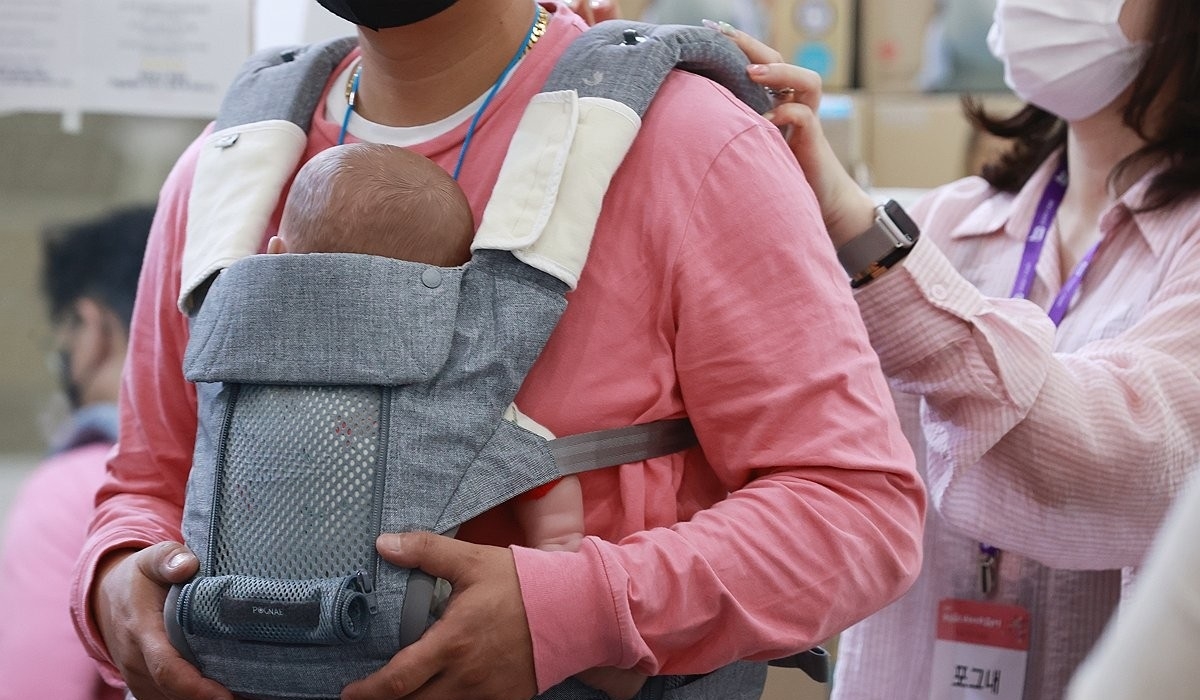
Starting next year, families will be able to receive up to 75 million won ($54,600) per child under a new marriage, childbirth and parenting support package.
The basic pension system will also be restructured to provide greater benefits to lower-income recipients, with the spousal reduction rate cut to ease the burden on couples.
A new special account for essential regional healthcare will be established, and the government will expand the regional medical workforce through tuition and housing support for students in a regional physician selection program, a nationwide rollout of the contracted regional essential physician program, and an increase in the number of senior physicians hired.
The Ministry of Health and Welfare said Tuesday that the Cabinet approved a 2027 budget proposal of 148.77 trillion won, an 8.2% increase from last year's main budget.
Including a child basic allowance and a newborn welcome grant to be allocated under a newly created future response fund, the total rises to 152.43 trillion won, a 10.9% increase.
The ministry's 2027 budget is organized around five core investment priorities: strengthening the social safety net that protects lives; expanding investment to revitalize regional and essential healthcare; establishing community integrated care and reinforcing universal care services; supporting the recovery and growth of future generations including children and youth; and driving healthcare AI transformation and biotech innovation.
Mandatory support obligation scrapped for households of severely disabled welfare recipients
Among the key measures by sector, the government will raise the standard median income — the benchmark for welfare eligibility — by 6.7%, the largest increase since the customized benefit reform of 2015, to strengthen minimum livelihood protections for low-income households. It will also abolish the family support obligation requirement for about 20,000 households in which the livelihood benefit recipient is severely disabled.
Abolishing the family support obligation standard for severely disabled people will also expand the pool of medical benefit recipients by 30,000 people, and basic medical expenses for those recipients will be enhanced.
The basic pension will shift to an income-differentiated payment structure to concentrate support on lower-income recipients. The spousal reduction rate will be cut from 20 percent to 10 percent, and coverage will be extended to recipients of occupational pensions and their spouses. Total spending on the basic pension will rise 11 percent from last year to 25.7 trillion won.
To help low-income people with the capacity to work become self-sufficient, participation in self-reliance programs will be expanded to 75,000 people, and self-reliance benefits will be raised by 3.7 percent.
To help people facing urgent crises, the government will introduce a system allowing township and village offices to immediately provide a 300,000-won livelihood grant when warning signs of hardship are detected. It will also launch a "Hope Dream Package" outreach program under which local civil servants visiting a household in crisis for the first time will provide daily necessities worth 25,000 won.
New essential regional healthcare special account created; dementia patient asset management pilot to expand
Investment to revitalize regional and essential healthcare will also be significantly expanded.
A new 1.26 trillion won special account for essential regional healthcare will be established, with concentrated investment guided by three principles: greater support the farther a region is from Greater Seoul, priority investment in public medical institutions, and stronger local government autonomy.
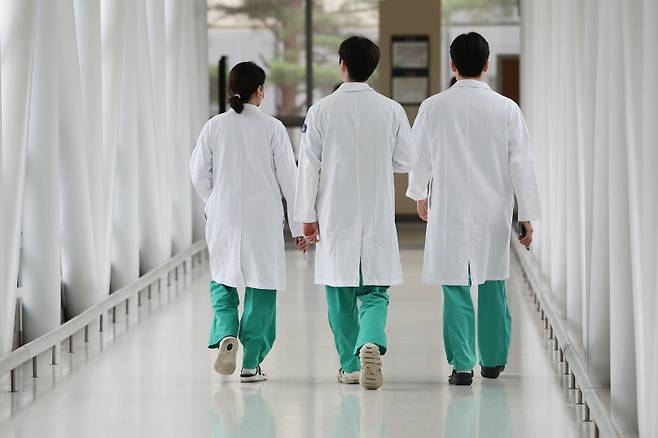
Students in the regional physician selection program, who are required to serve for 10 years in their assigned region, will receive support for tuition and housing costs. The contracted regional essential physician program will be expanded nationwide, and the number of senior physicians hired will increase from 160 to 220, bolstering the regional medical workforce.
The government will work to embed community integrated care in local settings and strengthen universal care services, while significantly improving the working conditions of social welfare workers.
The integrated medical, nursing and care support service will be extended beyond the elderly to include people with disabilities, with regions that are medically underserved or experiencing population decline receiving a 1.2- to 1.5-times funding premium. Thirty new public "vulnerable-area care centers" will be established in depopulating regions lacking care infrastructure, providing daytime, overnight, short-term and home-visit care services.
Senior employment positions — centered on social service and private-sector roles — will be expanded to about 1.18 million, and dedicated safety personnel will be significantly increased to 1,341. The pilot program providing asset management support services for dementia patients will also be expanded.
New childbirth and parenting package introduced; newborn welcome grant and child basic allowance to be paid
The government will also actively support the recovery and growth of future generations, including children and youth.
Support for youth facing complex hardships — including family caregiving responsibilities and social isolation — will be expanded, and 120 new community-based institutions will be established to help young people restore daily routines and participate in society.
The government will cover the first month's national pension premium for all 451,000 young people turning 18 next year (born in 2009), ensuring each of them begins a pension contribution record.
A new childbirth and parenting package will be created by consolidating the existing first-meeting voucher, parental benefit and child allowance into a newborn welcome grant and a child basic allowance.
The newborn welcome grant will be paid in four installments over one year, with amounts varying by birth order: 10 million won for a first child, 12 million won for a second and 15 million won for a third or subsequent child. Families in designated priority areas, including depopulating regions, will receive an additional 5 million won.
The child basic allowance will pay 200,000 won per month to children aged 0 to 12 — a threshold that will rise by one year annually through 2030 — split between 100,000 won in cash and 100,000 won in local gift certificates. Families in priority areas will receive 300,000 won per month, split equally between cash and local gift certificates, with an additional 300,000 won per month for home-based care of children aged 0 to 1.
When the marriage support grant (1 million won), childbirth grant and child basic allowance are combined, a family can receive up to 75 million won per child.
The ministry will also provide 5 billion won in new vouchers to 13 youth-founded startups to nurture biotech health unicorn companies, expand the skin big data database, increase the number of flagship hub overseas experience and retail outlets to strengthen K-beauty competitiveness, and build an integrated K-healthcare hub platform that includes telemedicine services for foreign patients.
Health and Welfare Minister Jeong Eun-kyeong said the 2027 budget was drawn up with a focus on "making the social safety net that saves lives more robust, broadening community care, and expanding regional, essential and public healthcare to guarantee high-quality medical services regardless of where people live — protecting the basic lives and health of the people." She added that the ministry "made every effort to faithfully reflect the necessary budget so that the Ministry of Health and Welfare can lead the way in realizing a welfare state that saves lives."
The budget proposal will be submitted to the National Assembly on Wednesday and is expected to be finalized in December after legislative deliberation and approval.
thlee@heraldcorp.com





