
Attention turns to whether incumbent Yu Hong-lim will win a second term; four preliminary candidates to be selected Wednesday
Policy evaluation set for Oct. 7; new term to begin in February
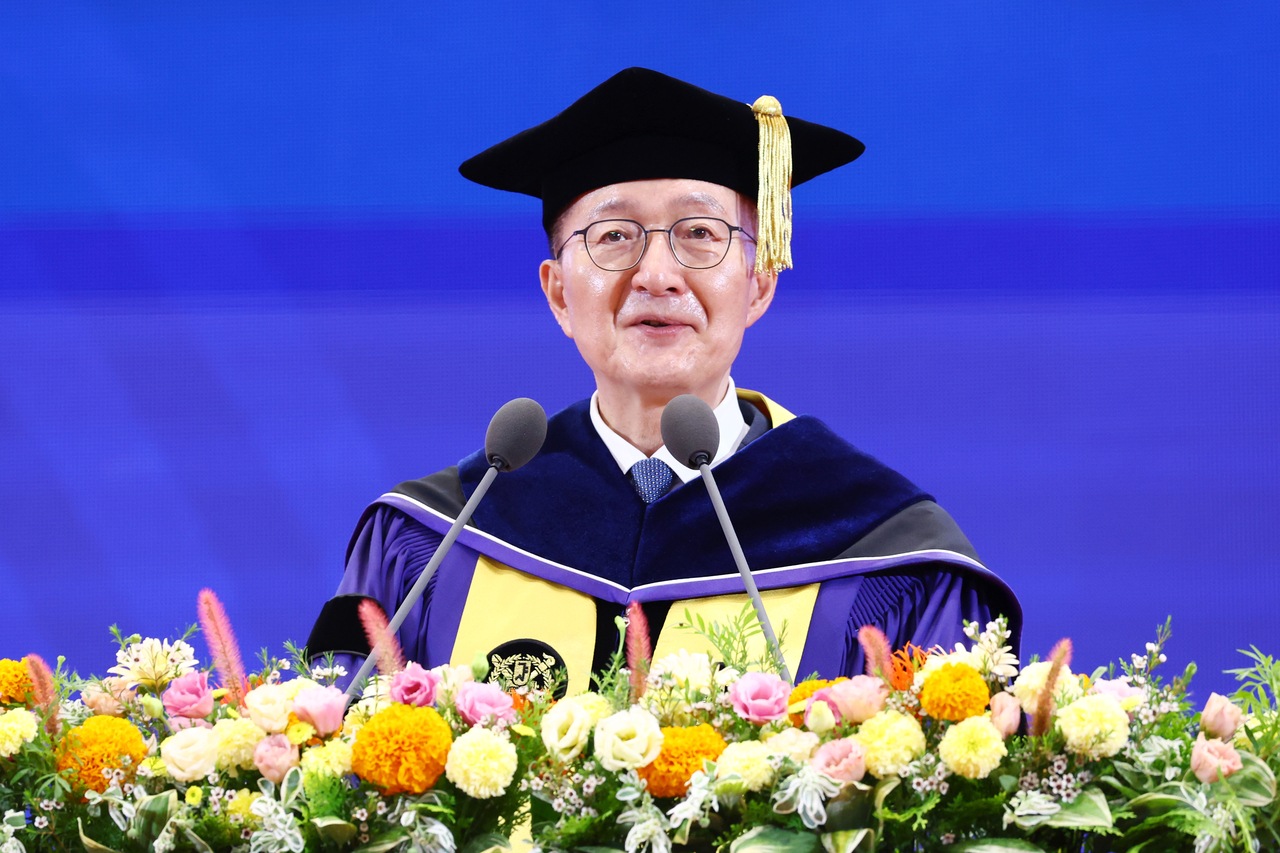
The race for the 29th president of Seoul National University is officially underway. Twelve professors, including incumbent President Yu Hong-lim, have been confirmed as candidates, with attention focused on whether Yu could become the first SNU president to serve consecutive terms in roughly half a century.
According to SNU on Tuesday, the 12 confirmed candidates are, in order of application: Jang Pan-sik of the College of Agriculture and Life Sciences, Lee Jae-young of the College of Humanities, Lee Jun-ho of the College of Natural Sciences, Kim Hyun-chul of the Graduate School of International Studies, Lee Won-woo of the School of Law, Lee Seok-jae of the College of Humanities, Choi Haecheon of the College of Engineering, Yoo Jae-joon of the College of Natural Sciences, Choi Man-soo (emeritus) of the College of Engineering, Kang Jun-ho of the College of Education, Cha Sang-gyun (emeritus) of the Graduate School of Data Science, and Yu Hong-lim of the College of Social Sciences.
The central question of this election is whether Yu will win a second term. Yu took office in February 2023, and if re-elected, he would be the first SNU president to serve consecutive terms since Han Sim-seok, who led the university as its 11th and 12th president in the 1970s — a gap of about 52 years.
This election is also the first held under revised rules that allow a sitting president to seek re-election without resigning. SNU amended its regulations governing the presidential nomination committee in 2023 to permit an incumbent to remain in office while running as a candidate.
Under the previous rules, a sitting president who entered the race was required to step down within seven days, making a re-election bid a significant burden. With Yu now in the race, Executive Vice President for Academic Affairs Lee Jun-jeong assumed the acting president role Tuesday.
Three engineering candidates enter race; repeat contenders also return
The candidates' academic backgrounds are drawing attention as well. Three candidates from the College of Engineering have entered the field, raising the question of whether SNU could elect its first engineering-trained president. The interest reflects a broader debate about how the university will cultivate AI and advanced technology and reshape its research and education systems at a time when such fields increasingly determine a university's competitive standing. Observers are watching to see what vision the candidates with expertise in engineering and data science will offer for driving technological innovation at the university.
The College of Engineering has the second-largest full-time faculty after the College of Medicine. Among its ranks, Choi Haecheon and emeritus professor Choi Man-soo have both entered the race. Cha Sang-gyun, an emeritus professor in the Department of Electrical and Computer Engineering who served as the inaugural dean of SNU's Graduate School of Data Science, has also put his name forward.
Engineering professors have consistently made the final slate of three candidates recommended to the board of directors in each of the three presidential elections held since SNU became a government-funded corporation in 2011. Yet despite that consistent presence among the finalists, the college has not produced a president.
Two candidates are making a second run, having competed in the previous election for the 28th president: emeritus professor Cha and professor Lee Jae-young. Cha was among the three finalists alongside Yu in that election and will once again face Yu in this race.
With the candidate list finalized, the selection process moves into full gear. The presidential nomination committee plans to narrow the field to four preliminary candidates from the 12 on Wednesday. This election introduces a weighted scoring system for that stage: committee members each select their four preferred candidates and assign them scores from one to four points, with the top four point-getters advancing as preliminary candidates.
Once four preliminary candidates are chosen, a policy evaluation panel composed of faculty, staff and students will assess their platforms. That evaluation is scheduled for Oct. 7. The nomination committee will then select three finalists from the four and recommend them to the board of directors, which will vote to choose one.
The chosen candidate will be formally appointed by the president of South Korea upon the recommendation of the minister of education. The 29th SNU president selected through this process will begin a new term in February.
newday@heraldcorp.com





