
'Competent oversight' as the key to better policy
Emphasis on strengthening local council authority and addressing everyday concerns
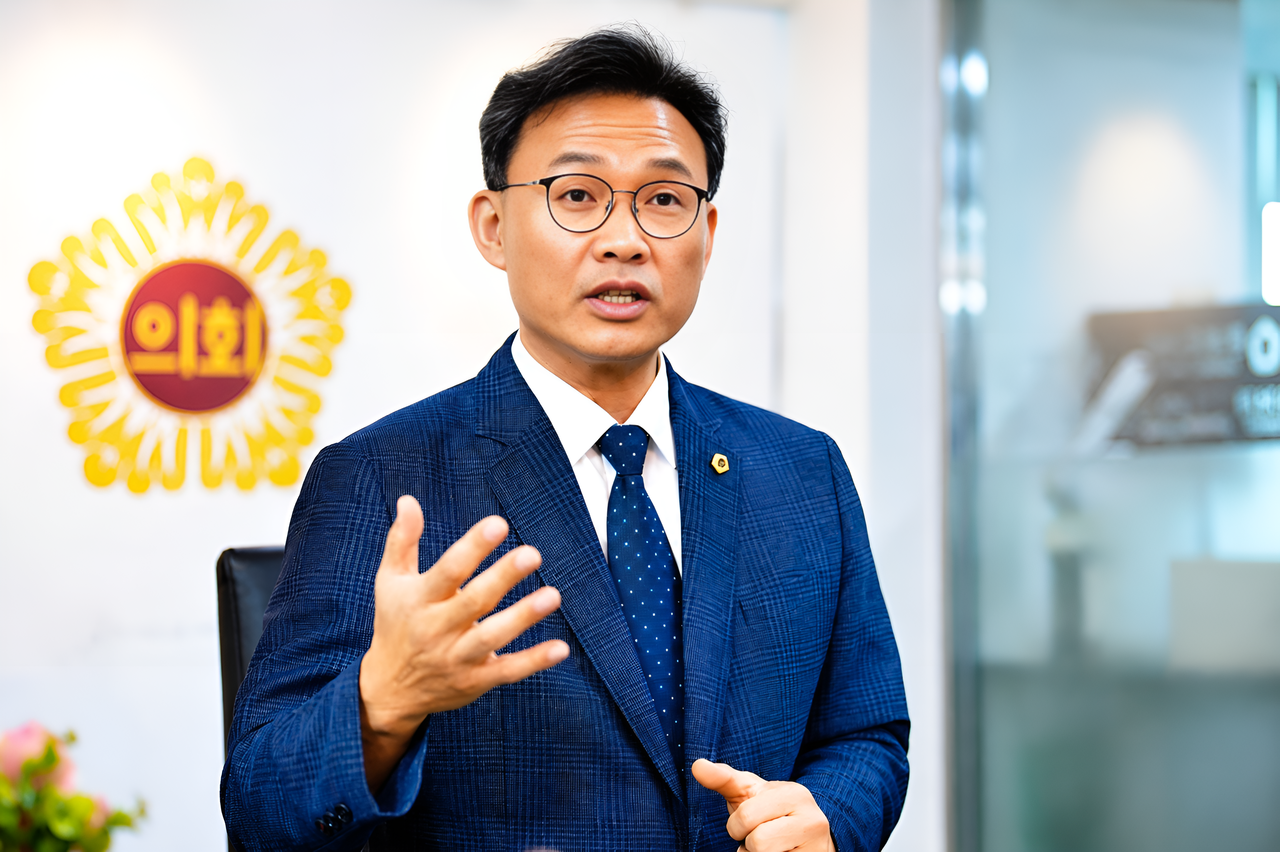
Lee Sang-hoon, floor leader of the Democratic Party of Korea caucus at the Seoul Metropolitan Council (Gangbuk District 2), said he intends to deliver tangible legislative results for residents through rigorous scrutiny of city administration and realistic policy alternatives. He also outlined his vision on major issues including proactive investment in aging urban infrastructure, improvements to the local council's policy support system, economic recovery and cross-party cooperation.
As the guiding principle for running the council's majority party, Lee underscored "competent oversight and cooperative collaboration." Rather than opposing the city administration's policies across the board, he said the focus should be on carefully examining the feasibility, safety and sustainability of each project — and offering realistic alternatives where needed.
"When a policy lacks completeness, it becomes difficult to earn the public's trust," Lee said. "It is the council's role to closely examine safety risks and practical obstacles that may arise during project implementation, and to present solutions alongside that scrutiny."
Lee said major city projects should prioritize substance over speed. Even when the intent behind a project is sound, he argued, failing to thoroughly examine potential problems during implementation can erode public confidence in the policy.
From building policy capacity to investing in urban infrastructure
Lee said the Democratic Party caucus needs to systematize collaboration among its members to strengthen its policy capacity. The goal, he explained, is to build a structure in which lawmakers share their individual experience and expertise and respond collectively to major issues — allowing the caucus to engage more precisely with the increasingly complex affairs of city government. He particularly said the specialized knowledge of each standing committee should feed into the party's broader policy capacity, with members jointly analyzing data and developing alternatives on key issues.
Lee also identified the local council's policy support staff system as an area in need of reform, saying the current arrangement makes it difficult to adequately support each lawmaker's areas of expertise and district-level concerns. He called for dedicated policy support staff assigned to each metropolitan council member to provide substantive assistance with legislation, policy review and local issues. He said support should go beyond simple document preparation to cover budget analysis, ordinance review and policy impact assessment.
He also put forward the enactment of a local council act and revision of the Local Autonomy Act as priorities for strengthening the independence and professionalism of local councils. He said councils need expanded authority and organizational capacity not only to check the executive branch, but to put forward independent policy alternatives.
On fiscal management for public welfare and safety, Lee prioritized proactive investment in aging infrastructure. With Seoul's water and sewage systems, railways, schools and other facilities that underpin daily life entering a state of deterioration, he said public funds should go toward prevention and maintenance rather than reactive responses after accidents occur.
"Budgets should be allocated first to the basic infrastructure that sustains residents' daily lives, not to high-visibility development projects," Lee said. "Responsible fiscal management means scaling back low-priority or unnecessary development and securing the resources needed for safety and upkeep."
On revitalizing the local economy, Lee focused on creating a virtuous cycle of public spending. He said linking public institutions' procurement and expenditure to locally rooted industries — such as Seoul's fashion and garment sector — could expand sales for small and medium-sized enterprises and small business owners and generate jobs. He also proposed building an institutional framework that encourages public institutions to actively use products and services from local businesses as a way to inject vitality into the local economy.
On relations between the ruling and opposition parties, Lee said policy differences should be resolved through productive dialogue. Because both sides share responsibility for governing Seoul regardless of party affiliation or seat count, he said sufficient communication is needed to produce outcomes that benefit residents. He added that the basis for cooperation should be the substance of policies and their effect on the public, not political positioning.
On the normalization of TBS, Lee said the remaining procedures — including the formation of an executive recommendation committee and board of directors, budget planning and labor-management relations — must proceed in a stable manner. He said efforts should focus on building the institutional foundation needed to normalize the broadcaster's operations, rather than repeating political disputes.
The council Lee envisions goes beyond monitoring the executive branch. It identifies gaps in policy, offers realistic alternatives and delivers practical solutions on issues that directly affect residents' lives. He sent a clear message that the majority party must also answer to the public's trust with a level of responsibility and policy capacity commensurate with its seat count.
7toy7@heraldcorp.com





