![The calligraphy work "Ilban Siguguen" on display before its removal. [National Museum of Korea]](https://wimg.heraldcorp.com/news/cms/2026/09/07/news-p.v1.20260907.f40e6656e0b145379fc05a900543d218_P1.jpg)
A piece of calligraphy displayed at the National Museum of Korea as the work of an independence activist has been found to be the creation of a pro-Japanese collaborator who shared the same name.
The National Museum of Korea said Monday that after a verification process, it had determined the work was produced by Park Joong-yang — a figure designated as a pro-Japanese collaborator — under the name "Park Won-geun," which he used during his studies in Japan.
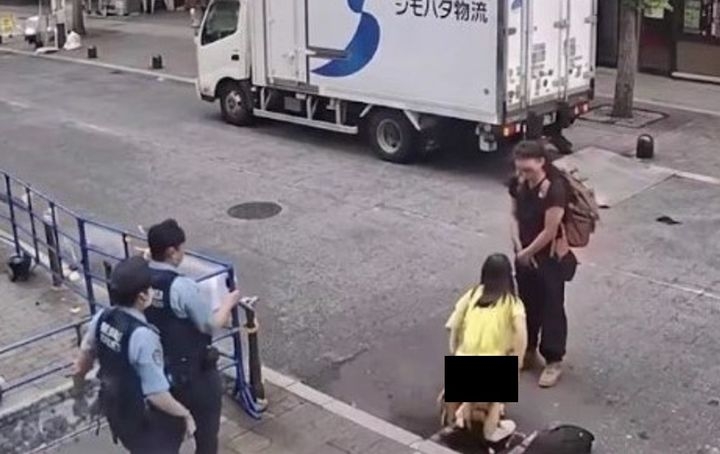
The museum had previously introduced the piece as calligraphy left by independence activist Park Won-geun, a native of Boeun in North Chungcheong Province. The case drew wide attention after footage emerged of the activist's descendants kneeling and weeping in the exhibition hall upon learning of the display.
About a month after the exhibition opened, a tip came in on Aug. 10 alleging that "Park Won-geun" was a former name used by Park Joong-yang, sparking controversy. The work was removed from the exhibition two days later.
The museum then assembled a cross-verification panel of seven specialists in calligraphy, classical literature, modern and contemporary history, and conservation science, whose findings confirmed the tip.
"Considering the semi-cursive script style, the introductory seal and the artist's seal used in 'Ilban Siguguen,' the work appears to be by someone with a considerable command of calligraphy," the museum said. "A comparison of the work with Park Joong-yang's known handwriting revealed similar characteristics in brushstroke technique, and we concluded it is reasonable to attribute the work to Park Joong-yang."
The museum also said the term "Hanin" — meaning Korean person — that appears in the calligraphy was commonly used by students and visitors in the presence of Japanese people, making it more consistent with Park Joong-yang's background as a Japan-educated figure than with the life of independence activist Park Won-geun, who has no recorded history of residing in Japan.
Documentary research further revealed circumstances in which Park Joong-yang used a different name. Analysis of sources including the "Report on the Truth of Pro-Japanese Anti-National Activities," the Miryang Park clan genealogy, his memoir "Sulhoe" and official imperial personnel records showed that Park Joong-yang used the name "Park Won-geun" until around 1903, when he returned from Japan and began using his better-known name.
Records also showed that during his time in Japan under the name Park Won-geun, he traveled through various regions selling his calligraphy to cover expenses.
In addition, the mounting style used for "Ilban Siguguen" was found to be consistent with methods commonly employed in modern Japanese-style framing.
The museum said it plans to explain the circumstances and findings of the investigation to the family of independence activist Park Won-geun and offer a renewed apology. It added that it would strengthen pre-exhibition verification of displayed items and their accompanying descriptions, and expand the pool of internal and external specialists in modern and contemporary history to prevent similar incidents from recurring.
National Museum of Korea Director Yu Hong-jun said he was "again deeply sorry to the family members who came to view the piece with all their hearts, believing it to be their father's work, and to the public," and pledged to reinforce the verification process for exhibited items to ensure the same mistake would not be repeated.
123@heraldcorp.com