Lawmaker flags absence of architectural data standards and AI talent pipeline gaps
Proposes Seoul-specific BIM standard and smart building certification regime
Suggests 'Seoul AI Fellowship' to link graduate programs with public projects
Seoul's digital twin must be grounded in architectural data standards before the city expands its technology projects — otherwise it will remain little more than a three-dimensional map on a screen rather than a platform for solving real urban problems, a city lawmaker said Monday. The lawmaker also proposed a graduate-level talent pipeline linking Seoul universities with public projects to build lasting competitiveness in AI.
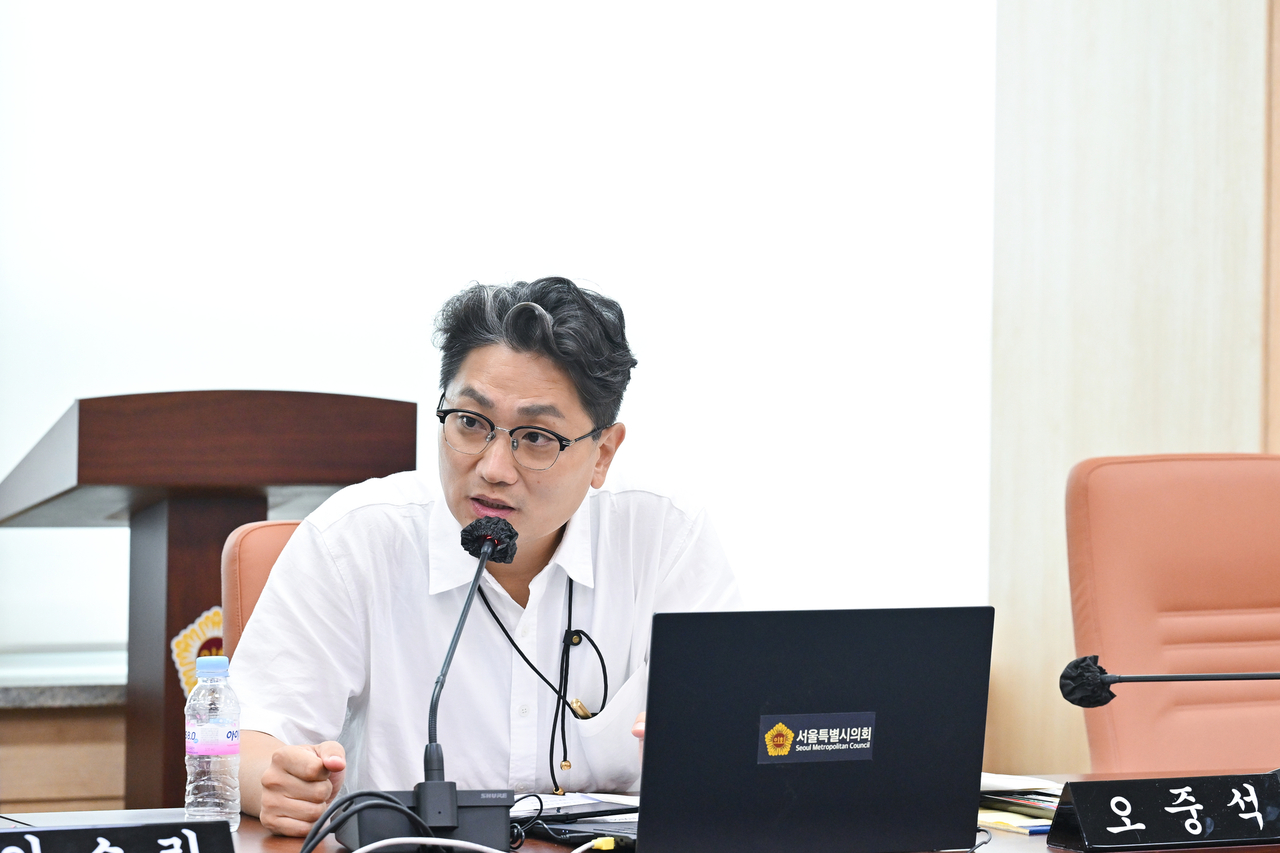
Oh Jung-seok, a Democratic Party of Korea member of the Seoul Metropolitan Council's Housing and Space Committee representing Dongdaemun District 2, raised the issues during a recent extraordinary session briefing by the Seoul AI Foundation, where he reviewed the foundation's digital twin, Virtual Seoul and Urban AI projects and identified standards and talent as the two core challenges.
Oh said the Seoul AI Foundation has been pushing ahead with a range of digital city projects without establishing a data standard that would allow building information to be produced, accumulated and used in a consistent way. Simply expanding individual projects and technologies, he said, is not enough to connect architectural and urban data across the city or to apply it reliably in administrative settings.
As an alternative, he proposed a Seoul-specific building information modeling standard. BIM is a technology that integrates information generated during the design, construction and maintenance of a building into a three-dimensional digital model. A Seoul BIM framework would allow building lifecycle data to be managed under a single standard and linked to a city-scale digital twin.
Oh said that only when data spanning design through maintenance is standardized can the digital twin be put to practical use in areas such as disaster and safety response, facility management and energy reduction. With data formats and quality varying from project to project, he said, there are inherent limits to sophisticated urban analysis and forecasting.
He also proposed introducing a smart building certification regime that would encourage buildings to generate and manage their own energy, equipment and safety data. The idea is to institutionalize standards for building data production and management through certification, creating a structure in which accumulated information feeds into city operations.
Oh said the digital twin must not stop at visually rendering Seoul's physical form, and that connecting real-time data generated by buildings to urban policy is what would make it a living city infrastructure. He said, however, that the Seoul AI Foundation's briefing contained no concrete roadmap for a BIM standard or smart building certification regime.
The Seoul AI Foundation said it had not separately reviewed the introduction of a Seoul-specific BIM standard. It also said it still lacks sufficient research and project experience in the housing and construction sectors to assess the feasibility of designing and piloting a smart building certification regime.
In response, Oh said the foundation should not halt discussion by citing a lack of in-house experience, but should instead build a collaborative framework with relevant city departments, including the Digital City Bureau and the Housing Bureau. His point was that the foundation, with its technology and data capabilities, and the departments responsible for construction and housing policy should divide responsibilities and move forward together on system design and pilot implementation.
The discussion then shifted from technology infrastructure to human capital. Oh said that for digital twin, metaverse and AI projects to amount to more than single-year tasks or one-off events, the city needs a stable talent pipeline to identify and develop master's- and doctoral-level researchers.
Oh said the Seoul AI Foundation's university partnerships are currently centered on overseas institutions such as MIT, while systematic ties with Seoul-based universities remain comparatively weak. He noted that Seoul has around 10 general and specialized graduate programs in AI-related fields, but that there are gaps in the pathways and support structures for developing basic-science researchers from master's through doctoral level.
Poor research conditions were also raised as a concern. Some graduate students have had to fund their own practical training due to a lack of research grants, meaning financial circumstances are determining who gets to participate in research and accumulate experience.
The foundation cited Dongguk University as an example of domestic university collaboration, saying it has run joint projects with students there since last year and that Dongguk students are currently involved in a project related to the Seoul Metro.
Oh proposed a program tentatively called the "Seoul AI Fellowship" to develop such individual partnerships into a city-level talent development system. The idea is to connect key Seoul universities with the city government and its affiliated agencies, providing master's and doctoral researchers with research funding and access to urban field data, along with guaranteed opportunities to participate in actual public projects.
Through this, he said, graduate students would gain research and pilot experience working on real urban problems, while Seoul would be able to draw on young researchers' expertise for policy and projects — a mutually reinforcing cycle. The focus, he said, is on building a sustained pathway for researchers to grow, rather than relying on one-off training sessions or events.
Oh called on the Seoul AI Foundation to report the results of its review of a Seoul-specific BIM standard and smart building certification regime to the relevant council committee, together with the Digital City Bureau and the Housing Bureau. He also asked the foundation to prepare a project plan for the Seoul AI Fellowship, survey the talent development gaps and research conditions across the roughly 10 AI-related graduate programs in Seoul, and propose ways to secure research funding.
"Events can be forgotten within a week, but data standards and people are assets that last a decade," Oh said, urging the Seoul AI Foundation to move beyond short-term results and invest in building the long-term foundations that will underpin Seoul's future competitiveness.
7toy7@heraldcorp.com