
Ministry of Statistics releases August employment report
Youth employment rate falls for 28th straight month; jobs for people in their 20s down 164,000
Manufacturing, construction employment remain weak; growth driven by workers 60 and older, health and welfare sector
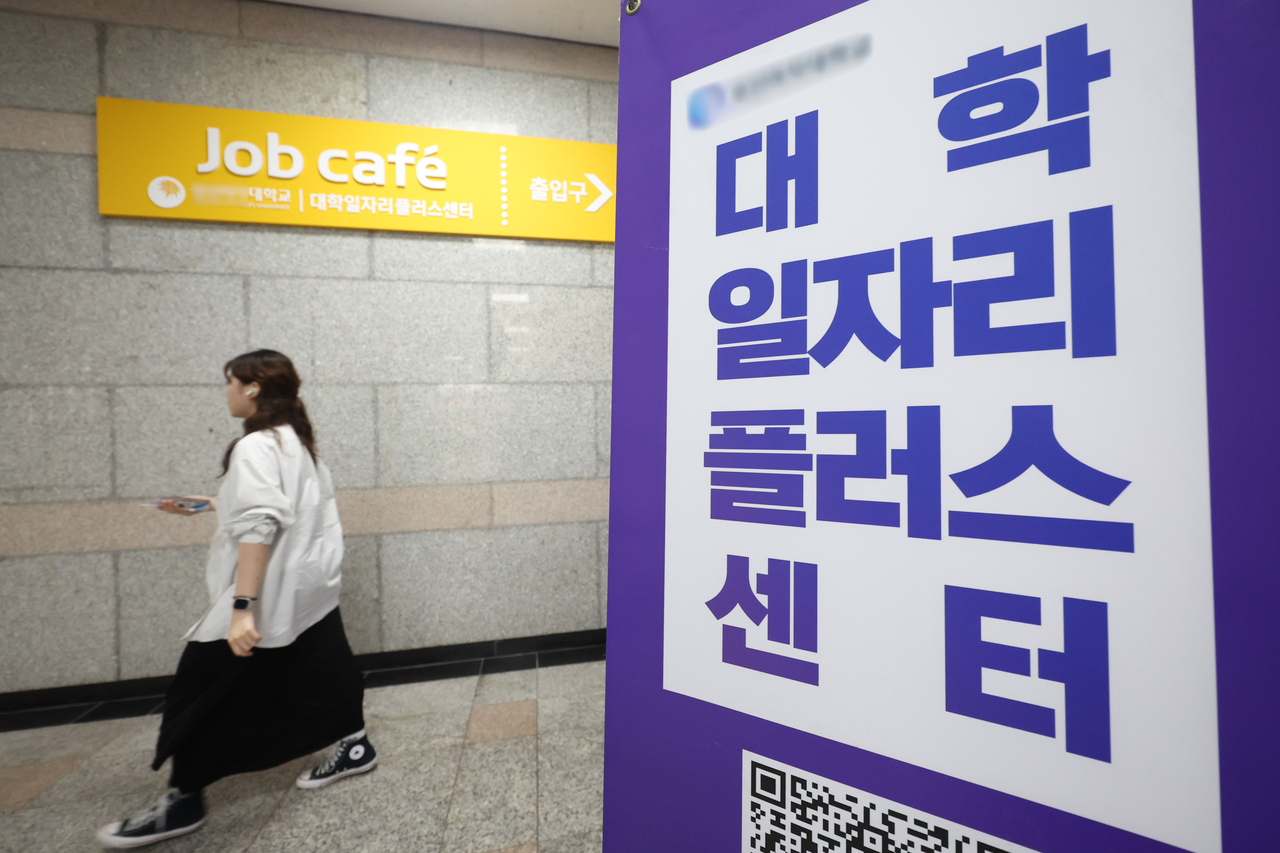
The number of employed people in South Korea rose by nearly 200,000 in August, marking the largest increase in five months. Overall employment showed signs of recovery as job losses in the construction and manufacturing sectors narrowed. However, the number of employed young people fell for the 46th consecutive month, and the youth employment rate dropped for the 28th straight month.
According to the "August 2026 Employment Trends" report released by the Ministry of Statistics on Wednesday, the number of employed people aged 15 and older stood at about 29.15 million last month, up 184,000, or 0.6 percent, from a year earlier. That marked the largest increase since March, when employment rose by 206,000. Seasonally adjusted employment also rose by 82,000 from the previous month.
Employment had grown by between 100,000 and 200,000 from January through March, before the pace slowed to 74,000 in April and turned negative in May with a decrease of 40,000. It rebounded in June with a gain of 63,000, then expanded further to 108,000 in July and 184,000 in August.
By age group, employment among people 60 and older increased by 191,000, exceeding the overall growth figure. Those in their 30s and 50s also saw gains, up 91,000 and 62,000, respectively. In contrast, employment among people in their 20s fell by 164,000, and those in their 40s declined by 17,000.
Employment among young people aged 15 to 29 fell by 143,000 from a year earlier, marking the 46th consecutive month of decline. The drop was smaller than July's decrease of 191,000. The youth employment rate stood at 44.1 percent, down 1.0 percentage point from a year earlier, falling for the 28th straight month. The youth unemployment rate rose 0.5 percentage point to 5.4 percent.
By industry, manufacturing employment fell by 38,000, extending its decline to 26 consecutive months. Construction employment also fell, down 32,000 for a 28th straight month of decline. Both sectors, however, saw their declines shrink from July, when manufacturing lost 68,000 jobs and construction lost 57,000.
Employment in the accommodation and food service sector, which is sensitive to domestic demand, dropped by 61,000, the largest decline in 13 months. The Ministry of Statistics attributed this partly to a base effect from last year's employment boost tied to the government's livelihood recovery consumption coupons. Employment in agriculture, forestry and fisheries also fell, down 109,000.
In contrast, employment in the health and social welfare service sector rose by 186,000, driving the overall increase. The arts, sports and leisure-related services sector and the business facilities management and support services sector also added jobs, up 73,000 and 45,000, respectively.
By employment status, the number of regular workers rose by 180,000, while temporary and daily workers fell by 50,000 and 17,000, respectively. Self-employed individuals with employees increased by 47,000 and those without employees rose by 62,000, while unpaid family workers declined by 37,000.
The employment rate for people aged 15 and older stood at 63.3 percent last month, unchanged from a year earlier. The employment rate for those aged 15 to 64 — the benchmark used for OECD comparisons — rose 0.5 percentage point to 70.4 percent. Employment among the 15-to-64 age group nevertheless fell by 79,000, reflecting a 326,000 decrease in the population of that age bracket.
The number of unemployed people stood at 588,000, down 4,000 from a year earlier, while the unemployment rate held steady at 2.0 percent. The economically inactive population totaled about 16.3 million, up 77,000. Within that group, the number of people who said they were "resting" fell by 89,000, while those citing schooling or exam preparation and those citing old age rose by 80,000 and 69,000, respectively.
fact0514@heraldcorp.com





