'Preparing support measures before a membership decision is the same as assuming accession'
NACF Act revision to be settled at National Assembly committee this month ... stresses direct election of NACF chairman
Gwacheon racecourse relocation proposal to be decided at Korea Racing Authority board meeting this month
Next year's agriculture ministry budget set at 22.2 trillion won, up 10.4 percent ... 'biggest increase in 27 years'
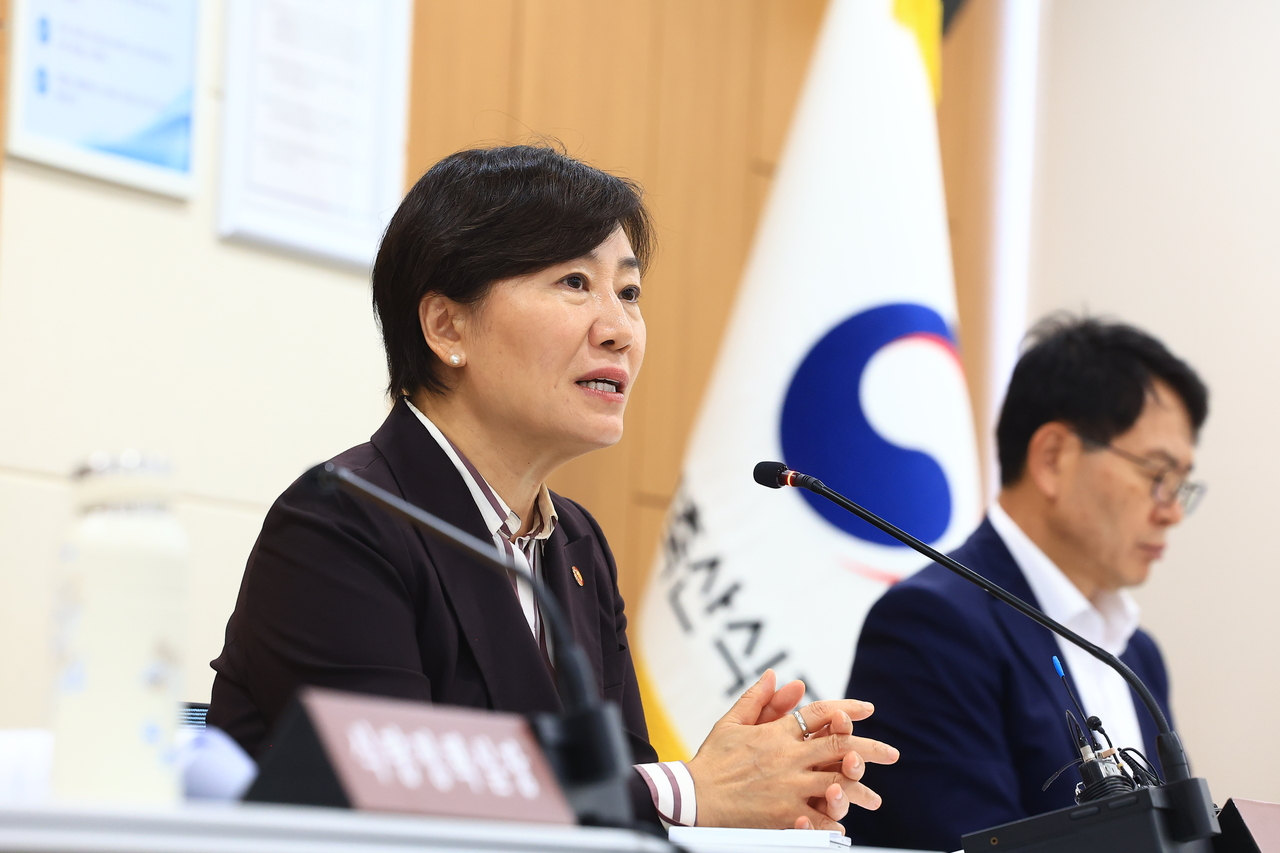
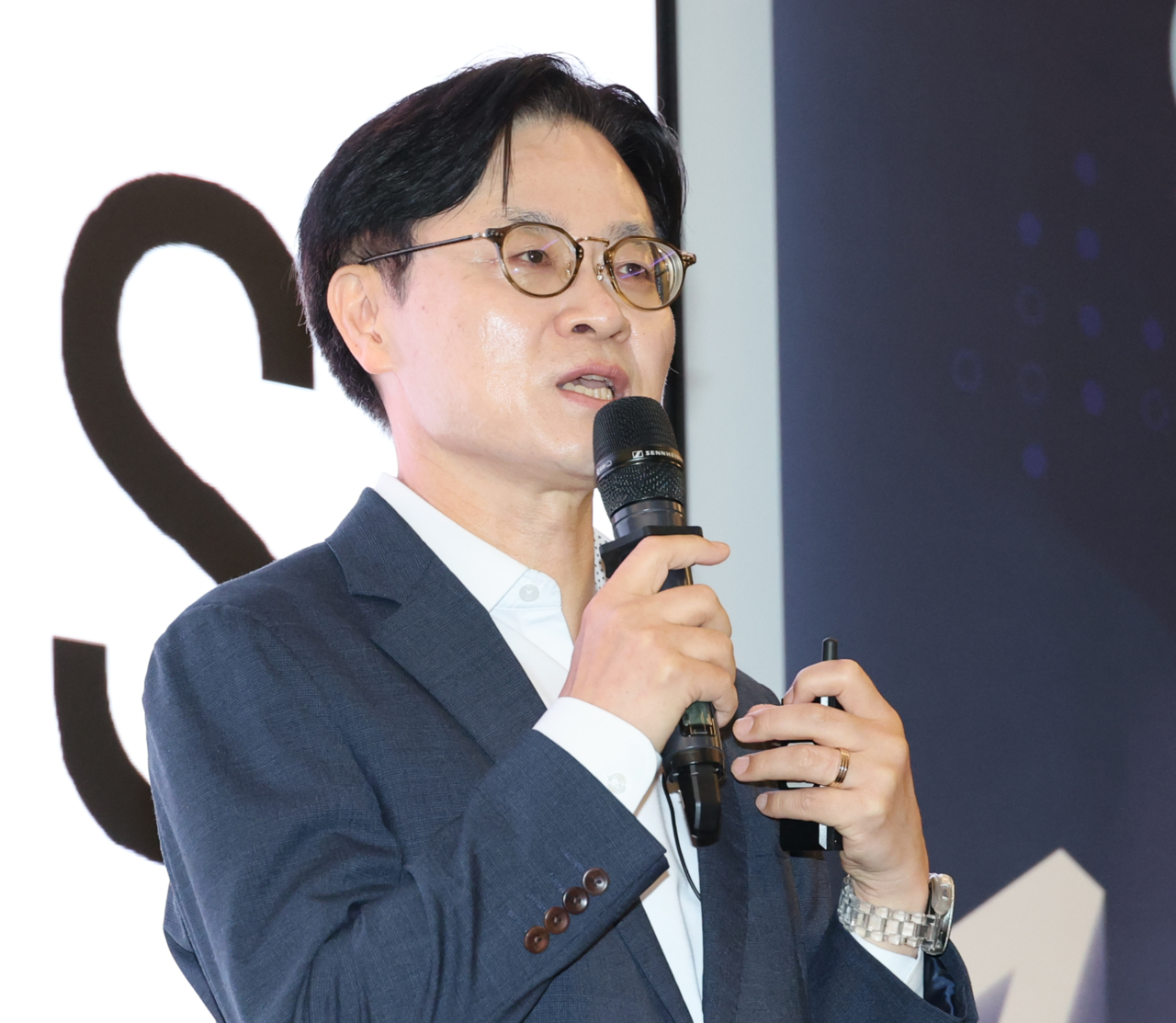
Agriculture Minister Song Mi-ryung drew a line on the debate over joining the Comprehensive and Progressive Agreement for Trans-Pacific Partnership (CPTPP). She said accession is not necessarily a foregone conclusion if it goes against national interest or public sentiment. She said it would be "difficult to accept" CPTPP membership if it were to undermine South Korea's minimum agricultural production base. She also said that support measures sought by the farming industry should be worked out only after a decision on accession has been made.
Song made these remarks at a press briefing at Government Complex Sejong on Thursday, addressing the CPTPP accession debate and concerns from the agricultural sector.
CPTPP is a multilateral free trade agreement involving Asia-Pacific countries such as Japan, Australia and Canada. The agricultural sector has expressed concern that further opening of the farm and livestock product market could weaken the domestic production base.
"The government's consistent position is that we will listen fully to opinions, rather than treating accession as a given premise, if it goes against national interest or public sentiment," Song said, adding, "This is a process to fully hear out the agricultural sector's views."
She drew a line on the industry's demand that the government present damage-mitigation measures before deciding on accession. "Establishing support measures in advance could, in a sense, be the same as premising the discussion on joining," she said. "That is something to consider after the accession decision is made -- we are not at that stage yet."
However, she stressed that preparations to boost domestic agricultural competitiveness should continue regardless of the CPTPP decision. "We are researching what preparations are needed to expand industrial competitiveness, regardless of whether we join CPTPP," Song said, adding, "I think it makes sense to work out support measures alongside the accession decision."
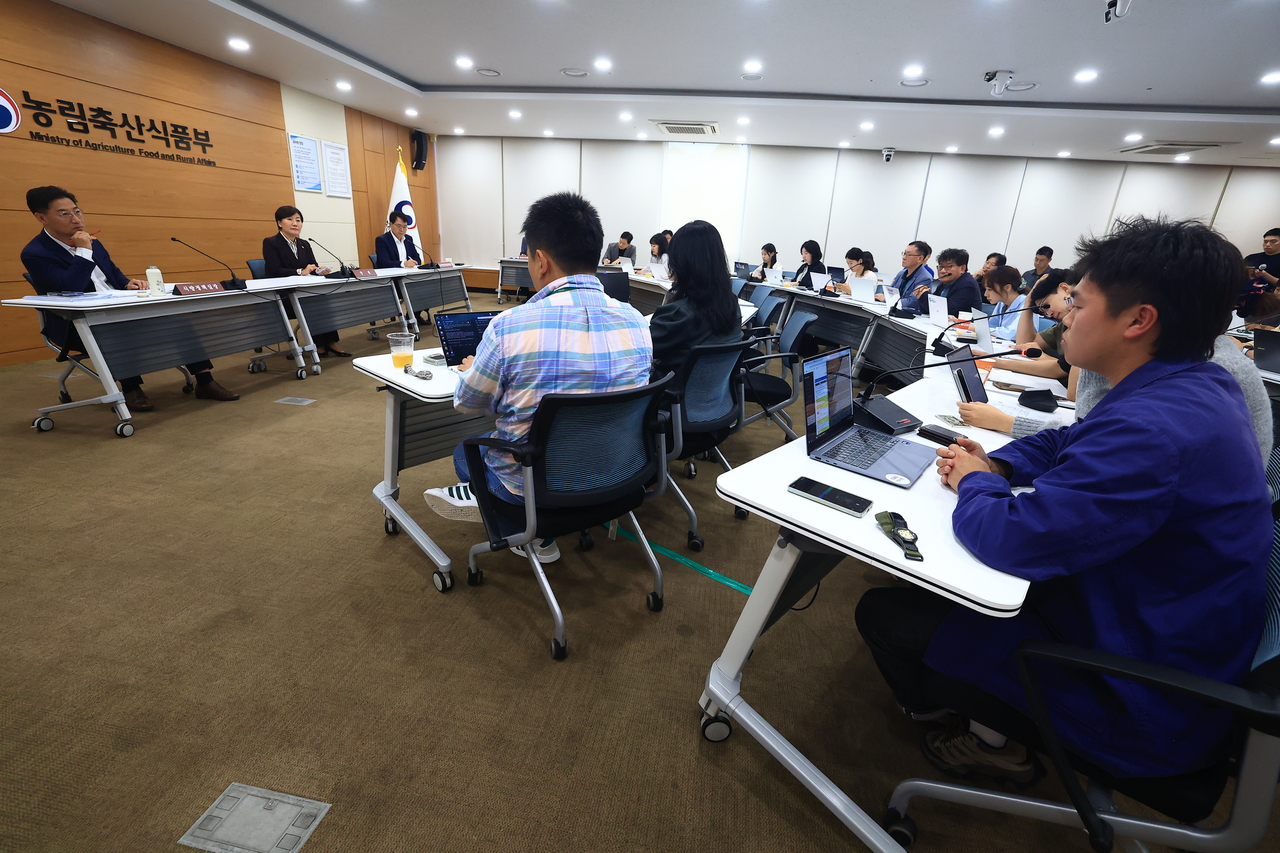
Song expressed empathy with the sense of crisis felt by the agricultural sector. "Farmers are very afraid that CPTPP could collapse the production base," she said. "It is true that the fear exists because the 12 member countries are also agricultural powerhouses."
However, she added, "We have signed 23 free trade agreements before, and there were a few FTAs we feared, but there were cases we overcame well," and went on to say, "There is no need to be so afraid just because we join CPTPP. There will be pluses and minuses, so we need to approach it wisely."
She presented food security and the domestic production base as the "bottom line" that must be protected in the CPTPP discussions.
Song introduced the industry's logic that securing stable conditions to import food raw materials from abroad could also help food security in a broader sense. But she said, "Even so, it is naturally necessary to meet a certain portion of food security that we must secure on our own."
She then said, "If it reaches the point of undermining the minimum scope we must maintain on our own, wouldn't it be difficult to accept?" She also stressed, "We need to discuss how to maintain and supplement the minimum base we must have on our own."
She also mentioned the possibility that CPTPP could open new markets for domestic agriculture, citing grapes as an example. Grapes were a product feared to suffer heavy damage when the Korea-Chile free trade agreement was signed. "When we signed the Korea-Chile FTA, people said grapes would be in big trouble, but grapes are now the No. 1 fresh agricultural export among K-food exports," she said. "This year, cautiously, I think we will reach $100 million."
She also touched on overseas market expansion for Korean beef and pork. "Depending on how we approach it, I think our agricultural products are quite competitive," she said. "There is fear on one hand, but depending on how we do it, there are areas we can meaningfully challenge. We need to closely analyze those areas together with farmers' groups."
Separately from the CPTPP discussions, the government is also preparing to enact a food security law. "We are not thinking of rice as a single item," Song said. "The definition of food security probably needs to be renewed as well -- isn't it different from the self-sufficiency rate?" She added, "We need to enact the law in a way that is realistic and helpful to our agriculture."
Song forecast that a revision to the National Agricultural Cooperative Federation (NACF) Act, aimed at reforming the organization, would take shape at a National Assembly standing committee this month. On the direct election of the NACF chairman, she said, "A direct election system is more meaningful in the sense of returning our agricultural cooperative to the farmers." On the issue of making the audit body independent, she said there was broad agreement on the general direction that the function should be made independent. However, differences remain over what form the organization should take.
"Most of the major direction has been resolved without disagreement," she said. "I think it can be settled at the standing committee within September."
The relocation of the Gwacheon racecourse park is also expected to enter a concrete process this month. "I have heard that the Korea Racing Authority's board of directors will meet within September," Song said, adding that the board is expected to decide the criteria, procedures and schedule for a public call for candidate relocation sites. However, she drew a line between the racecourse relocation and the relocation of the Korea Racing Authority's headquarters to the provinces, saying they are separate issues.
Next year's budget for the Ministry of Agriculture, Food and Rural Affairs is set at 22.22 trillion won ($16.6 billion), up 10.4 percent from this year. Song said it marks "the biggest increase in 27 years since 2000," adding that when the cleanup of accumulated fund debt is factored in, the real increase reaches 25.7 percent. The budget for the public-interest direct payment program will surpass 3 trillion won for the first time, and new projects such as joint farming will also be expanded.
adastra@heraldcorp.com