Forum launched in 2017 under 'Ki-UP' banner; marks 10th anniversary this year
Tackled COVID-19, supply chains, semiconductors and AI at each industry inflection point
Chey Tae-won, global scholars and innovation executives have taken the stage
Robots and AI content added to broaden the forum's appeal
A decade-long theme: from follower to architect of global markets
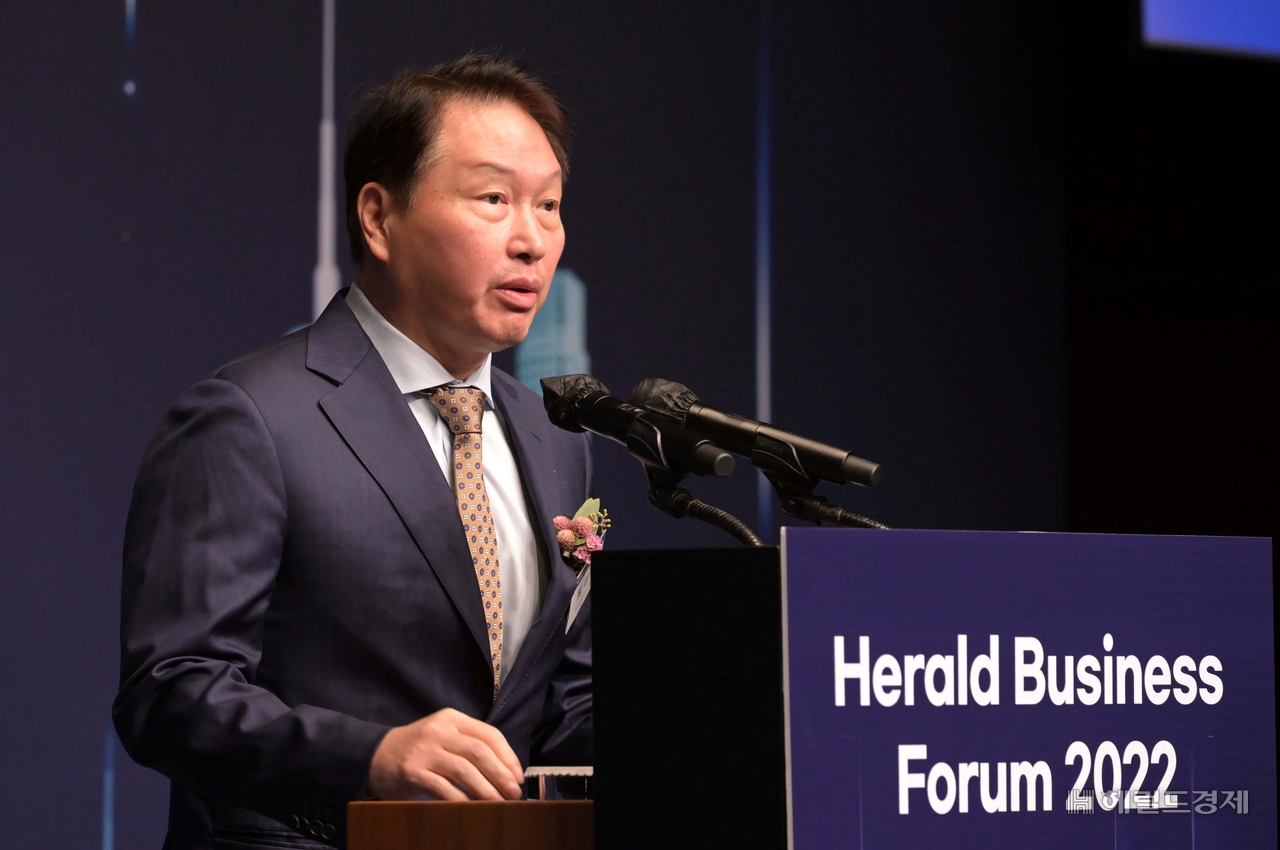
"It is time to lead change as a 'designer,' not merely an 'acceptor.'"
That was the message Korea Chamber of Commerce and Industry Chairman Chey Tae-won delivered to Korean businesses at the Herald Business Forum in 2022 — a call for Korean companies to stop following markets and rules set by others and instead become the architects of a new order.
"Korea must put forward an agenda that leads the entire world," Chey said at the time. "We should become not just an advanced economy, but one that leads other nations." He added that Korea's growing role meant it was time to write new rules.
Four years later, the forum marks its 10th anniversary with the theme "Beyond Follower: Transition to a Leading Economy" — a phrase that distills a decade of debate over where Korean industry needs to go.
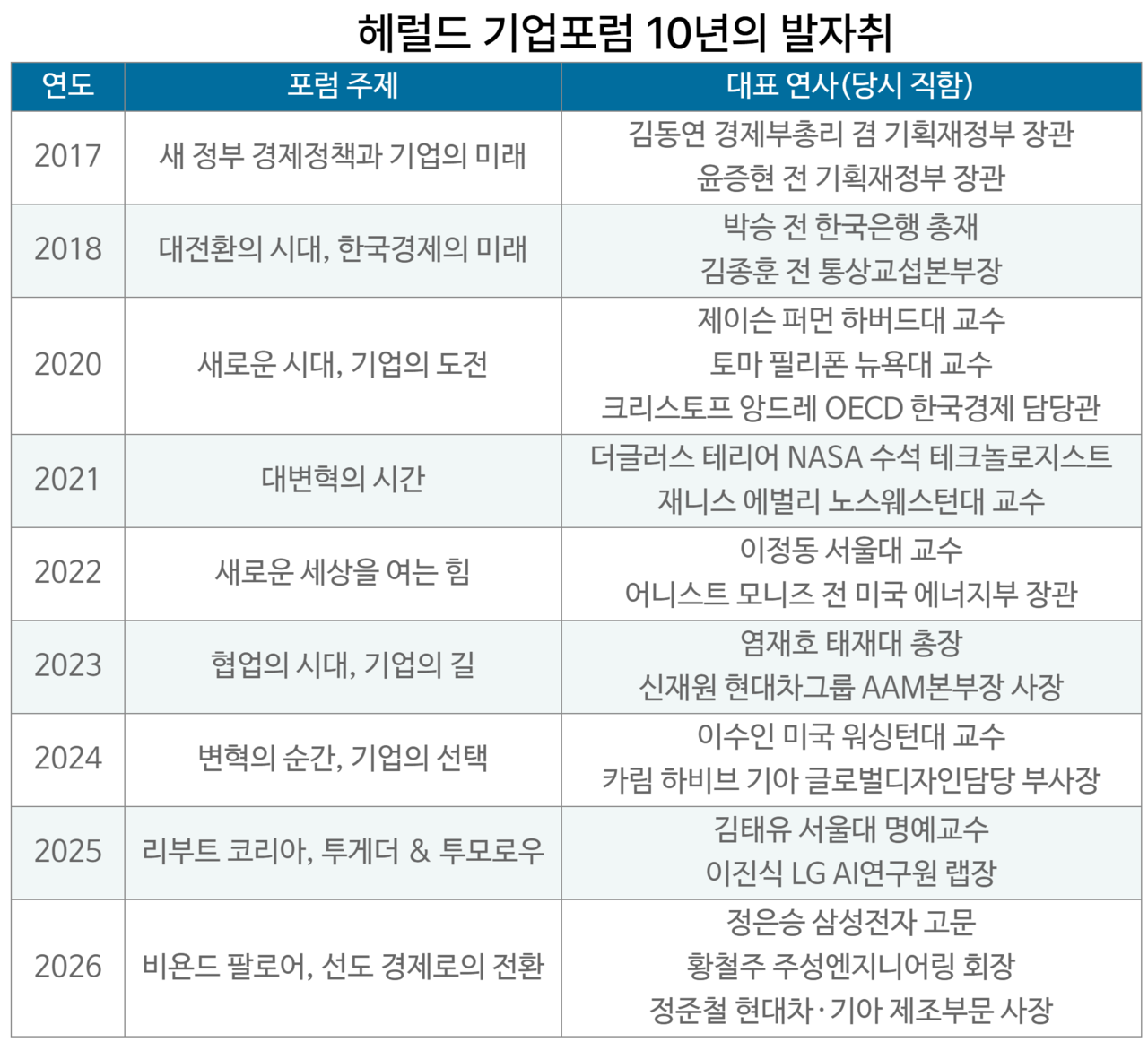
South Korea's economy built its growth foundation by tackling regulatory and employment challenges, then navigated the COVID-19 pandemic and global supply chain disruptions to develop semiconductors, batteries, robots and AI as its core growth engines. It has now reached the stage of seeking solutions to lead global markets in physical AI and the space industry.
The imperative to lead industry has crystallized into a concrete national challenge: building the strategy and infrastructure for the AI era — a challenge that, as of 2026, remains central to determining the fate of Korean industry.
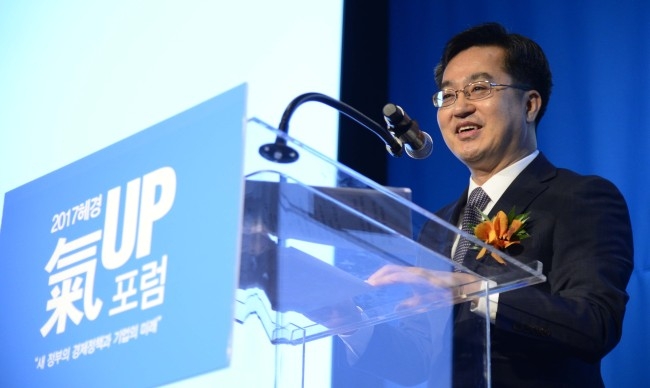
'Ki-UP': companies at the center from day one
Business has always been the protagonist of the Korean economy, and the forum reflected that from the start. The inaugural event in 2017 was named the "Herald Ki-UP Forum" — a play on the Korean word for "company" (gieop) and the English word "up," signaling that energizing Korean business was the key to energizing the Korean economy.
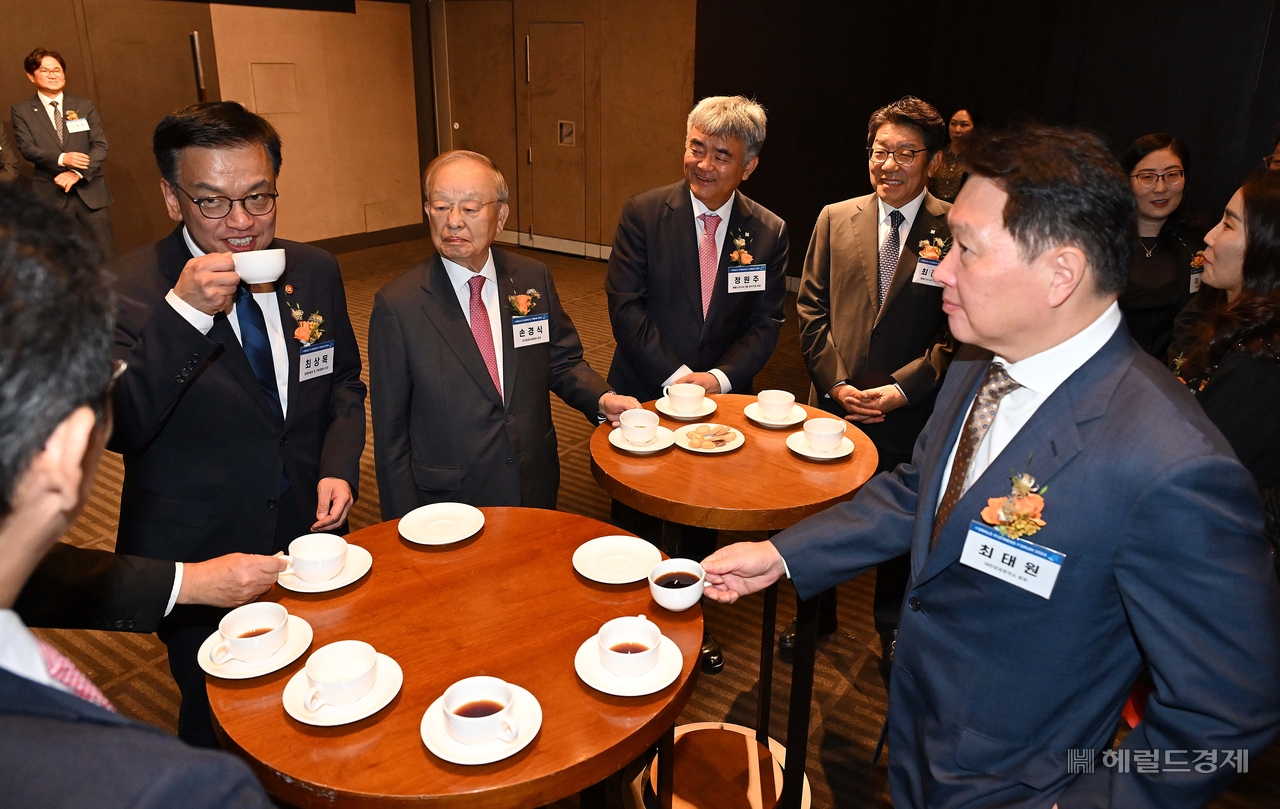
The inaugural forum came shortly after the launch of the Moon Jae-in administration, and it drew blunt calls for action on government market intervention, regulation, the labor market, job creation and the Fourth Industrial Revolution. Then-Deputy Prime Minister and Minister of Economy and Finance Kim Dong-yeon said the new government's economic policies could only succeed in partnership with business. At the 2018 forum, former Bank of Korea Governor Park Seung diagnosed the Korean economy as standing at a "historic turning point" requiring a change of growth engine.
The forum was never a venue for flattery. Corporate calls to ease regulation clashed on the same stage with arguments for a stronger government role in maintaining market order, and sensitive issues — labor market reform, performance-based pay, the US-China trade dispute and the erosion of manufacturing competitiveness — all made it onto the agenda. When the US-China trade war intensified in 2019, the discussion expanded further to cover generational renewal in manufacturing, the energy transition and the demographic cliff.
The theme changed every year, but one principle held constant: the forum would not shy away from the hard questions companies needed to confront.
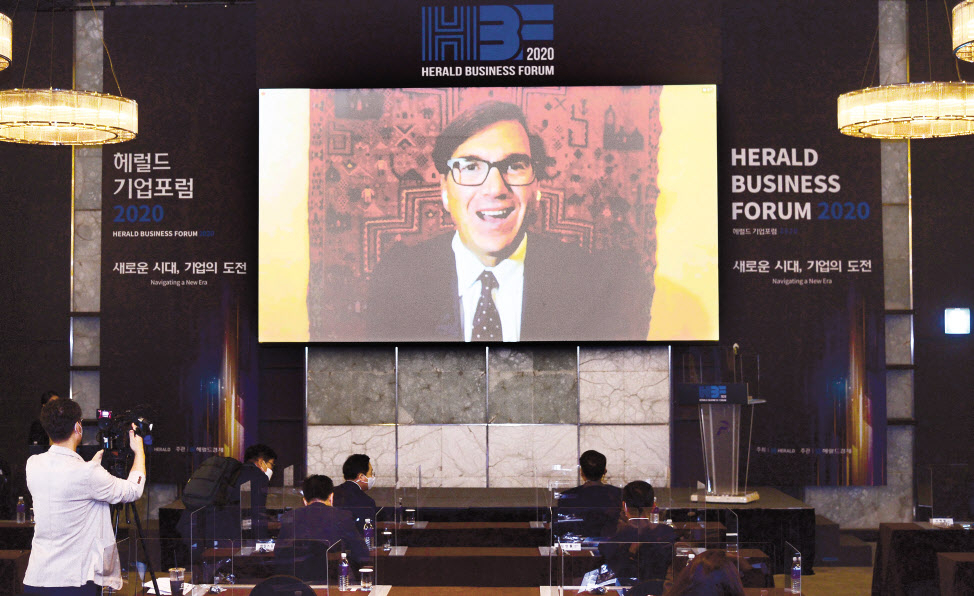
That commitment came into sharp relief in 2020, when COVID-19 struck. Rather than cancel the event at a time when gathering was nearly impossible, organizers connected global scholars and business leaders online to offer companies a set of coordinates for navigating the crisis. Jason Furman, a Harvard professor who had chaired the White House Council of Economic Advisers under Barack Obama, was asked about how governments and businesses should respond to the COVID-19 crisis. He was joined in real time by Thomas Philippon of New York University, Christophe André of the OECD's Korea desk, and Mike Orgill, Airbnb's head of policy for Asia-Pacific.
From White House economic advisers to NASA and the US energy secretary
The weight of the forum over the past decade is evident in the caliber of its speakers.
Alongside domestic economic and policy leaders — former Bank of Korea Governor Park Seung, Deputy Prime Minister Kim Dong-yeon and Prime Minister Lee Nak-yon — the forum's stage has welcomed Jason Furman, who helped design White House economic policy; Douglas Terrier, chief technologist at NASA; and Ernest Moniz, a former US secretary of energy.
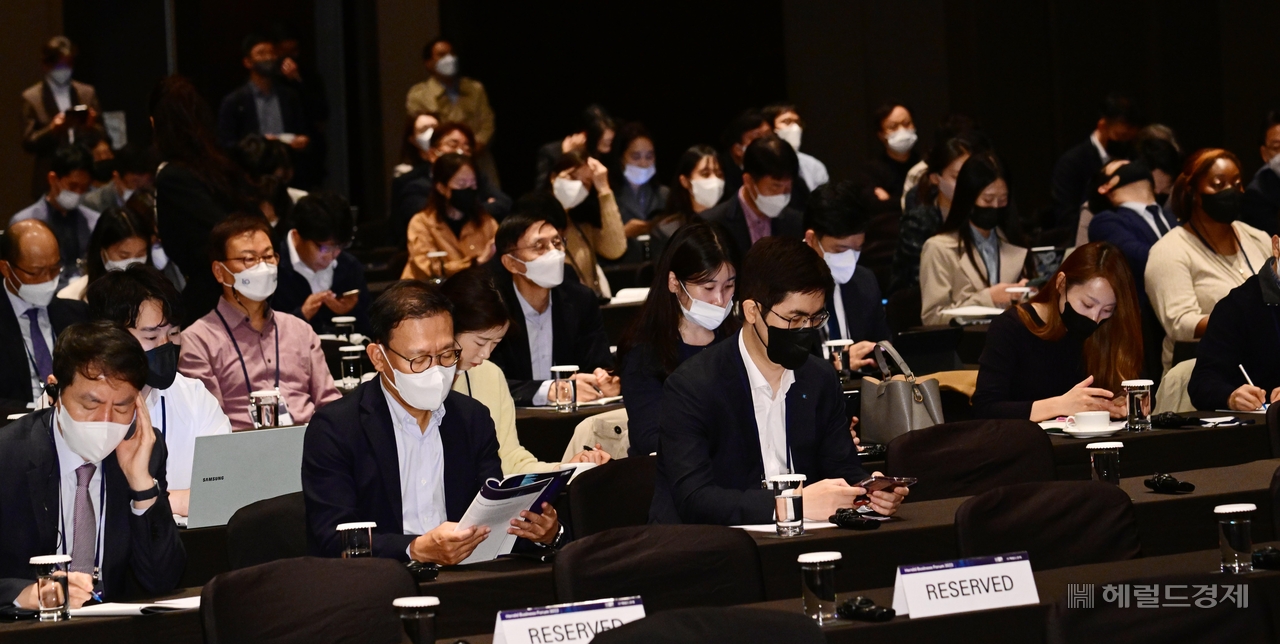
The front lines of industry were equally well represented. Chey and senior executives and experts from Samsung Electronics, SK hynix, Hyundai Motor Group and LG Energy Solution joined figures from global innovators — including Boston Dynamics and TerraPower, a next-generation nuclear power company — to map the direction of future industries.
The topics they raised were grounded in the real concerns of business. In 2020, the agenda centered on the pandemic and the contactless economy; in 2022, semiconductors, large-scale AI, advanced air mobility, robots, space and hydrogen took center stage. In 2023, as generative AI shook the world, SK hynix used the forum to highlight how growing AI models were making memory capacity and bandwidth increasingly critical. The following year, Lee Soo-in, a leading authority on explainable AI at the University of Washington, posed the question of how to understand and build trust in AI decision-making.
Robot Spot dances, AI writes fiction: breaking the mold of the stiff economics forum
Another hallmark of the forum's decade-long run has been its determination to shatter the notion that an economics forum must be stiff and formal.
In 2023, the main screen at the venue transformed into a rally stage for the 2030 Busan World Expo bid. Promotional videos and media art produced by Samsung, SK Group, Hyundai Motor and LG played to the crowd, and Busan Expo citizen supporters joined other attendees in backing the campaign. A forum normally devoted to industrial policy had become a shared rally for companies and citizens alike.
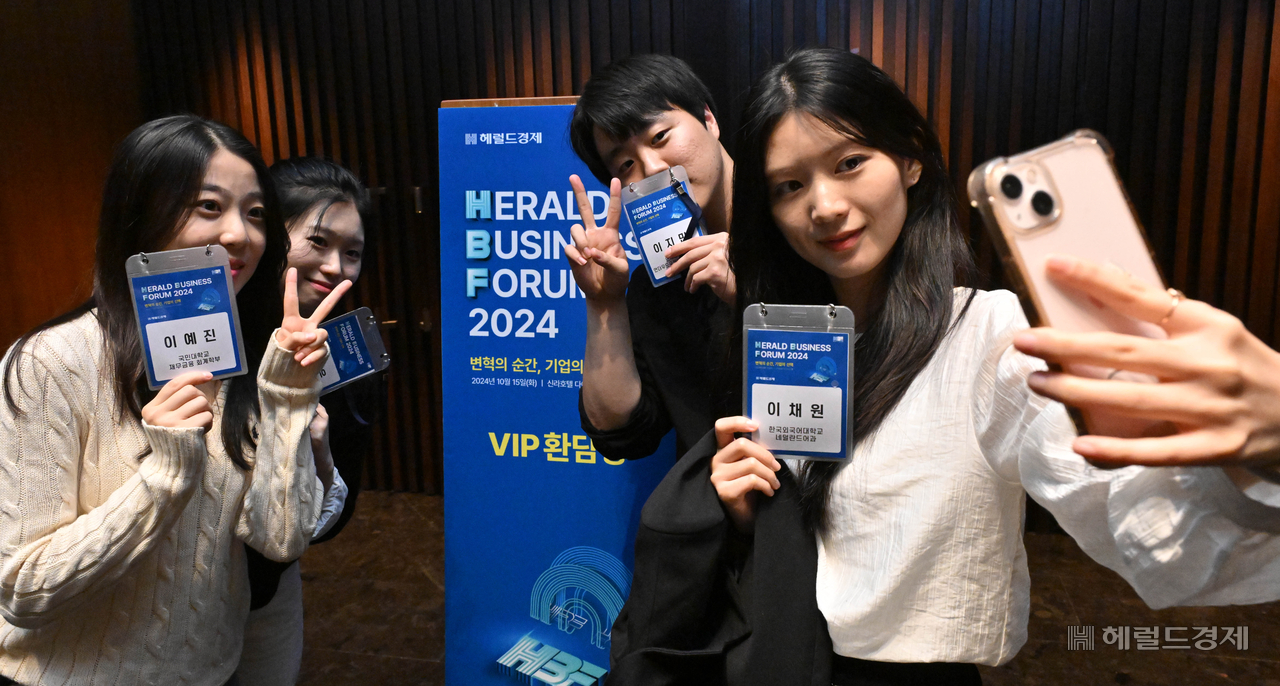
In 2024, film and fiction — subjects seemingly far removed from corporate management — made it onto the stage. Kwon Han-seul, chief executive of Studio Freewillusion and a pioneer in AI filmmaking, introduced the fusion of K-content and AI, while Jeon Yun-ho, a novelist and former chief technology officer at SK Planet, posed the question: "Can ChatGPT write a bestselling novel?" Corporate venture heads from large conglomerates searching for new business opportunities also gathered in one room. The session sparked genuine curiosity among participants about how far technological change would reshape not just industry but human creativity itself.
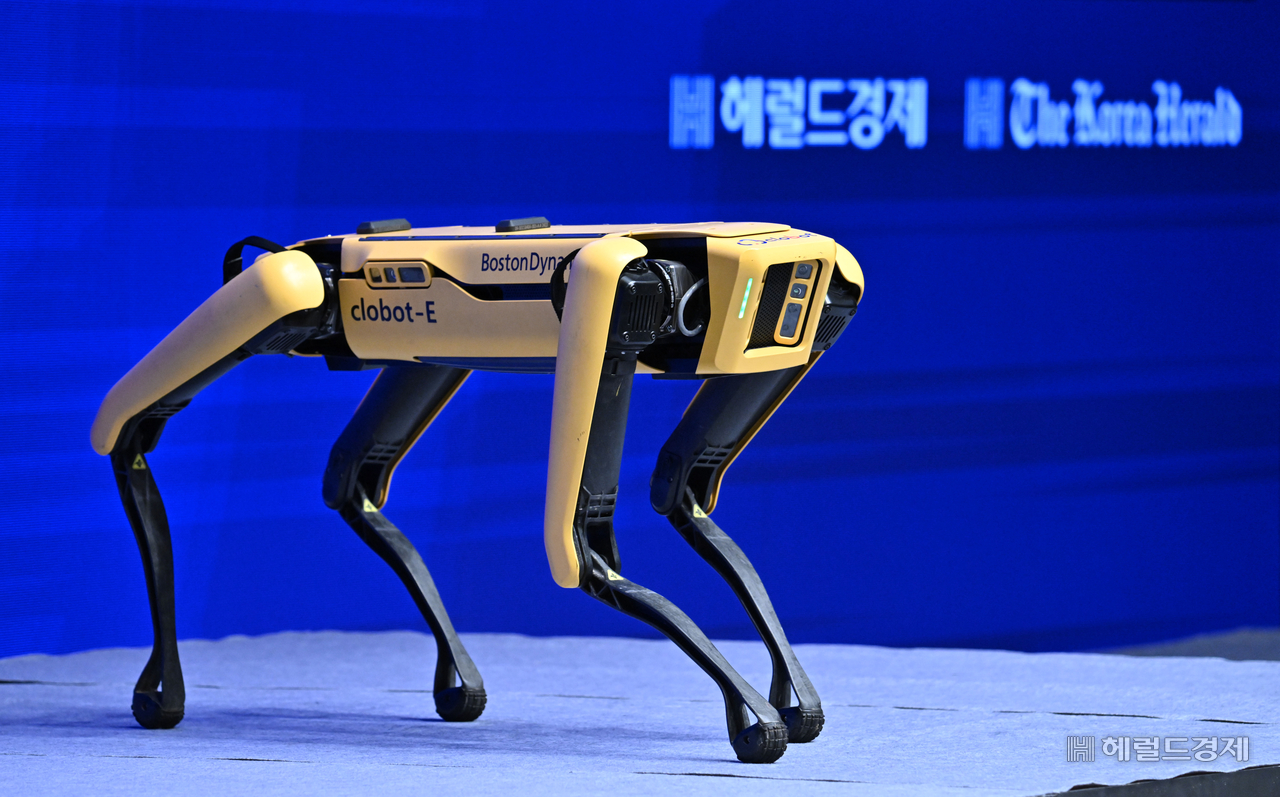
Last year, a robot took center stage outright. Boston Dynamics' quadruped robot Spot made a surprise appearance at the opening performance and danced to music. New faces bridging the public and industry also took the podium — among them Song Gil-young, a data expert and author, and Choi Sung-woon, a producer behind the YouTube channel "Choi Sung-woon's Thought Experiments."
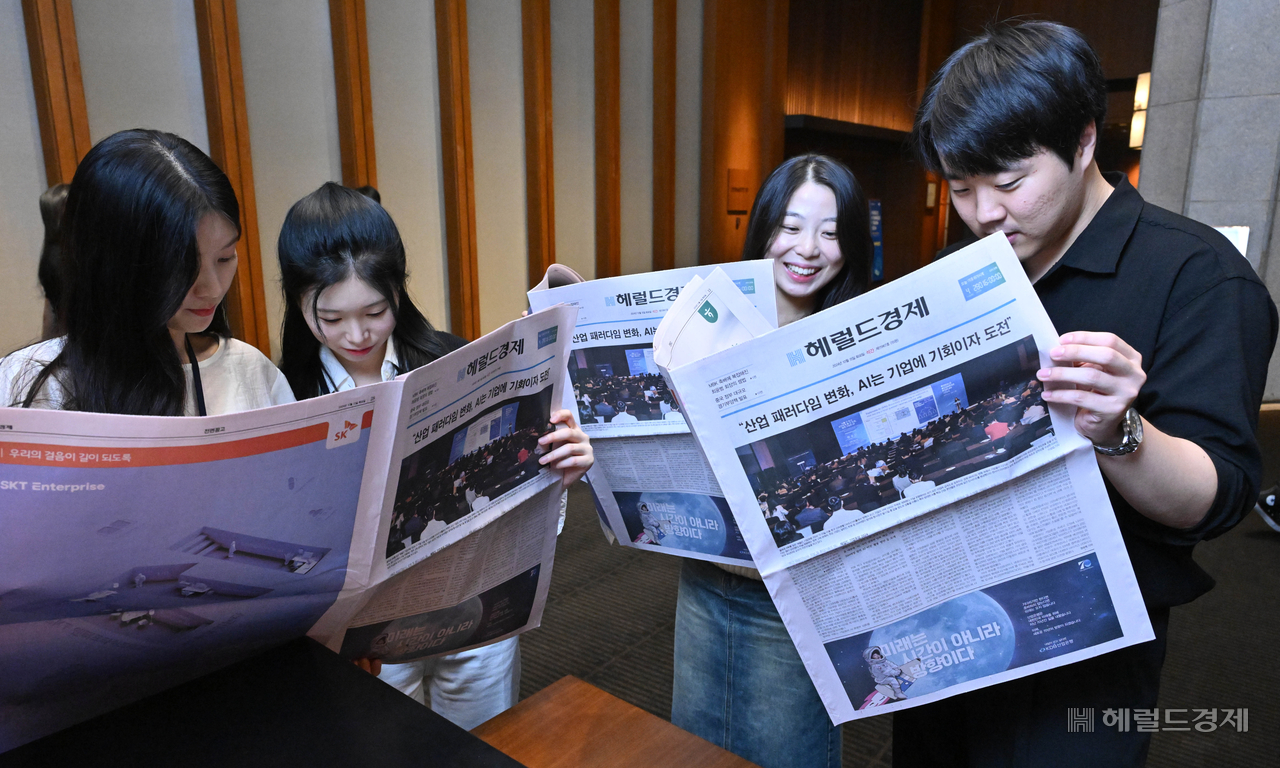
The forum has steadily expanded beyond passive listening into a space for watching, questioning and hands-on experience — one reason the event now draws not only industry insiders but also university students and members of the general public.
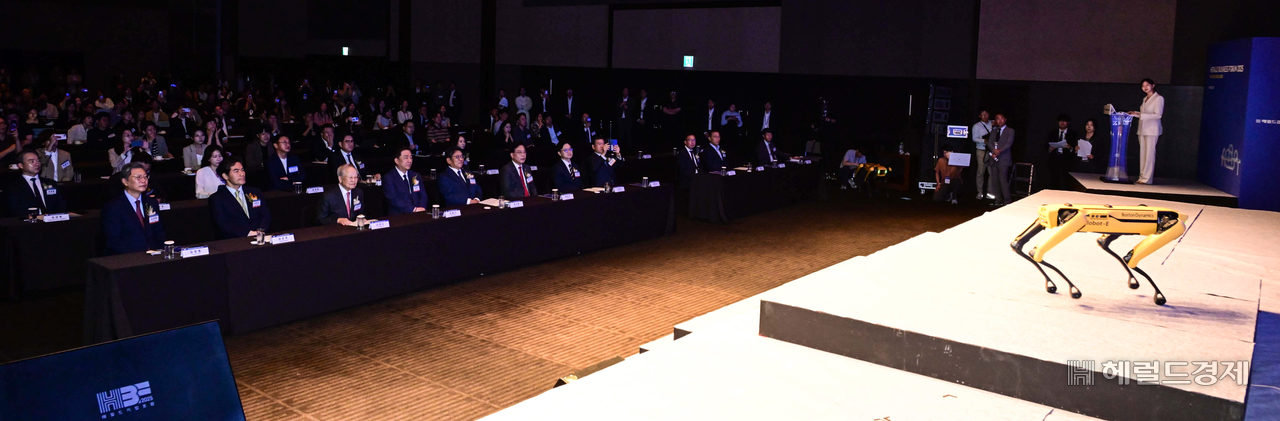
This year's forum opens with Samsung Electronics adviser Jeong Eun-seung and Seoul National University AI Institute Director Lee Jae-wook examining the technology race in the AI era, followed by Jusung Engineering Chairman Hwang Cheol-ju and semiconductor specialists from Samsung Electronics and SK hynix. Hyundai Motor, Kia, LG Electronics, Posco Holdings, Samsung SDI and HD Hyundai will then take up physical AI and manufacturing innovation, before the forum's final gaze turns toward space data centers and Korea's new space industry.
kwater@heraldcorp.com