Rate-hike outlook flips in a week
10-year yield already above 5% — markets eye next move, not this one
Trump presses for cuts as Warsh faces biggest test since taking office
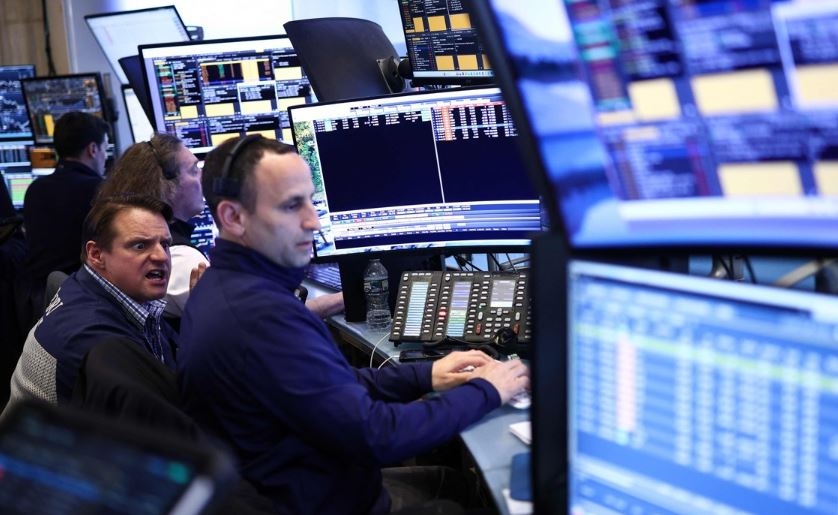
With the Federal Reserve set to announce its benchmark interest rate decision Wednesday, market attention has rapidly shifted from whether the Fed will raise rates to how many more times it might do so. Just a week ago, a hold was the consensus view — but with international oil prices surpassing $100 a barrel and inflation showing little sign of cooling further, the first rate hike since 2023 now looks all but certain.
The problem is that neither path is easy. The surge in oil prices driven by the war with Iran cannot be tamed by raising interest rates, yet leaving it unchecked risks reigniting inflation expectations. A rate hike, on the other hand, would pile onto already elevated long-term borrowing costs — the 10-year Treasury yield has already crossed 5% — squeezing households and businesses from both ends. Add to that President Donald Trump's public pressure on the Fed to cut rates, and Fed Chair Kevin Warsh faces what analysts are calling the most difficult decision of his tenure.
Holding rates risks inflation — outlook reverses in a week
![Federal Reserve Chair Kevin Warsh. [AFP]](https://wimg.heraldcorp.com/news/cms/2026/09/16/news-p.v1.20260828.1c1e8c07e3a343c98d301f57fd7fe78c_P1.jpg)
Financial markets are pricing in roughly a 90 percent chance that the FOMC will raise its benchmark interest rate by 25 basis points Wednesday, according to Reuters on Tuesday (local time). If it happens, it would be the first rate increase in about three years since 2023.
Just a week ago, the mood was the opposite. In a Reuters survey of 93 economists conducted Sept. 4–9, 65 respondents — about 70 percent — expected the Fed to hold rates in September. A majority also predicted no rate hike at all this year.
But in the latest survey conducted Tuesday, 86 of 101 economists — 85 percent — forecast a 25-basis-point increase. In the span of a single week, market consensus had swung sharply from a hold to a hike.
The primary driver is inflation. The US consumer price index rose 0.4 percent in August from the previous month, while core CPI — which strips out volatile food and energy — climbed 0.3 percent. Expectations that inflation would fall quickly toward the Fed's 2 percent target have faded, and the war with Iran has pushed international oil prices above $100 a barrel.
At last month's Jackson Hole symposium, Warsh warned that the Fed would need to act further if inflation did not slow sufficiently. Since then, prices have not cooled as hoped, and concerns have grown in markets that inaction by the Fed could undermine confidence in its commitment to price stability.
That is the first dilemma. Holding rates while high oil prices threaten to spread through the broader economy risks sending a signal that the Fed is willing to tolerate inflation.
Hiking risks piling onto 5% bonds — and rate rises can't fix an oil shock
![Ships near the Strait of Hormuz, captured by drone. [Reuters]](https://wimg.heraldcorp.com/news/cms/2026/09/16/news-p.v1.20260910.b7050ecae7374c5387374a48be819be0_P1.jpg)
The second dilemma is that financial conditions are already too tight to absorb another rate hike comfortably. The concern deepens because much of the current inflationary pressure originated outside the Fed's control.
Rate hikes work by curbing borrowing, consumption and investment — suppressing demand and, in turn, prices. But oil prices rising because the war with Iran has disrupted crude supply cannot be fixed by raising interest rates. Higher rates will not restore Middle Eastern oil output or repair Saudi Arabia's pipelines. To fight inflation rooted in a supply shock, the Fed would have to inflict even greater pain on domestic consumption and investment.
Financial markets are already significantly tighter. The yield on the 10-year US Treasury note surged to 5.041 percent during trading, its highest level since 2007.
The 10-year yield sets borrowing costs across the US economy — from mortgages and auto loans to corporate lending and bond issuance. With long-term rates already above 5 percent, a Fed hike in short-term policy rates would leave households and businesses squeezed on both ends of the yield curve.
Heavy US government bond issuance driven by the country's massive fiscal deficit, along with a surge in corporate bond sales by big tech companies fueling the AI investment boom, is also pushing long-term yields higher. Even without a Fed rate hike, markets are already tightening financial conditions on their own.
The Fed thus faces a situation where raising rates is unlikely to address the underlying supply shock driving oil prices, while the damage to US consumption and investment could prove larger than expected.
The scarier question: How far will hikes go after this one?
![US President Donald Trump. [AFP=Yonhap]](https://wimg.heraldcorp.com/news/cms/2026/09/16/9/news-p.v1.20260914.d38ebddb221f43ed885036f6498a90a6_P1.jpg)
The third dilemma lies in what comes after this hike.
Markets have largely priced in a 25-basis-point increase, analysts say. What will actually move markets Wednesday is less the hike itself than whether it proves to be a one-off or the start of a new tightening cycle.
In Reuters' latest survey, 37 of the 70 economists who answered the question expected at least one additional rate hike by March next year. Markets are already looking past September's move to the next one.
That makes Warsh's signal on the future rate path critical. Since taking office, he has been skeptical of forward guidance — the practice of pre-committing to future rate moves — and has consistently emphasized policy flexibility.
But in a bond market as sensitive as the current one, ambiguity itself carries risks. If the Fed strongly hints at further hikes, long-term yields already above 5 percent could climb further, tightening financial conditions even more. Conversely, signaling that one hike is enough could prompt markets to question the Fed's resolve on inflation, pushing long-term bond investors to demand higher risk premiums.
There is also a political dimension. Trump has publicly called on the Fed to cut rates, arguing the US should maintain some of the lowest interest rates in the world. Warsh — Trump's own nominee — could find himself raising rates in direct defiance of the president's wishes just four months into his tenure.
A 25-basis-point hike is already largely baked into markets. The real focal point of this FOMC meeting will be how the Fed charts the rate path ahead — at a moment when $100 oil and a 5 percent Treasury yield are simultaneously bearing down on the US economy.
Debriefing: The Korea Herald's international desk breaks down the hidden stories behind the hottest global issues. Have a question? Leave a comment.
sjy@heraldcorp.com